Dioscorea batatas
Chinese yam
Explore the size, hardiness, soil, light, edible uses and harvest period of Dioscorea batatas.
Plant photos
2 photos · Select to enlarge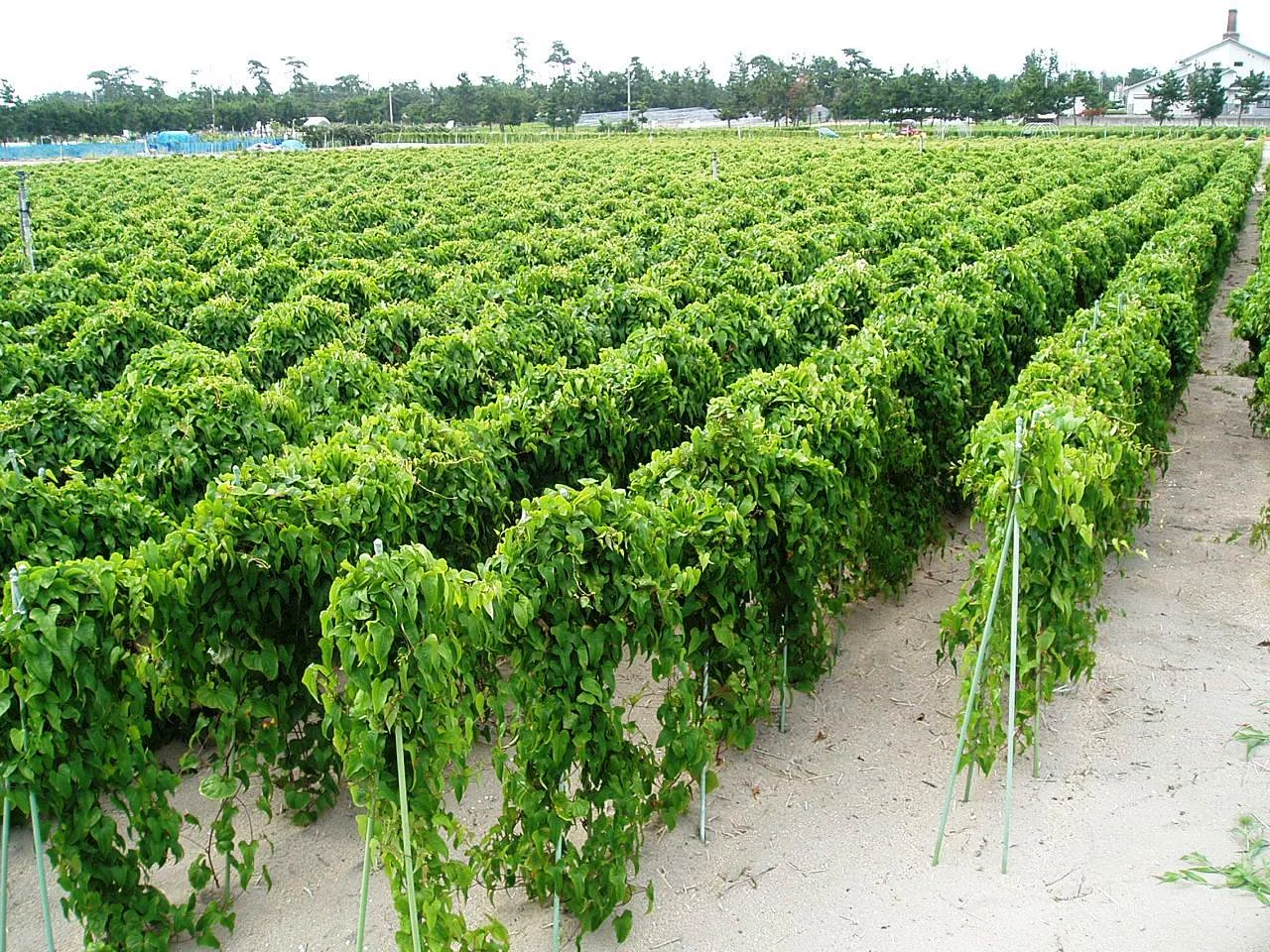
Rows of Dioscorea polystachya (Chinese yam) in cultivation.
Hasec / Wikimedia Commons / CC0

Photo details
Resized and converted to WebP. No content edits.
Source: File:Nagaimo-Fields-Hokuei-Tottori-2013071401.jpg
Reviewed . Source identification, photograph and license reviewed. The image illustrates the named plant; it does not verify dimensions or other plant traits.
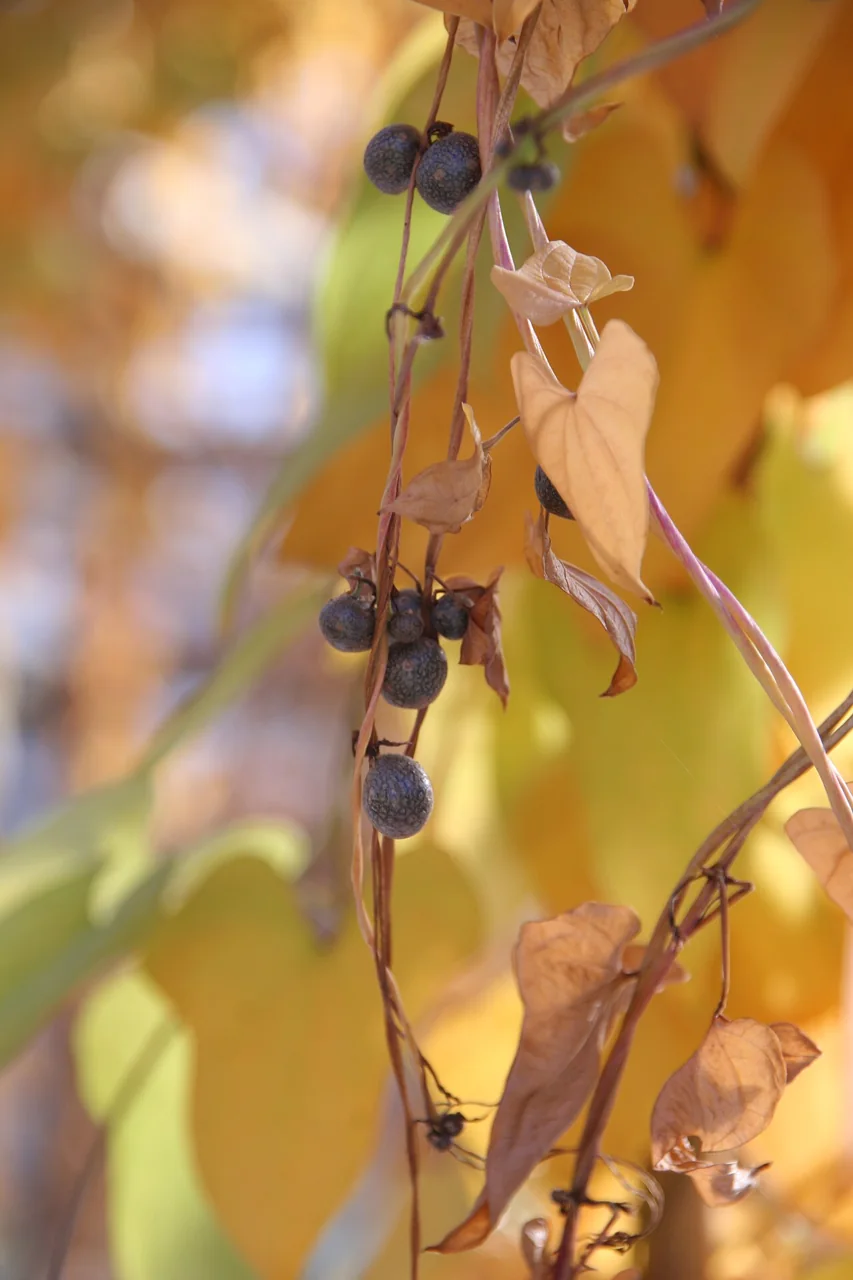
Aerial bulbils of Dioscorea polystachya on autumn stems.
Hans-Martin Aurich / Wikimedia Commons / CC BY-SA 4.0

Photo details
Resized and converted to WebP. No content edits.
Source: File:Lichtwurzel-Bulbillen-im-Herbst.jpg
Reviewed . Source identification, photograph and license reviewed. The image illustrates the named plant; it does not verify dimensions or other plant traits.
Common names
3 names · 3 languages- EnglishYour language
-
- Chinese yam
Other languages (2)
- Dutch
-
- Chinese yam
- French
-
- Igname de Chine
Sources & name notes
Names recorded in our plant catalogue, grouped by language. Usage can vary by region.
General information
Kew's family placement for the genus Dioscorea (WCVP v16).
Sources [1]Plant characteristics
Growing conditions
Moist
Sand (light) Loam (medium) Clay (heavy)
Acidic Neutral Alkaline
Partial shade, Full sun
Uses
Fruit, Root
Carbon farming, Fragrant
Description
Tubers - prepared for consumption. The tubers have a floury texture and a pleasant potato-like taste. They can be prepared in various ways, such as boiling, baking, frying, mashing, grinding, and adding to soups. They can be well preserved in the ground and harvested as needed, especially in winter. These tubers are of top quality and can serve as a staple food. Arrowroot can be obtained from these tubers, although this is less effective as a thickening agent than the starch from D. japonica. The tubers contain about 20% starch, 75% water, 0.1% vitamin B1, and 10-15 mg% vitamin C. The fruit has a starch-rich flavor and is considered very beneficial for health. The antenna tubers of this plant are known to be very tasty and can be eaten. Carbon Farming - Stacked Crop.
Harvest
Sources and references
References for the information marked with source numbers on this page.
-
Royal Botanic Gardens, Kew
World Checklist of Vascular Plants, version 16, extracted 4 June 2026
Relevant sections
- Taxonomy: WCVP version 16, wcvp_names.csv: Dioscorea batatas Decne., name ID 239830, row 1134193; Dioscorea polystachya Turcz., name ID 240732, row 1134201
- Botanical family: WCVP v16, wcvp_names.csv row 207195; name ID 239724; Dioscorea Plum. ex L.. Family column.
Source checked on .
Source data licence: CC BY 3.0.
-
Catalogue of Life
Catalogue of Life 2026-08-20 — Dioscorea batatas
Taxonomic data from WCVP, version 16.0, reproduced in Catalogue of Life 2026-08-20. This shares the Kew WCVP evidence base cited on this page.
Supports: TaxonomyRelevant sections
- Taxonomy: COL 2026-08-20, NameUsage.tsv line 2071787, ID 6CWSL: Dioscorea batatas Decne. (synonym). Accepted target: Dioscorea polystachya Turcz., ID 36D57, line 97641.
Source checked on .