Dianthus superbus
Fringed Pink
Explore the size, hardiness, soil, light, edible uses and harvest period of Dianthus superbus.
Plant photos
2 photos · Select to enlarge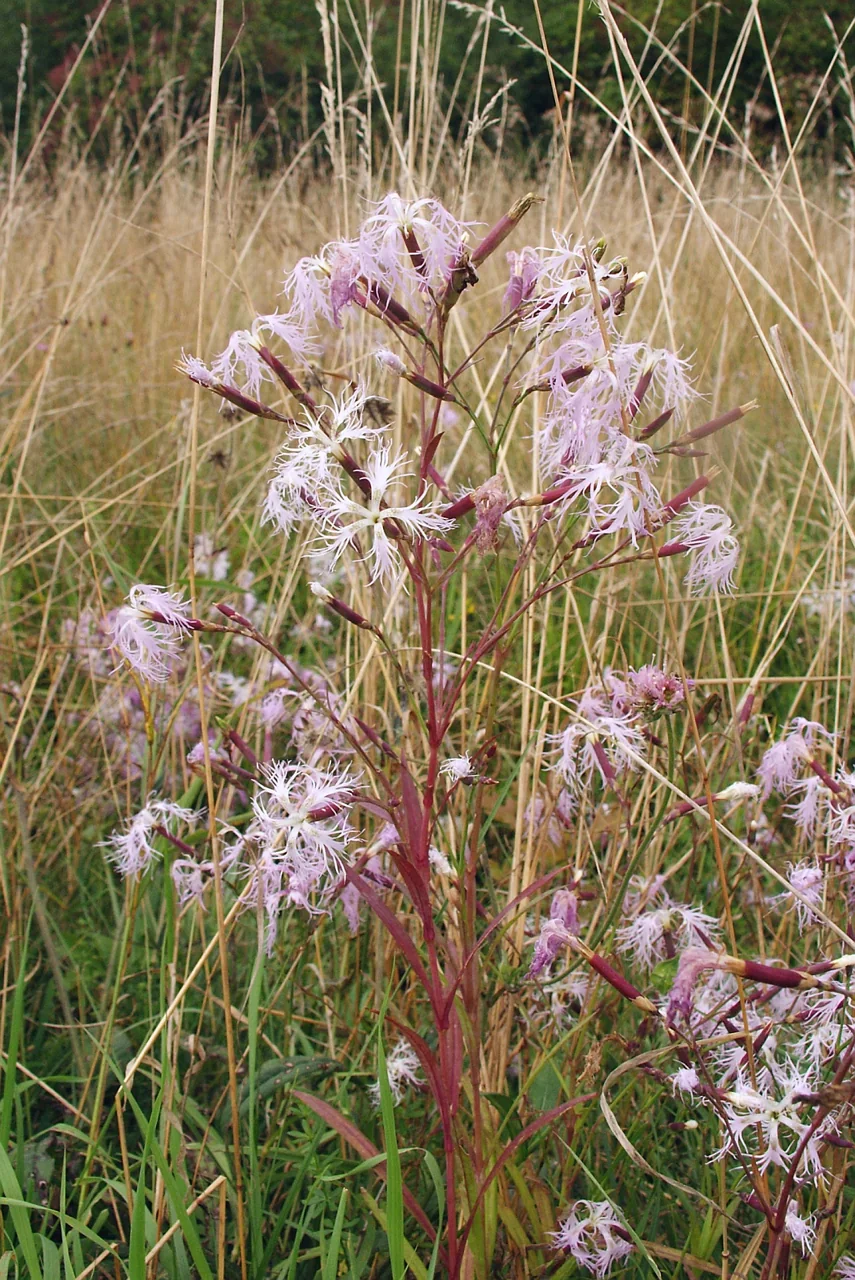
Dianthus superbus in flower.
Bernd Haynold / Wikimedia Commons / CC BY-SA 2.5

Photo details
Resized and converted to WebP. No content edits.
Source: File:Dianthus superbus 140805a.jpg
Reviewed . Source identification, photograph and license reviewed. The image illustrates the named plant; it does not verify dimensions or other plant traits.
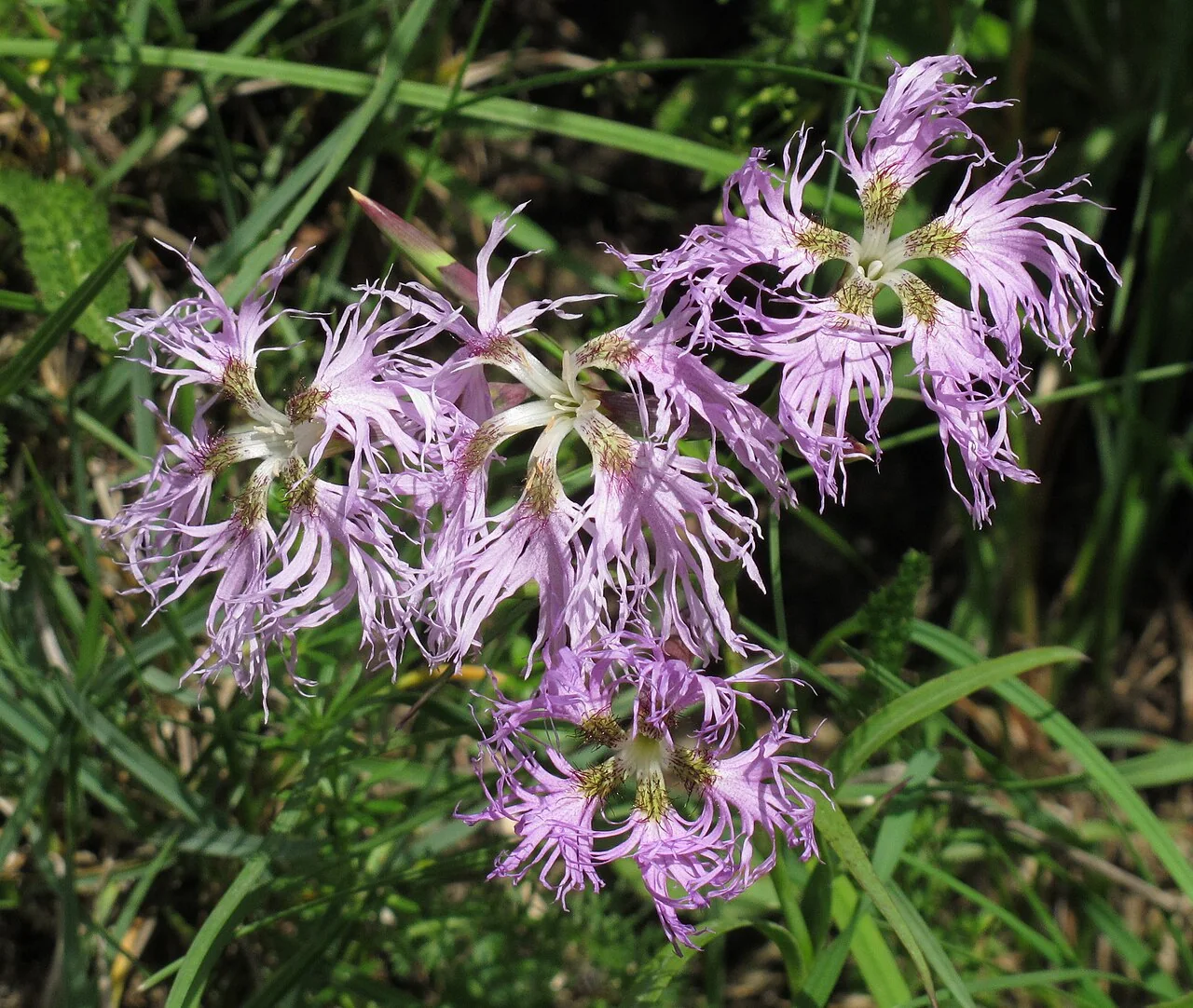
Flowers of Dianthus superbus.
Robert Flogaus-Faust / Wikimedia Commons / CC BY 4.0

Photo details
Resized and converted to WebP. No content edits.
Source: File:Dianthus superbus 2 RF.jpg
Reviewed . Source identification, photograph and license reviewed. The image illustrates the named plant; it does not verify dimensions or other plant traits.
Common names
24 names · 23 languages- EnglishYour language
-
- Fringed Pink[1]
Other languages (22)
- Dutch
-
- Prachtanjer[1]
- French
-
- Oeillet superbe
- Œillet superbe[1]
- Chinese (Simplified)
-
- 瞿麦[1]
- Chinese (Traditional)
-
- 瞿麥[1]
- Czech
-
- hvozdík pyšný[1]
- Danish
-
- Strand-nellike[1]
- Estonian
-
- aasnelk[1]
- Finnish
-
- pulskaneilikka[1]
- German
-
- Prachtnelke[1]
- Hungarian
-
- buglyos szegfű[1]
- Italian
-
- garofano superbo[1]
- Japanese
-
- エゾカワラナデシコ(広義)[1]
- Korean
-
- 꽃술패랭이꽃[1]
- Lithuanian
-
- Puošnusis gvazdikas[1]
- Mongolian
-
- Жавхаалаг Башир[1]
- Norwegian
-
- silkenellik[1]
- Polish
-
- Goździk pyszny[1]
- Russian
-
- Гвоздика пышная[1]
- Slovak
-
- klinček pyšný[1]
- Slovenian
-
- čudoviti klinček[1]
- Swedish
-
- praktnejlika[1]
- Ukrainian
-
- Гвоздика гордовита[1]
Sources & name notes (1)
Names recorded in our plant catalogue and botanical sources, grouped by language. Usage can vary by region.
Numbered references identify names recorded by an external source. Other names are from our plant catalogue.
Community-curated iNaturalist taxonomy; common-name attestation, not an independent botanical determination.
Source records
- Fringed Pink — results[0].names[1]; taxon id 447244; Dianthus superbus.
- pulskaneilikka — results[0].names[2]; taxon id 447244; Dianthus superbus.
- Prachtnelke — results[0].names[3]; taxon id 447244; Dianthus superbus.
- Гвоздика пышная — results[0].names[4]; taxon id 447244; Dianthus superbus.
- Œillet superbe — results[0].names[5]; taxon id 447244; Dianthus superbus.
- hvozdík pyšný — results[0].names[6]; taxon id 447244; Dianthus superbus.
- Strand-nellike — results[0].names[7]; taxon id 447244; Dianthus superbus.
- Prachtanjer — results[0].names[8]; taxon id 447244; Dianthus superbus.
- silkenellik — results[0].names[9]; taxon id 447244; Dianthus superbus.
- エゾカワラナデシコ(広義) — results[0].names[10]; taxon id 447244; Dianthus superbus.
- Puošnusis gvazdikas — results[0].names[11]; taxon id 447244; Dianthus superbus.
- praktnejlika — results[0].names[12]; taxon id 447244; Dianthus superbus.
- 瞿麦 — results[0].names[13]; taxon id 447244; Dianthus superbus.
- 瞿麥 — results[0].names[14]; taxon id 447244; Dianthus superbus.
- 꽃술패랭이꽃 — results[0].names[15]; taxon id 447244; Dianthus superbus.
- Goździk pyszny — results[0].names[16]; taxon id 447244; Dianthus superbus.
- Жавхаалаг Башир — results[0].names[17]; taxon id 447244; Dianthus superbus.
- garofano superbo — results[0].names[18]; taxon id 447244; Dianthus superbus.
- aasnelk — results[0].names[19]; taxon id 447244; Dianthus superbus.
- čudoviti klinček — results[0].names[20]; taxon id 447244; Dianthus superbus.
- Гвоздика гордовита — results[0].names[21]; taxon id 447244; Dianthus superbus.
- buglyos szegfű — results[0].names[22]; taxon id 447244; Dianthus superbus.
- klinček pyšný — results[0].names[23]; taxon id 447244; Dianthus superbus.
General information
Kew's family placement for the genus Dianthus (WCVP v16).
Sources [1]Plant characteristics
Growing conditions
Well-drained, Moist
Sand (light) Loam (medium) Clay (heavy)
Acidic Neutral Alkaline
Full sun, Partial shade
Uses
Flowers, Leaves, Nectar
Fragrant
Description
The leaves, stems, and buds of this plant can be boiled and eaten as 'pot herbs,' and the young plants are also edible. It is reported that the plant contains saponins, but that the leaves themselves are not toxic. This is likely because the saponin content is too low to be harmful. Additionally, children suck on the flowers of this plant to enjoy the sweet, edible nectar.
Harvest
Sources and references
References for the information marked with source numbers on this page.
-
Royal Botanic Gardens, Kew
World Checklist of Vascular Plants, version 16, extracted 4 June 2026
Relevant sections
- Botanical family: WCVP v16, wcvp_names.csv row 773143; name ID 2763744; Dianthus L.. Family column.
- Taxonomy: WCVP v16, wcvp_names.csv row 1374333; name ID 2764999; Dianthus superbus L..
Source checked on .
Source data licence: CC BY 3.0.
-
Catalogue of Life
Catalogue of Life 2026-08-20 — Dianthus superbus
Taxonomic data from World Plants, version 26.05, reproduced in Catalogue of Life 2026-08-20.
Supports: TaxonomyRelevant sections
- Taxonomy: COL 2026-08-20, NameUsage.tsv line 73530, ID 35B5Q: Dianthus superbus L. (accepted).
Source checked on .