Cynara cardunculus
Cardoon
Explore the size, hardiness, soil, light, edible uses and harvest period of Cynara cardunculus.
Plant photos
2 photos · Select to enlarge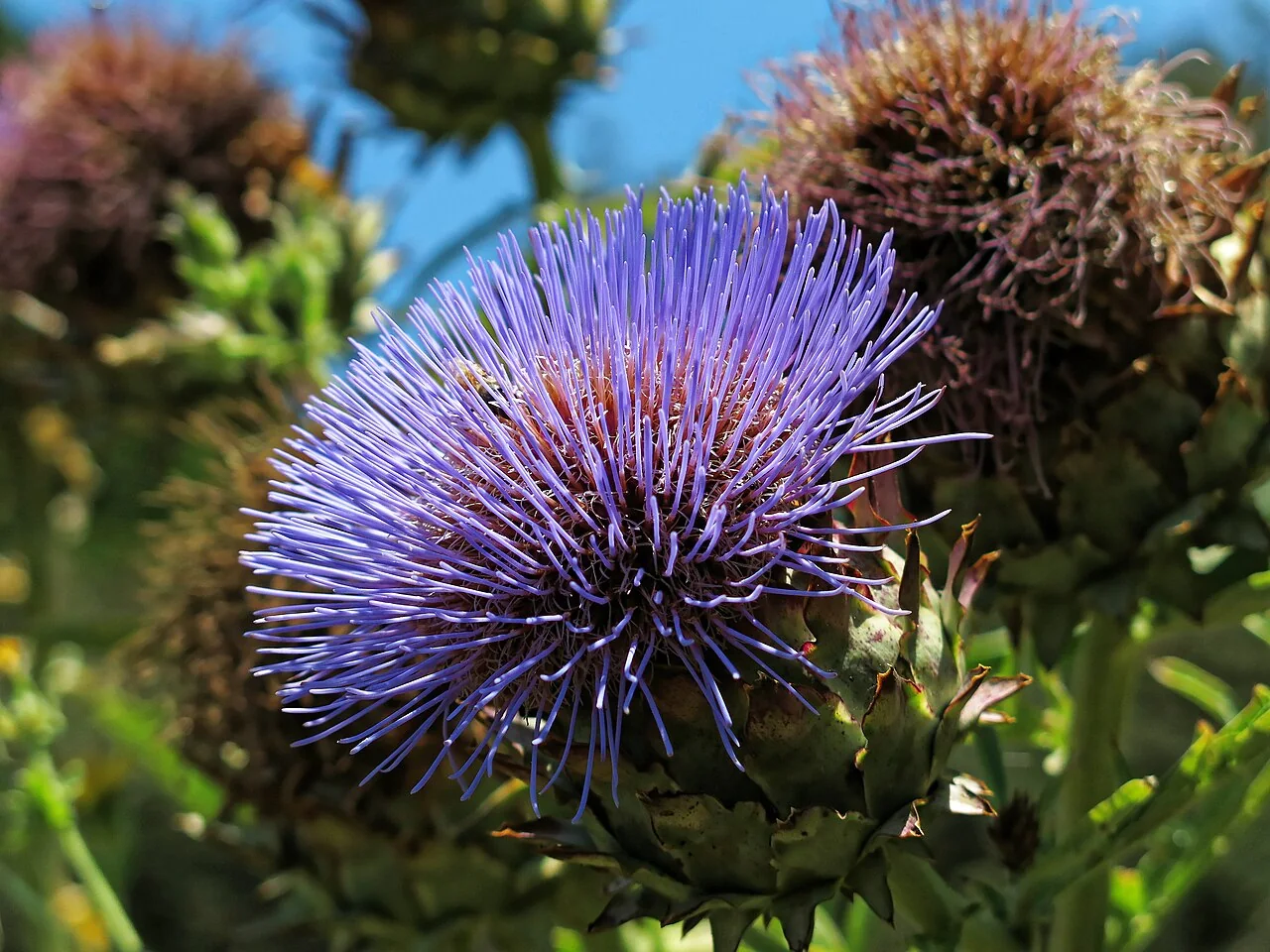
Flowers of Cynara cardunculus.
Burkhard Mücke / Wikimedia Commons / CC BY-SA 4.0

Photo details
Resized and converted to WebP. No content edits.
Source: File:Cynara cardunculus in Edible Schoolyard Berkeley.jpg
Reviewed . Source identification, photograph and license reviewed. The image illustrates the named plant; it does not verify dimensions or other plant traits.
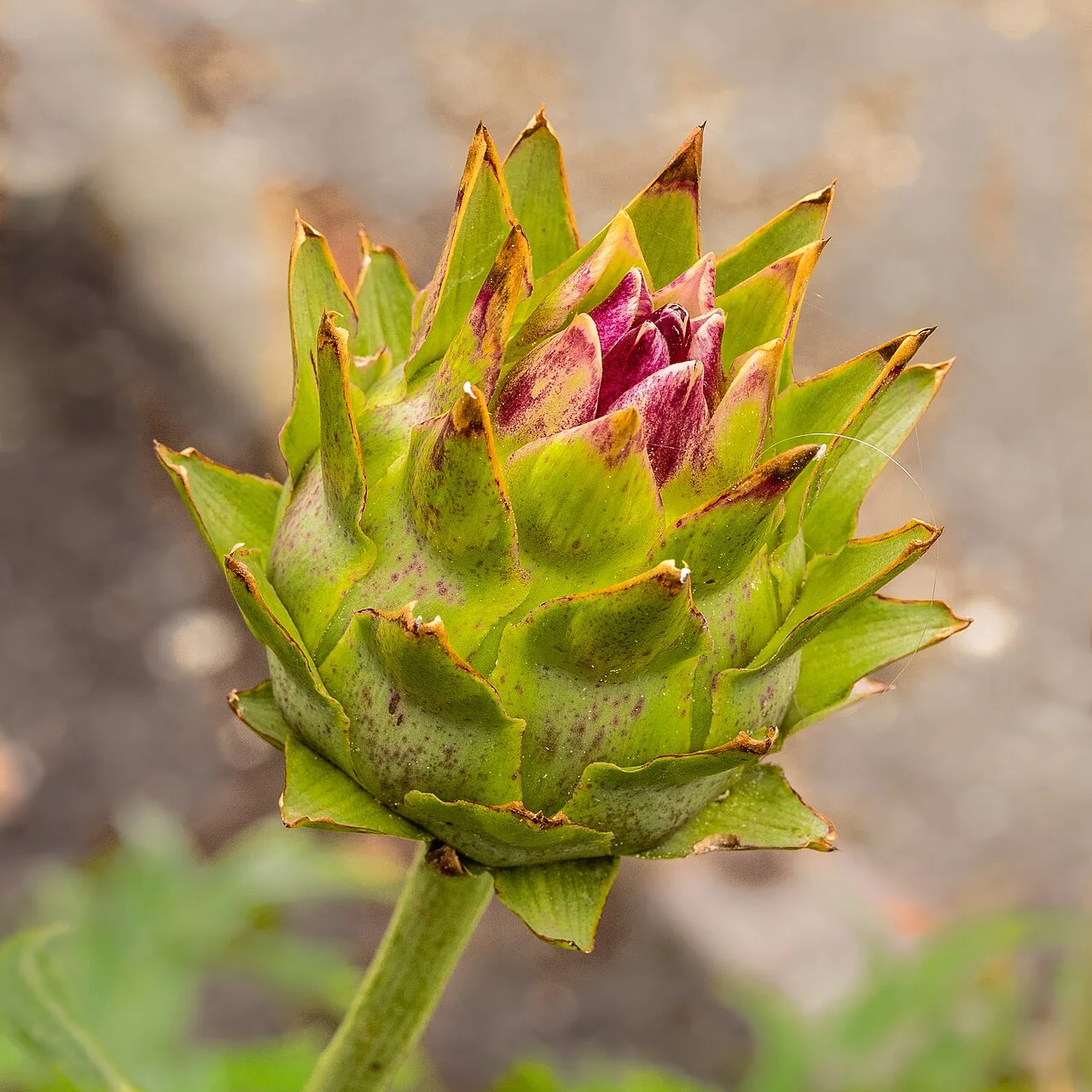
Buds of Cynara cardunculus.
Agnes Monkelbaan / Wikimedia Commons / CC BY-SA 4.0
._16-10-2021_(actm.).jpg)
Photo details
Resized and converted to WebP. No content edits.
Source: File:De Kruidhof Buitenpost. Bloemknop van een kardoen (Cynara cardunculus). 16-10-2021 (actm.).jpg
Reviewed . Source identification, photograph and license reviewed. The image illustrates the named plant; it does not verify dimensions or other plant traits.
Common names
45 names · 33 languagesOther languages (32)
- Dutch
-
- Kardoen[1]
- Basque
-
- Baratze-kardu[1]
- Catalan
-
- Herbacol[1]
- Chinese (Traditional)
-
- 刺苞菜薊[1]
- Croatian
-
- Divlja artičoka[1]
- Czech
-
- artyčok kardový[1]
- Danish
-
- kardon[1]
- Farsi
-
- کنگر فرنگی خاردار[1]
- Finnish
-
- isoartisokka[1]
- German
-
- Artischocke[1]
- Greek
-
- Αγκινάρα[1]
- Hebrew
-
- ארטישוק[1]
- Icelandic
-
- Ætiþistill[1]
- Japanese
-
- カルドン[1]
- Kurdish
-
- Artîşoka spanî[1]
- Lithuanian
-
- Dygusis artišokas[1]
- Manx
-
- Cardoon[1]
- Norwegian
-
- Artisjokk[1]
- Russian
-
- Артишок испанский[1]
- Slovak
-
- artičoka bodliaková[1]
- Slovenian
-
- Artičoka[1]
- Swedish
-
- kardon[1]
- Turkish
-
- yabani enginar[1]
- Ukrainian
-
- Артишок звичайний[1]
- Welsh
-
- Marchysgallen y gerddi[1]
- Zazaki
-
- Kenger[1]
Sources & name notes (1)
Names recorded in our plant catalogue and botanical sources, grouped by language. Usage can vary by region.
Numbered references identify names recorded by an external source. Other names are from our plant catalogue.
Community-curated iNaturalist taxonomy; common-name attestation, not an independent botanical determination.
Source records
- Artichoke Thistle — results[0].names[1]; taxon id 57563; Cynara cardunculus.
- Wild Cardoon — results[0].names[2]; taxon id 57563; Cynara cardunculus.
- cardo de huerta — results[0].names[3]; taxon id 57563; Cynara cardunculus.
- Artichauts sauvages et cultivés — results[0].names[4]; taxon id 57563; Cynara cardunculus.
- Cardo-do-coalho — results[0].names[5]; taxon id 57563; Cynara cardunculus.
- Cardo — results[0].names[6]; taxon id 57563; Cynara cardunculus.
- Alcachofra — results[0].names[7]; taxon id 57563; Cynara cardunculus.
- Cardons et Artichaut — results[0].names[8]; taxon id 57563; Cynara cardunculus.
- Kardoen — results[0].names[9]; taxon id 57563; Cynara cardunculus.
- Cardoon — results[0].names[10]; taxon id 57563; Cynara cardunculus.
- Globe Artichoke — results[0].names[11]; taxon id 57563; Cynara cardunculus.
- Divlja artičoka — results[0].names[12]; taxon id 57563; Cynara cardunculus.
- Ætiþistill — results[0].names[13]; taxon id 57563; Cynara cardunculus.
- Baratze-kardu — results[0].names[14]; taxon id 57563; Cynara cardunculus.
- کنگر فرنگی خاردار — results[0].names[15]; taxon id 57563; Cynara cardunculus.
- Artisjokk — results[0].names[16]; taxon id 57563; Cynara cardunculus.
- Artičoka — results[0].names[17]; taxon id 57563; Cynara cardunculus.
- Marchysgallen y gerddi — results[0].names[18]; taxon id 57563; Cynara cardunculus.
- Αγκινάρα — results[0].names[19]; taxon id 57563; Cynara cardunculus.
- Cardoon — results[0].names[20]; taxon id 57563; Cynara cardunculus.
- Kenger — results[0].names[21]; taxon id 57563; Cynara cardunculus.
- Artîşoka spanî — results[0].names[22]; taxon id 57563; Cynara cardunculus.
- Herbacol — results[0].names[23]; taxon id 57563; Cynara cardunculus.
- artyčok kardový — results[0].names[24]; taxon id 57563; Cynara cardunculus.
- Alcachofa — results[0].names[25]; taxon id 57563; Cynara cardunculus.
- カルドン — results[0].names[26]; taxon id 57563; Cynara cardunculus.
- 刺苞菜蓟 — results[0].names[27]; taxon id 57563; Cynara cardunculus.
- 刺苞蓟 — results[0].names[28]; taxon id 57563; Cynara cardunculus.
- kardon — results[0].names[29]; taxon id 57563; Cynara cardunculus.
- Артишок испанский — results[0].names[30]; taxon id 57563; Cynara cardunculus.
- yabani enginar — results[0].names[31]; taxon id 57563; Cynara cardunculus.
- Carciofo — results[0].names[32]; taxon id 57563; Cynara cardunculus.
- 刺苞菜薊 — results[0].names[33]; taxon id 57563; Cynara cardunculus.
- kardon — results[0].names[34]; taxon id 57563; Cynara cardunculus.
- Karczoch zwyczajny — results[0].names[35]; taxon id 57563; Cynara cardunculus.
- Kard — results[0].names[36]; taxon id 57563; Cynara cardunculus.
- Karczoch hiszpański — results[0].names[37]; taxon id 57563; Cynara cardunculus.
- Артишок звичайний — results[0].names[38]; taxon id 57563; Cynara cardunculus.
- ארטישוק — results[0].names[39]; taxon id 57563; Cynara cardunculus.
- Cardo de Castilla — results[0].names[40]; taxon id 57563; Cynara cardunculus.
- Dygusis artišokas — results[0].names[41]; taxon id 57563; Cynara cardunculus.
- isoartisokka — results[0].names[42]; taxon id 57563; Cynara cardunculus.
- Artischocke — results[0].names[43]; taxon id 57563; Cynara cardunculus.
- artičoka bodliaková — results[0].names[44]; taxon id 57563; Cynara cardunculus.
General information
Plant characteristics
NC State landscape size range; converted from feet and inches. Size varies with site, age and management.
Sources [3]NC State landscape size range; converted from feet and inches. Size varies with site, age and management.
Sources [3]Whole-plant habit and form as described by NC State.
Sources [3]Uses
Fruit, Leaves, Root, Stem, Stems
Dye, Carbon farming
Description
Flower buds can be eaten both raw and cooked and serve as an alternative to artichokes. They are slightly smaller than artichokes and are harvested before the flowers open. The buds are usually cooked, and only the base of each bract and the 'heart' are eaten. The taste is perceived by some people as milder and more pleasant than that of artichokes. Stems can be cooked and used as a substitute for celery. It is advisable to mound the stems while they grow to reduce bitterness. Blanched stems can then be cooked or incorporated into salads. In Italy, raw strips of the stems are dipped in olive oil, though they can be too bitter to eat raw. Young leaves can be eaten raw or cooked, and were once consumed as a salad by the ancient Romans, although they are somewhat bitter. The root of this plant can be cooked like parsnip and has a tender, thick, and flavorful texture. Additionally, the dried flowers can be used as a rennet substitute in making cheese from plant-based milk.
Harvest
Sources and references
References for the information marked with source numbers on this page.
-
Royal Botanic Gardens, Kew
World Checklist of Vascular Plants, version 16, extracted 4 June 2026
Relevant sections
- Botanical family: WCVP v16, wcvp_names.csv row 560388; name ID 3134409; Cynara L.. Family column.
- Taxonomy: WCVP v16, wcvp_names.csv row 837704; name ID 2911920; Cynara cardunculus L..
Source checked on .
Source data licence: CC BY 3.0.
-
Catalogue of Life
Catalogue of Life 2026-08-20 — Cynara cardunculus
Taxonomic data from World Plants, version 26.05, reproduced in Catalogue of Life 2026-08-20.
Supports: TaxonomyRelevant sections
- Taxonomy: COL 2026-08-20, NameUsage.tsv line 2055453, ID 6C6PZ: Cynara cardunculus L. (accepted).
Source checked on .
-
NC State Extension, North Carolina State University
Cynara cardunculus — Extension Gardener Plant Toolbox
Supports: HeightSpreadGrowth rateFoliageGrowth habitLife cycleLightSoil moistureSoil textureSoil pHUSDA hardiness
Relevant sections
- Height: Dimensions > Height; Height: 3 ft. 0 in. - 6 ft. 0 in.
- Spread: Dimensions > Width; Width: 2 ft. 0 in. - 3 ft. 0 in.
- Growth rate: Growth Rate
- Foliage: Woody Plant Leaf Characteristics
- Growth habit: Habit/Form
- Life cycle: Life Cycle
- Light: Light
- Soil moisture: Soil Drainage
- Soil texture: Soil Texture
- Soil pH: Soil pH
- USDA hardiness: USDA Plant Hardiness Zone
Source checked on .