Crocus sativus
Saffron
Explore the size, hardiness, soil, light, edible uses and harvest period of Crocus sativus.
Plant photos
2 photos · Select to enlarge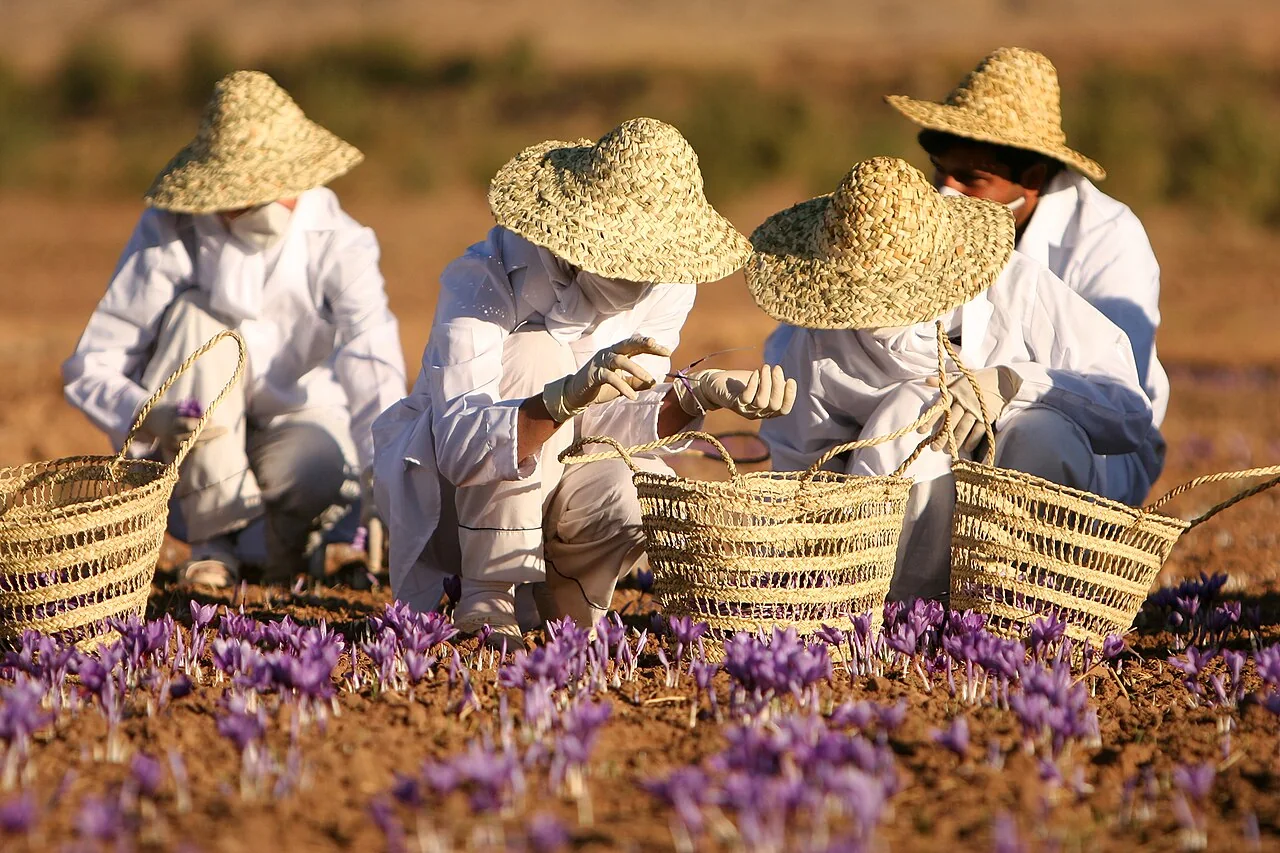
Harvesting Crocus sativus flowers on a saffron farm in Iran.
Safa.daneshvar / Wikimedia Commons / CC BY-SA 3.0

Photo details
Resized and converted to WebP. No content edits.
Source: File:Saffronfarm-860808.jpg
Reviewed . Source identification, photograph and license reviewed. The image illustrates the named plant; it does not verify dimensions or other plant traits.
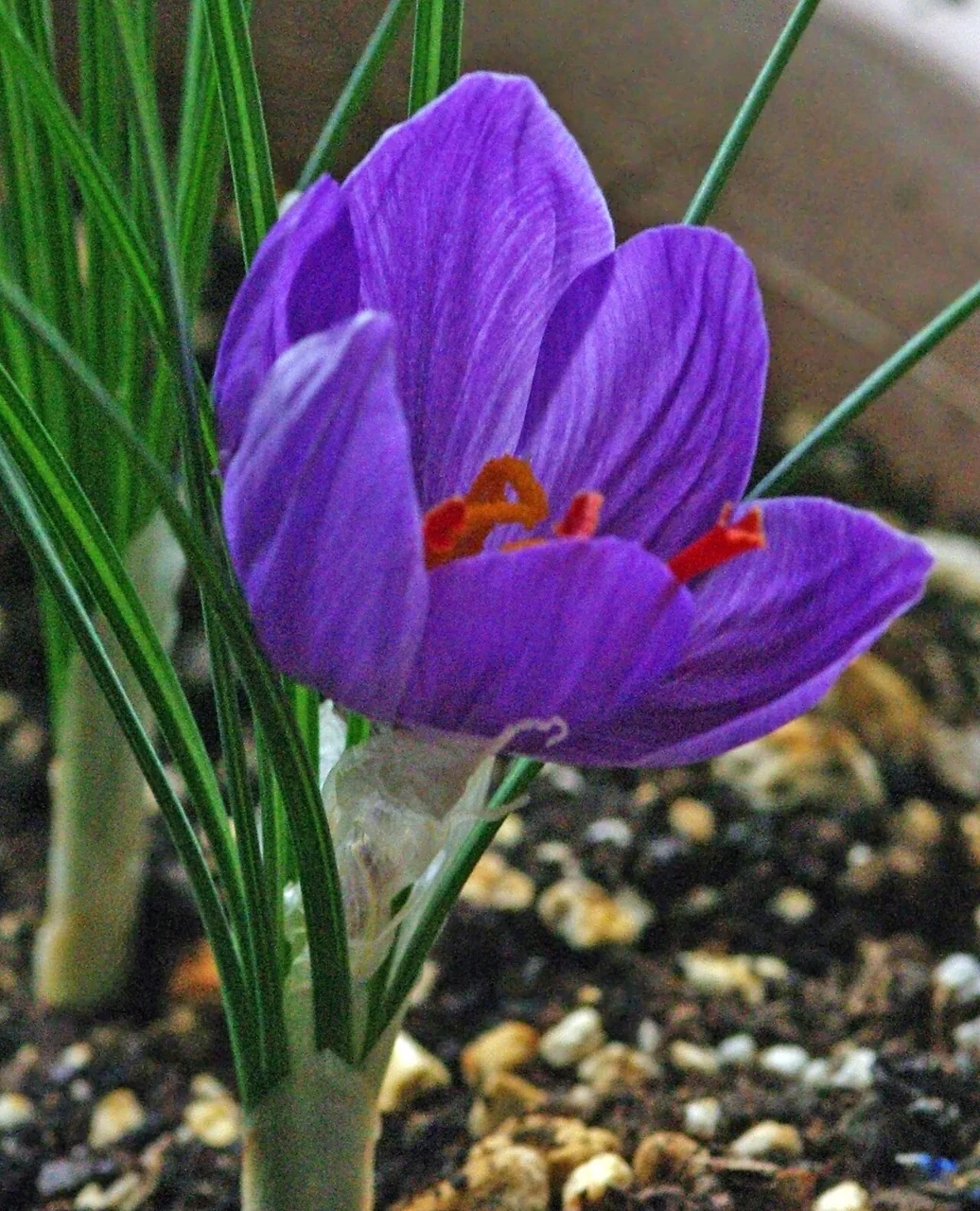
A close view of a Crocus sativus flower.
Zeynel Cebeci / Wikimedia Commons / CC BY-SA 4.0

Photo details
Resized and converted to WebP. No content edits.
Source: File:Crocus sativus - Saffron crocus - Safran 01.JPG
Reviewed . Source identification, photograph and license reviewed. The image illustrates the named plant; it does not verify dimensions or other plant traits.
Common names
28 names · 20 languagesOther languages (19)
- Dutch
-
- Saffraan
- Saffraankrokus[1]
- Catalan
-
- safrà[1]
- Czech
-
- šafrán setý[1]
- Finnish
-
- maustesahrami[1]
- German
-
- Safran[1]
- Hungarian
-
- Jóféle sáfrány[1]
- Icelandic
-
- Saffrankrókus[1]
- Italian
-
- Zafferano vero[1]
- Polish
-
- Szafran uprawny[1]
- Russian
-
- Шафран посевной[1]
- Sanskrit
-
- Kunkuma[1]
- Sinhala
-
- කුංකුම[1]
- Slovak
-
- šafran siaty[1]
- Spanish
-
- azafrán[1]
- Turkish
-
- safran[1]
Sources & name notes (1)
Names recorded in our plant catalogue and botanical sources, grouped by language. Usage can vary by region.
Numbered references identify names recorded by an external source. Other names are from our plant catalogue.
Community-curated iNaturalist taxonomy; common-name attestation, not an independent botanical determination.
Source records
- Saffron Crocus — results[0].names[1]; taxon id 118933; Crocus sativus.
- Crocus à safran — results[0].names[2]; taxon id 118933; Crocus sativus.
- Safran cultivé — results[0].names[3]; taxon id 118933; Crocus sativus.
- Saffrankrókus — results[0].names[4]; taxon id 118933; Crocus sativus.
- Шафран посевной — results[0].names[5]; taxon id 118933; Crocus sativus.
- šafrán setý — results[0].names[6]; taxon id 118933; Crocus sativus.
- サフラン — results[0].names[7]; taxon id 118933; Crocus sativus.
- කුංකුම — results[0].names[8]; taxon id 118933; Crocus sativus.
- Safran — results[0].names[9]; taxon id 118933; Crocus sativus.
- safrà — results[0].names[10]; taxon id 118933; Crocus sativus.
- azafrán — results[0].names[11]; taxon id 118933; Crocus sativus.
- 番紅花 — results[0].names[12]; taxon id 118933; Crocus sativus.
- 番红花 — results[0].names[13]; taxon id 118933; Crocus sativus.
- safran — results[0].names[14]; taxon id 118933; Crocus sativus.
- Jóféle sáfrány — results[0].names[15]; taxon id 118933; Crocus sativus.
- saffron — results[0].names[16]; taxon id 118933; Crocus sativus.
- Zafferano vero — results[0].names[17]; taxon id 118933; Crocus sativus.
- Szafran uprawny — results[0].names[18]; taxon id 118933; Crocus sativus.
- 藏红花 — results[0].names[19]; taxon id 118933; Crocus sativus.
- 西红花 — results[0].names[20]; taxon id 118933; Crocus sativus.
- 咱夫藍 — results[0].names[21]; taxon id 118933; Crocus sativus.
- maustesahrami — results[0].names[22]; taxon id 118933; Crocus sativus.
- šafran siaty — results[0].names[23]; taxon id 118933; Crocus sativus.
- Kunkuma — results[0].names[24]; taxon id 118933; Crocus sativus.
- 藏紅花 — results[0].names[25]; taxon id 118933; Crocus sativus.
- Saffraankrokus — results[0].names[26]; taxon id 118933; Crocus sativus.
General information
Plant characteristics
NC State landscape size range; converted from feet and inches. Size varies with site, age and management.
Sources [3]NC State landscape size range; converted from feet and inches. Size varies with site, age and management.
Sources [3]Growing conditions
USDA zones listed by NC State; winter survival does not establish reliable cropping.
Sources [3]Well-drained, Occasionally Dry
Moisture and drainage conditions listed by NC State.
Sources [3]Acidic Neutral Alkaline
Uses
Root, Condiment, Tea
Dye, Fragrant
Description
The flower styles of saffron are often used as flavorings and yellow colorants in various foods, including bread, soups, sauces, rice, and pudding. They are an essential ingredient in traditional dishes such as paella, bouillabaisse, risotto Milanese, and various Italian dishes. These styles contain a lot of riboflavin and are soluble in water. However, the yield per plant is low: approximately 4,000 stigmas are needed to produce 25 grams of saffron. Saffron is the most expensive spice in the world, and it takes 150,000 flowers and 400 hours of work to obtain 1 kilogram of dried saffron. About 25 kilograms of saffron can be harvested from one hectare of plants. Although only small amounts of saffron are needed due to its intense flavor and color, it is often mixed with cheaper alternatives such as marigold and safflower. The flower styles are also used as a tea substitute. The root of the plant is edible after cooking, but the tubers are toxic to young animals, so care should be taken.
Harvest
Sources and references
References for the information marked with source numbers on this page.
-
Royal Botanic Gardens, Kew
World Checklist of Vascular Plants, version 16, extracted 4 June 2026
Relevant sections
- Botanical family: WCVP v16, wcvp_names.csv row 1194767; name ID 327117; Crocus L.. Family column.
- Taxonomy: WCVP v16, wcvp_names.csv row 1192824; name ID 327454; Crocus sativus L..
Source checked on .
Source data licence: CC BY 3.0.
-
Catalogue of Life
Catalogue of Life 2026-08-20 — Crocus sativus
Taxonomic data from WCVP, version 16.0, reproduced in Catalogue of Life 2026-08-20. This shares the Kew WCVP evidence base cited on this page.
Supports: TaxonomyRelevant sections
- Taxonomy: COL 2026-08-20, NameUsage.tsv line 5406107, ID ZL2V: Crocus sativus L. (accepted).
Source checked on .
-
NC State Extension, North Carolina State University
Crocus sativus — Extension Gardener Plant Toolbox
Relevant sections
- Height: Dimensions > Height; Height: 0 ft. 6 in. - 0 ft. 10 in.
- Spread: Dimensions > Width; Width: 0 ft. 2 in. - 0 ft. 4 in.
- Growth rate: Growth Rate
- Growth habit: Habit/Form
- Life cycle: Life Cycle
- Light: Light
- Soil moisture: Soil Drainage
- Soil texture: Soil Texture
- USDA hardiness: USDA Plant Hardiness Zone
Source checked on .