Chrysosplenium oppositifolium
Golden Saxifrage (opposite-leaved)
Explore the size, hardiness, soil, light, edible uses and harvest period of Chrysosplenium oppositifolium.
Plant photos
2 photos · Select to enlarge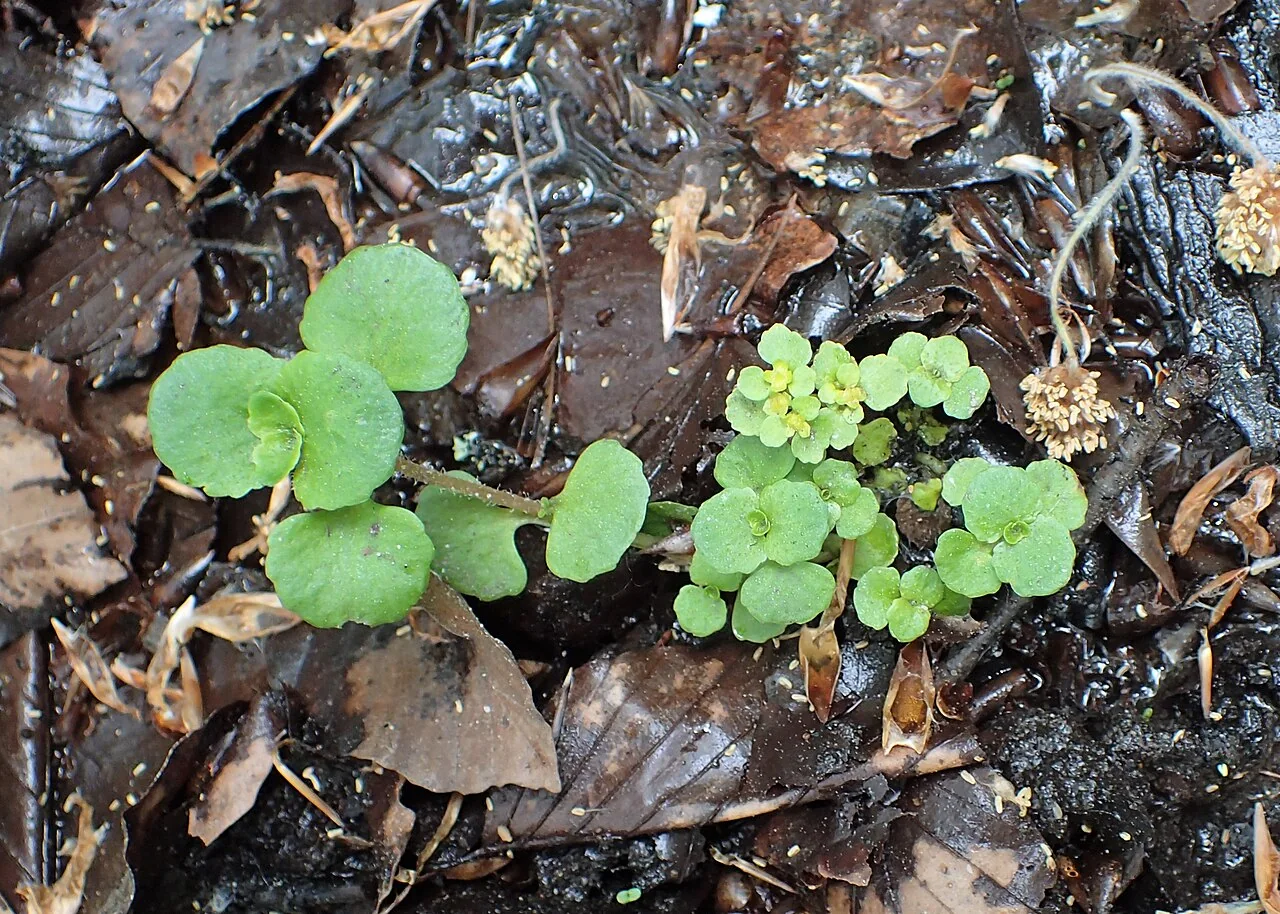
The growth habit of Chrysosplenium oppositifolium.
Krzysztof Ziarnek, Kenraiz / Wikimedia Commons / CC BY-SA 4.0

Photo details
Resized and converted to WebP. No content edits.
Source: File:Chrysosplenium oppositifolium kz23.jpg
Reviewed . Source identification, photograph and license reviewed. The image illustrates the named plant; it does not verify dimensions or other plant traits.
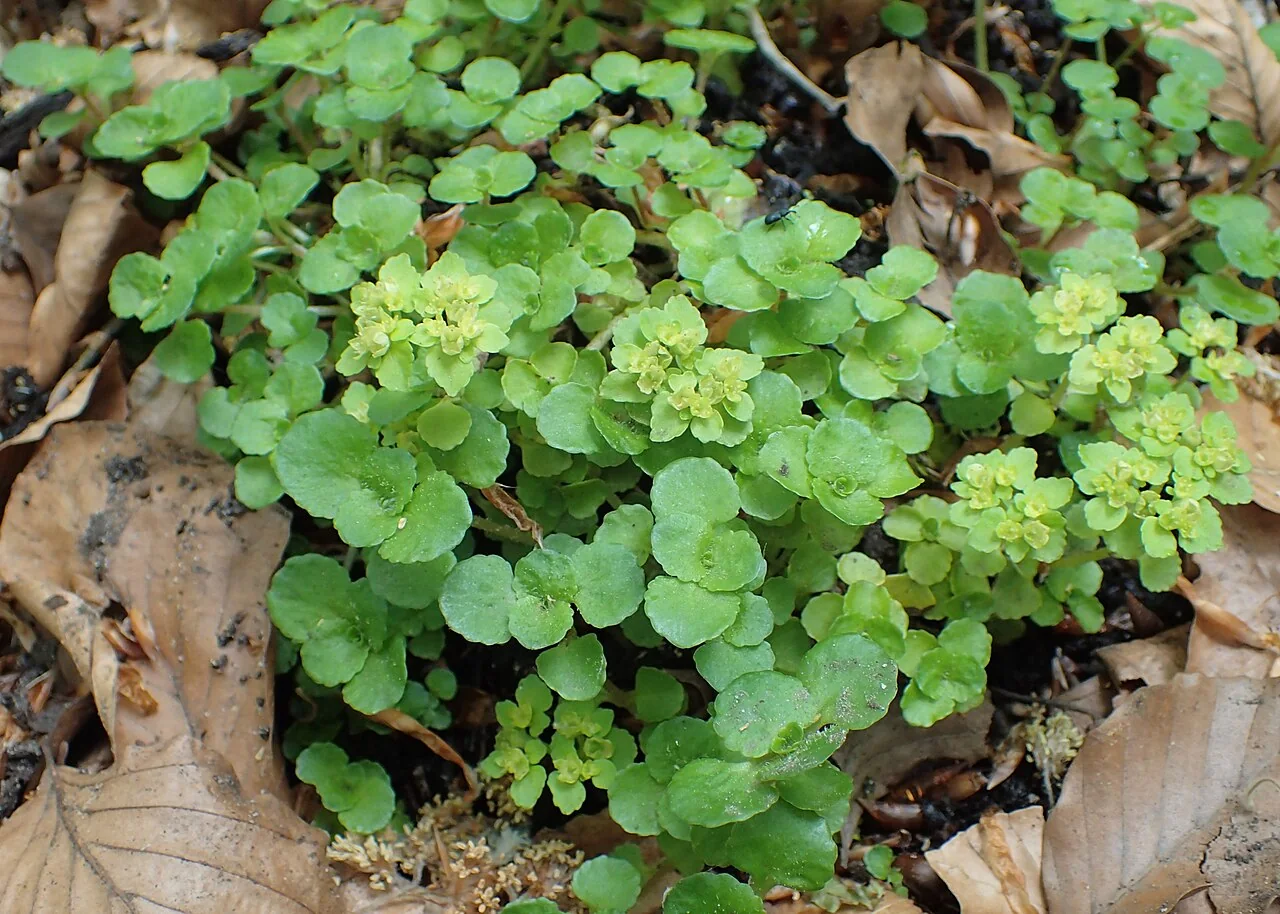
Chrysosplenium oppositifolium in flower.
Krzysztof Ziarnek, Kenraiz / Wikimedia Commons / CC BY-SA 4.0

Photo details
Resized and converted to WebP. No content edits.
Source: File:Chrysosplenium oppositifolium kz24.jpg
Reviewed . Source identification, photograph and license reviewed. The image illustrates the named plant; it does not verify dimensions or other plant traits.
Common names
20 names · 18 languagesOther languages (17)
- Dutch
-
- Paarbladig goudveil[1]
- French
-
- Dorine à feuilles opposées[1]
- Catalan
-
- Crisospleni[1]
- Chinese (Simplified)
-
- 对叶金腰[1]
- Czech
-
- mokrýš vstřícnolistý[1]
- Danish
-
- Småbladet milturt[1]
- Finnish
-
- lännenlinnunsilmä[1]
- German
-
- Gegenblättriges Milzkraut[1]
- Irish
-
- Glóiris[1]
- Norwegian
-
- kystmaigull[1]
- Polish
-
- Śledziennica naprzeciwlistna[1]
- Russian
-
- Селезёночник супротивнолистный[1]
- Slovak
-
- slezinovka protistojnolistá[1]
- Slovenian
-
- Nasprotnolistni vraničnik[1]
- Spanish
-
- hepática dorada[1]
- Swedish
-
- kustgullpudra[1]
- Welsh
-
- Eglyn Cyferbynddail[1]
Sources & name notes (1)
Names recorded in our plant catalogue and botanical sources, grouped by language. Usage can vary by region.
Numbered references identify names recorded by an external source. Other names are from our plant catalogue.
Community-curated iNaturalist taxonomy; common-name attestation, not an independent botanical determination.
Source records
- Opposite-leaved Golden-saxifrage — results[0].names[1]; taxon id 69626; Chrysosplenium oppositifolium.
- Buttered-eggs — results[0].names[2]; taxon id 69626; Chrysosplenium oppositifolium.
- Crisospleni — results[0].names[3]; taxon id 69626; Chrysosplenium oppositifolium.
- Gegenblättriges Milzkraut — results[0].names[4]; taxon id 69626; Chrysosplenium oppositifolium.
- Dorine à feuilles opposées — results[0].names[5]; taxon id 69626; Chrysosplenium oppositifolium.
- Nasprotnolistni vraničnik — results[0].names[6]; taxon id 69626; Chrysosplenium oppositifolium.
- mokrýš vstřícnolistý — results[0].names[7]; taxon id 69626; Chrysosplenium oppositifolium.
- Småbladet milturt — results[0].names[8]; taxon id 69626; Chrysosplenium oppositifolium.
- Paarbladig goudveil — results[0].names[9]; taxon id 69626; Chrysosplenium oppositifolium.
- kystmaigull — results[0].names[10]; taxon id 69626; Chrysosplenium oppositifolium.
- lännenlinnunsilmä — results[0].names[11]; taxon id 69626; Chrysosplenium oppositifolium.
- kustgullpudra — results[0].names[12]; taxon id 69626; Chrysosplenium oppositifolium.
- Селезёночник супротивнолистный — results[0].names[13]; taxon id 69626; Chrysosplenium oppositifolium.
- Glóiris — results[0].names[14]; taxon id 69626; Chrysosplenium oppositifolium.
- hepática dorada — results[0].names[15]; taxon id 69626; Chrysosplenium oppositifolium.
- Śledziennica naprzeciwlistna — results[0].names[16]; taxon id 69626; Chrysosplenium oppositifolium.
- Eglyn Cyferbynddail — results[0].names[17]; taxon id 69626; Chrysosplenium oppositifolium.
- slezinovka protistojnolistá — results[0].names[18]; taxon id 69626; Chrysosplenium oppositifolium.
- 对叶金腰 — results[0].names[19]; taxon id 69626; Chrysosplenium oppositifolium.
General information
Accepted in the cited Kew taxonomic treatment.
Sources [1]Kew's family placement for the genus Chrysosplenium (WCVP v16).
Sources [1]Plant characteristics
Growing conditions
Moist, Wet
Sand (light) Loam (medium) Clay (heavy)
Acidic Neutral Alkaline
Partial shade, Full sun
Uses
Leaves
Ground cover
Description
Leaves can be eaten both raw and cooked and are often added to salads and soups. The leaves of this plant are quite small in size and have a distinct bitter taste, especially in warm weather.
Harvest
Sources and references
References for the information marked with source numbers on this page.
-
Royal Botanic Gardens, Kew
World Checklist of Vascular Plants, version 16, extracted 4 June 2026
Relevant sections
- Botanical family: WCVP v16, wcvp_names.csv row 766982; name ID 2720056; Chrysosplenium L.. Family column.
- Taxonomy: WCVP v16, wcvp_names.csv row 1346277; name ID 2720223; Chrysosplenium oppositifolium L..
Source checked on .
Source data licence: CC BY 3.0.