Castanea mollissima
Chinese Chestnut
Explore the size, hardiness, soil, light, edible uses and harvest period of Castanea mollissima.
Plant photos
2 photos · Select to enlarge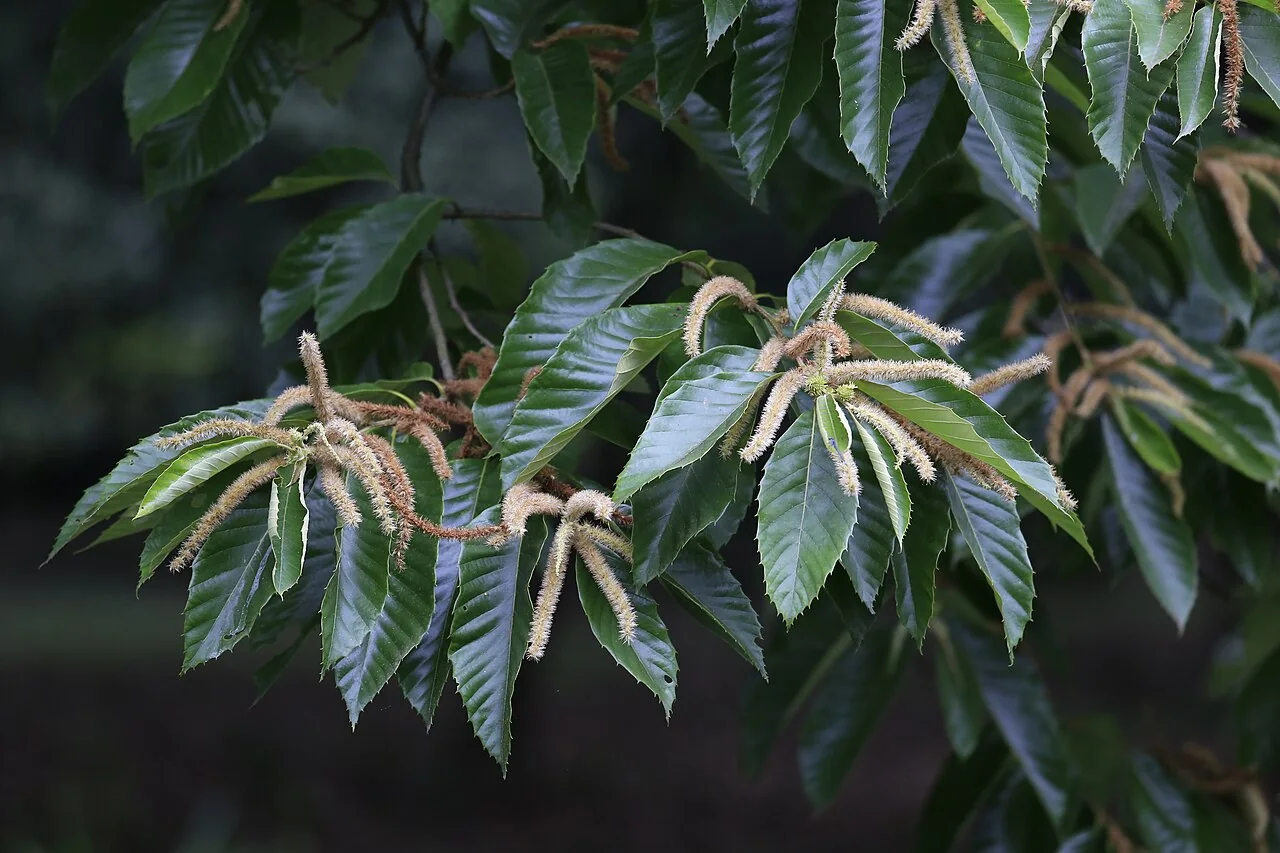
Catkins of Castanea mollissima.
Zhangzhugang / Wikimedia Commons / CC BY-SA 4.0

Photo details
Resized and converted to WebP. No content edits.
Source: File:Castanea mollissima, Hangzhou Botanical Garden 2018.06.03 15-39-04.jpg
Reviewed . Source identification, photograph and license reviewed. The image illustrates the named plant; it does not verify dimensions or other plant traits.
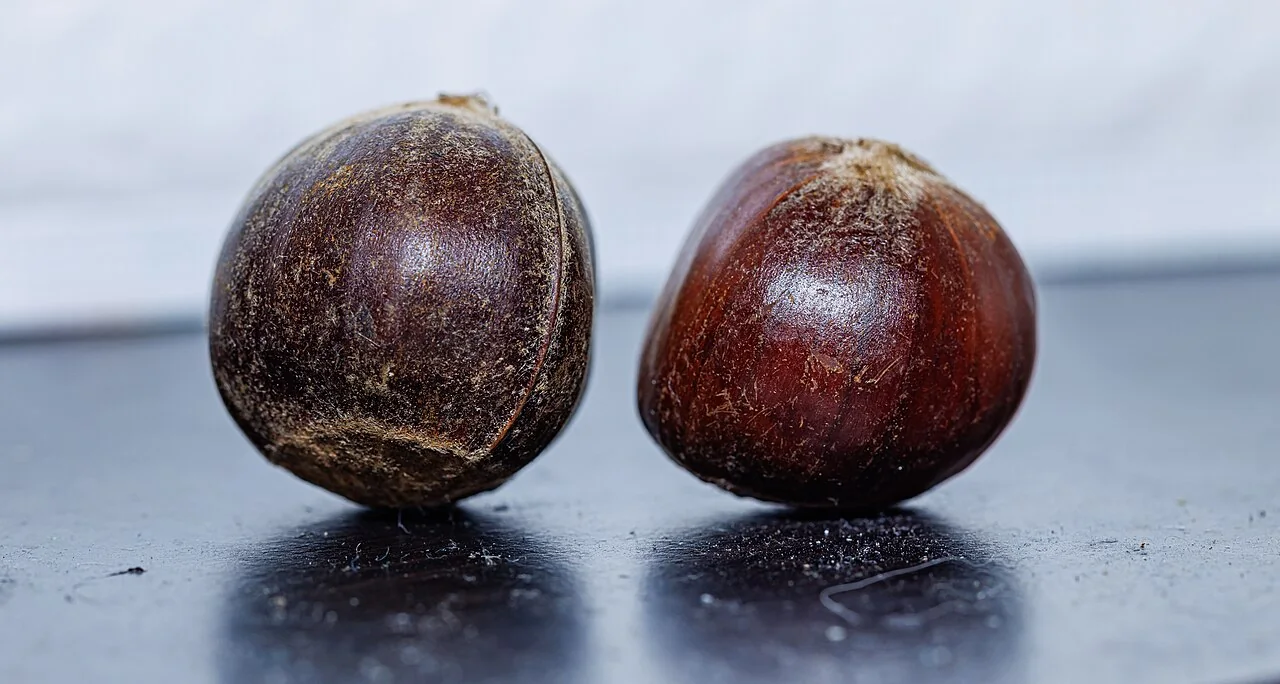
Fruit of Castanea mollissima.
Dinkun Chen / Wikimedia Commons / CC BY-SA 4.0

Photo details
Resized and converted to WebP. No content edits.
Source: File:Castanea mollissima in China.jpg
Reviewed . Source identification, photograph and license reviewed. The image illustrates the named plant; it does not verify dimensions or other plant traits.
Common names
20 names · 15 languagesOther languages (14)
Sources & name notes (2)
Names recorded in our plant catalogue and botanical sources, grouped by language. Usage can vary by region.
Numbered references identify names recorded by an external source. Other names are from our plant catalogue.
Common names from World Plants, version 26.05, reproduced in Catalogue of Life 2026-08-20. License: CC BY.
Source records
- Chinese chestnut — VernacularName.tsv, line 154480; taxon RNTN.
Community-curated iNaturalist taxonomy; common-name attestation, not an independent botanical determination.
Source records
- Chinese chestnut — results[0].names[1]; taxon id 49192; Castanea mollissima.
- 板栗 — results[0].names[2]; taxon id 49192; Castanea mollissima.
- kaštanovník měkoučký — results[0].names[3]; taxon id 49192; Castanea mollissima.
- Chinesische Kastanie — results[0].names[4]; taxon id 49192; Castanea mollissima.
- シナグリ — results[0].names[5]; taxon id 49192; Castanea mollissima.
- 板栗 — results[0].names[6]; taxon id 49192; Castanea mollissima.
- Каштан мягчайший — results[0].names[7]; taxon id 49192; Castanea mollissima.
- 天津甘栗 — results[0].names[8]; taxon id 49192; Castanea mollissima.
- 栗 — results[0].names[9]; taxon id 49192; Castanea mollissima.
- シイグリ — results[0].names[10]; taxon id 49192; Castanea mollissima.
- チュウゴクグリ — results[0].names[11]; taxon id 49192; Castanea mollissima.
- kínai gesztenye — results[0].names[12]; taxon id 49192; Castanea mollissima.
- Çin Kestanesi — results[0].names[13]; taxon id 49192; Castanea mollissima.
- kiinankastanja — results[0].names[14]; taxon id 49192; Castanea mollissima.
- Kasztan chiński — results[0].names[15]; taxon id 49192; Castanea mollissima.
- gaštan najmäkší — results[0].names[16]; taxon id 49192; Castanea mollissima.
- Weichkastanie — results[0].names[17]; taxon id 49192; Castanea mollissima.
- 약밤나무 — results[0].names[18]; taxon id 49192; Castanea mollissima.
General information
Plant characteristics
NC State landscape size range; converted from feet and inches. Size varies with site, age and management.
Sources [3]NC State landscape size range; converted from feet and inches. Size varies with site, age and management.
Sources [3]Uses
Seed
Wood
Description
Seeds can be eaten both raw and cooked. When eaten raw, there is often a noticeable contraction, especially if the fleshy inner skin is not removed. By cooking them, and especially by roasting them, the seeds become much sweeter and acquire a floral texture. At this point, they are an excellent source of nutrition and can serve as a main ingredient in a meal, similar to potatoes or grains. The outer shell of the seeds is easy to remove. Seeds contain little fat and oil but are rich in carbohydrates.
Harvest
Sources and references
References for the information marked with source numbers on this page.
-
Royal Botanic Gardens, Kew
World Checklist of Vascular Plants, version 16, extracted 4 June 2026
Relevant sections
- Botanical family: WCVP v16, wcvp_names.csv row 975697; name ID 34916; Castanea Daubenton. Family column.
- Taxonomy: WCVP v16, wcvp_names.csv row 975776; name ID 35016; Castanea mollissima Blume.
Source checked on .
Source data licence: CC BY 3.0.
-
Catalogue of Life
Catalogue of Life 2026-08-20 — Castanea mollissima
Taxonomic data from World Plants, version 26.05, reproduced in Catalogue of Life 2026-08-20.
Supports: TaxonomyRelevant sections
- Taxonomy: COL 2026-08-20, NameUsage.tsv line 5135357, ID RNTN: Castanea mollissima Blume (accepted).
Source checked on .
-
NC State Extension, North Carolina State University
Castanea mollissima — Extension Gardener Plant Toolbox
Supports: Crown shapeHeightSpreadGrowth rateFoliageGrowth habitLightSoil moistureSoil textureSoil pHUSDA hardiness
Relevant sections
- Crown shape: Description: crown architecture
- Height: Dimensions > Height; Height: 40 ft. 0 in. - 60 ft. 0 in.
- Spread: Dimensions > Width; Width: 40 ft. 0 in. - 60 ft. 0 in.
- Growth rate: Growth Rate
- Foliage: Woody Plant Leaf Characteristics
- Growth habit: Habit/Form
- Light: Light
- Soil moisture: Soil Drainage
- Soil texture: Soil Texture
- Soil pH: Soil pH
- USDA hardiness: USDA Plant Hardiness Zone
Source checked on .