Carum carvi
Caraway
Explore the size, hardiness, soil, light, edible uses and harvest period of Carum carvi.
Plant photos
2 photos · Select to enlarge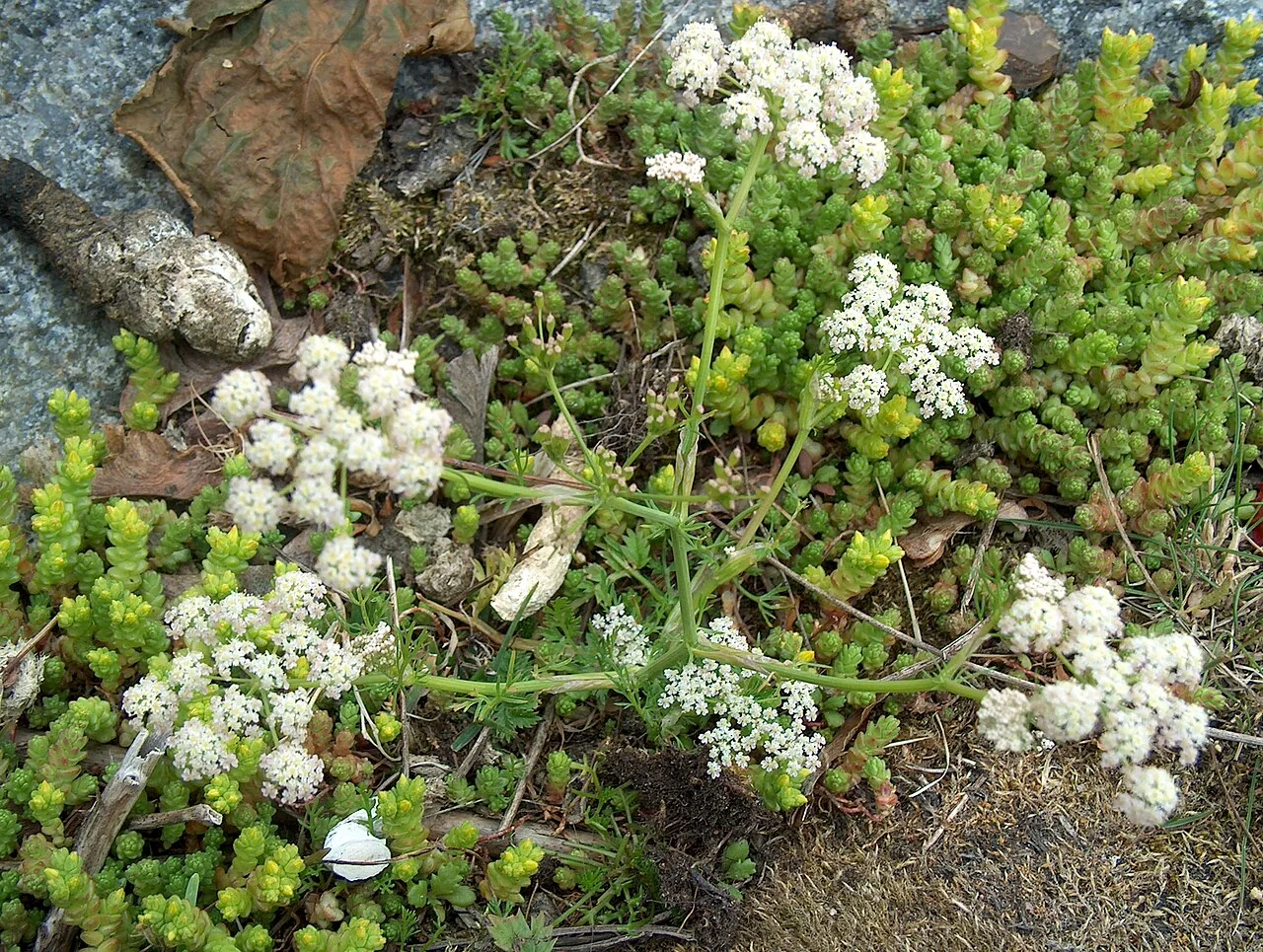
Carum carvi in flower.
Anneli Salo / Wikimedia Commons / CC BY-SA 3.0

Photo details
Resized and converted to WebP. No content edits.
Source: File:Kumina Carum carvi H5207 VI08 C.jpg
Reviewed . Source identification, photograph and license reviewed. The image illustrates the named plant; it does not verify dimensions or other plant traits.
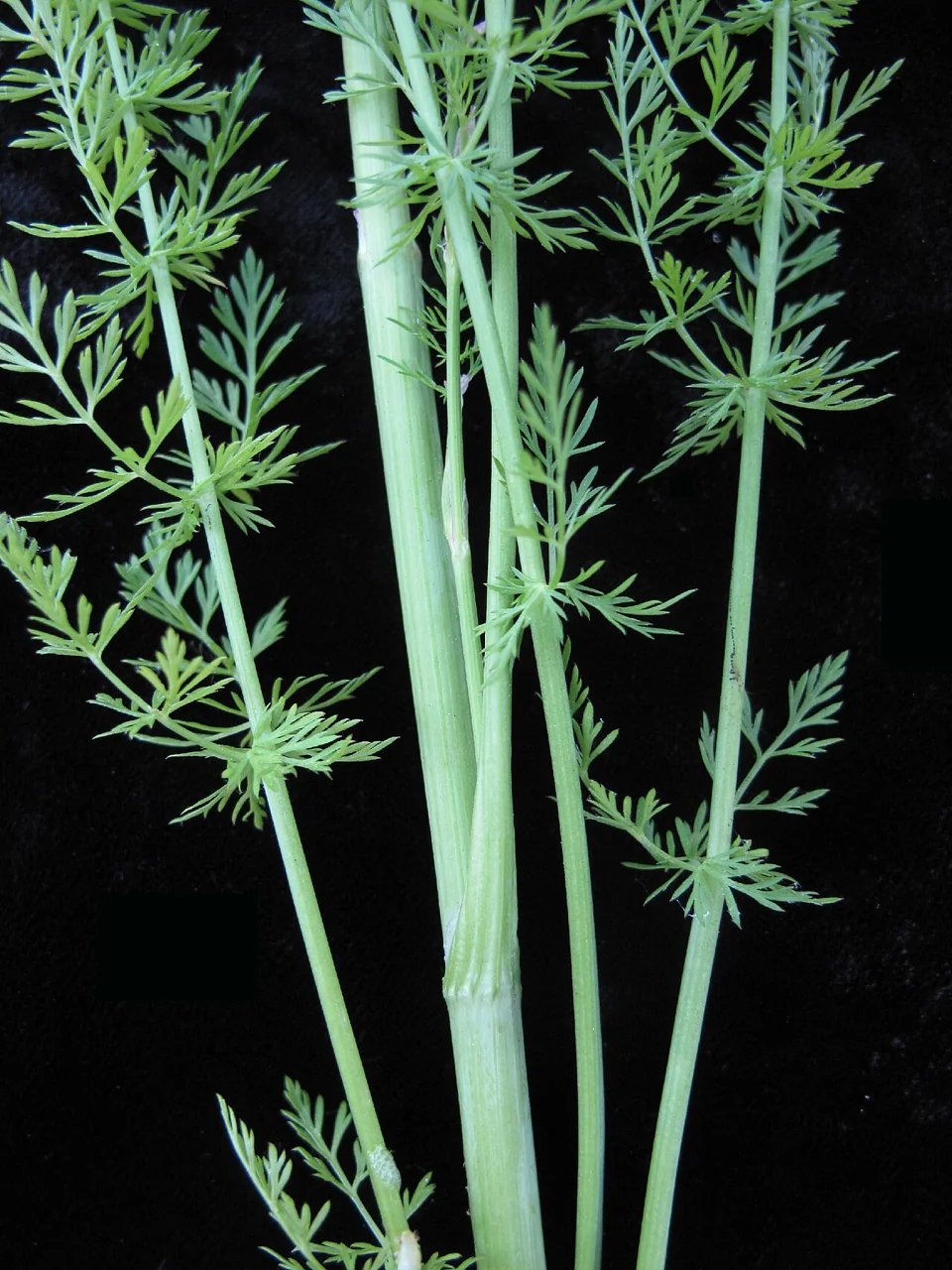
Stems and leaves of Carum carvi.
Ayotte, Gilles, 1948- / Wikimedia Commons / CC BY-SA 4.0

Photo details
Resized and converted to WebP. No content edits.
Source: File:Carum carvi 15-p.bot-carum.carvi-33.jpg
Reviewed . Source identification, photograph and license reviewed. The image illustrates the named plant; it does not verify dimensions or other plant traits.
Common names
49 names · 39 languagesOther languages (38)
- Dutch
-
- Karwij[2]
- French
-
- Carvi
- carvi commun[2]
- Arabic
-
- كروياء[2]
- Armenian
-
- Քեմոն սովորական[2]
- Basque
-
- Txarpoil[2]
- Belarusian
-
- Кмен звычайны[2]
- Burmese
-
- ကရဝေး[2]
- Catalan
-
- comí de prat[2]
- Chinese (Simplified)
-
- 葛缕子[2]
- Chinese (Traditional)
-
- 葛縷子[2]
- Croatian
-
- Kim[2]
- Czech
-
- kmín kořenný[2]
- Danish
-
- Kommen[2]
- Estonian
-
- harilik köömen[2]
- Faroese
-
- donsk kumman[2]
- Galician
-
- Alcaravea[2]
- Greek
-
- Άγριο κύμινο[2]
- Icelandic
-
- Kúmen[2]
- Indonesian
-
- Jintan[2]
- Latvian
-
- Pļavas ķimene[2]
- Lithuanian
-
- Paprastasis kmynas[2]
- Mongolian
-
- Эгэл гоньд[2]
- Norwegian
-
- karve[2]
- Polish
-
- Kminek zwyczajny[2]
- Portuguese
-
- Alcaravia[2]
- Russian
-
- Тмин обыкновенный[2]
- Slovak
-
- rasca lúčna[2]
- Slovenian
-
- navadna kumina[2]
- Spanish
-
- Alcaravea[2]
- Telugu
-
- కరం కర్వె[2]
- Thai
-
- เทียนตากบ[2]
- Ukrainian
-
- Кмин звичайний[2]
Sources & name notes (2)
Names recorded in our plant catalogue and botanical sources, grouped by language. Usage can vary by region.
Numbered references identify names recorded by an external source. Other names are from our plant catalogue.
Common names from World Plants, version 26.05, reproduced in Catalogue of Life 2026-08-20. License: CC BY.
Source records
- Caraway (EN) — VernacularName.tsv, line 138643; taxon RHGC.
- Wiesen-Kümmel (DE) — VernacularName.tsv, line 138644; taxon RHGC.
Community-curated iNaturalist taxonomy; common-name attestation, not an independent botanical determination.
Source records
- Caraway — results[0].names[0]; taxon id 160162; Carum carvi.
- carvi commun — results[0].names[3]; taxon id 160162; Carum carvi.
- Wiesen-Kümmel — results[0].names[4]; taxon id 160162; Carum carvi.
- Alcaravea — results[0].names[5]; taxon id 160162; Carum carvi.
- kmín kořenný — results[0].names[6]; taxon id 160162; Carum carvi.
- Kümmel — results[0].names[7]; taxon id 160162; Carum carvi.
- Fűszerkömény — results[0].names[8]; taxon id 160162; Carum carvi.
- Kim — results[0].names[9]; taxon id 160162; Carum carvi.
- Άγριο κύμινο — results[0].names[10]; taxon id 160162; Carum carvi.
- Txarpoil — results[0].names[11]; taxon id 160162; Carum carvi.
- Kumina — results[0].names[12]; taxon id 160162; Carum carvi.
- Kminek zwyczajny — results[0].names[13]; taxon id 160162; Carum carvi.
- เทียนตากบ — results[0].names[14]; taxon id 160162; Carum carvi.
- కరం కర్వె — results[0].names[15]; taxon id 160162; Carum carvi.
- 葛縷子 — results[0].names[16]; taxon id 160162; Carum carvi.
- ကရဝေး — results[0].names[17]; taxon id 160162; Carum carvi.
- Jintan — results[0].names[18]; taxon id 160162; Carum carvi.
- Kommen — results[0].names[19]; taxon id 160162; Carum carvi.
- Тмин обыкновенный — results[0].names[20]; taxon id 160162; Carum carvi.
- karve — results[0].names[21]; taxon id 160162; Carum carvi.
- maustekumina — results[0].names[22]; taxon id 160162; Carum carvi.
- Paprastasis kmynas — results[0].names[23]; taxon id 160162; Carum carvi.
- Alcaravea — results[0].names[24]; taxon id 160162; Carum carvi.
- Alcaravia — results[0].names[25]; taxon id 160162; Carum carvi.
- ヒメウイキョウ — results[0].names[26]; taxon id 160162; Carum carvi.
- キャラウェイ — results[0].names[27]; taxon id 160162; Carum carvi.
- カルム — results[0].names[28]; taxon id 160162; Carum carvi.
- kummin — results[0].names[29]; taxon id 160162; Carum carvi.
- brödkummin — results[0].names[30]; taxon id 160162; Carum carvi.
- harilik köömen — results[0].names[31]; taxon id 160162; Carum carvi.
- Cumino dei prati — results[0].names[32]; taxon id 160162; Carum carvi.
- Carvi — results[0].names[33]; taxon id 160162; Carum carvi.
- Karwij — results[0].names[34]; taxon id 160162; Carum carvi.
- 葛缕子 — results[0].names[35]; taxon id 160162; Carum carvi.
- Քեմոն սովորական — results[0].names[36]; taxon id 160162; Carum carvi.
- Эгэл гоньд — results[0].names[37]; taxon id 160162; Carum carvi.
- donsk kumman — results[0].names[38]; taxon id 160162; Carum carvi.
- Кмен звычайны — results[0].names[39]; taxon id 160162; Carum carvi.
- Кмин звичайний — results[0].names[40]; taxon id 160162; Carum carvi.
- كروياء — results[0].names[41]; taxon id 160162; Carum carvi.
- navadna kumina — results[0].names[42]; taxon id 160162; Carum carvi.
- Pļavas ķimene — results[0].names[43]; taxon id 160162; Carum carvi.
- meridian fennel — results[0].names[44]; taxon id 160162; Carum carvi.
- Persian cumin — results[0].names[45]; taxon id 160162; Carum carvi.
- fűszer kömény — results[0].names[46]; taxon id 160162; Carum carvi.
- comí de prat — results[0].names[47]; taxon id 160162; Carum carvi.
- Kúmen — results[0].names[48]; taxon id 160162; Carum carvi.
- rasca lúčna — results[0].names[49]; taxon id 160162; Carum carvi.
General information
Plant characteristics
NC State landscape size range; converted from feet and inches. Size varies with site, age and management.
Sources [3]NC State landscape size range; converted from feet and inches. Size varies with site, age and management.
Sources [3]Growing conditions
USDA zones listed by NC State; winter survival does not establish reliable cropping.
Sources [3]Uses
Leaves, Root, Seed, Tea, Condiment
Essential oil, Parasiticide, Fragrant
Description
Seeds: consumed raw or cooked, have a spicy flavor and are used to season dishes such as pastries, bread, salads, and vegetables. They are a good source of protein and fats and can also serve as chewing gum, making your breath smell sweeter and helping with heartburn. Essential oil can be extracted from the seeds, which is used as a flavoring in ice cream, candy, soft drinks, and even in the liqueur Kümmel. Additionally, tea can be made from the seeds after they have been crushed. This tea has a calming effect on digestion. Roots: eaten cooked and compared to parsnips, but with a more intense flavor. Despite the strong taste, many people find them enjoyable. Leaves: raw or used as a seasoning in soups, have a milder flavor than the seeds and taste like parsley and dill. They are ideal for salads. The older leaves can be cooked like spinach.
Harvest
Sources and references
References for the information marked with source numbers on this page.
-
Royal Botanic Gardens, Kew
World Checklist of Vascular Plants, version 16, extracted 4 June 2026
Relevant sections
- Botanical family: WCVP v16, wcvp_names.csv row 110517; name ID 2701447; Carum L.. Family column.
- Taxonomy: WCVP v16, wcvp_names.csv row 1337616; name ID 2701499; Carum carvi L..
Source checked on .
Source data licence: CC BY 3.0.
-
Catalogue of Life
Catalogue of Life 2026-08-20 — Carum carvi
Taxonomic data from World Plants, version 26.05, reproduced in Catalogue of Life 2026-08-20.
Supports: TaxonomyRelevant sections
- Taxonomy: COL 2026-08-20, NameUsage.tsv line 5130270, ID RHGC: Carum carvi L. (accepted).
Source checked on .
-
NC State Extension, North Carolina State University
Carum carvi — Extension Gardener Plant Toolbox
Supports: HeightSpreadGrowth rateGrowth habitLife cycleLightSoil moistureSoil textureSoil pHUSDA hardiness
Relevant sections
- Height: Dimensions > Height; Height: 1 ft. 0 in. - 2 ft. 0 in.
- Spread: Dimensions > Width; Width: 0 ft. 10 in. - 1 ft. 0 in.
- Growth rate: Growth Rate
- Growth habit: Habit/Form
- Life cycle: Life Cycle
- Light: Light
- Soil moisture: Soil Drainage
- Soil texture: Soil Texture
- Soil pH: Soil pH
- USDA hardiness: USDA Plant Hardiness Zone
Source checked on .