Camassia quamash
Quamash, Small camas, Utah small camas, Walpole's small camas
Explore the size, hardiness, soil, light, edible uses and harvest period of Camassia quamash.
Plant photos
2 photos · Select to enlarge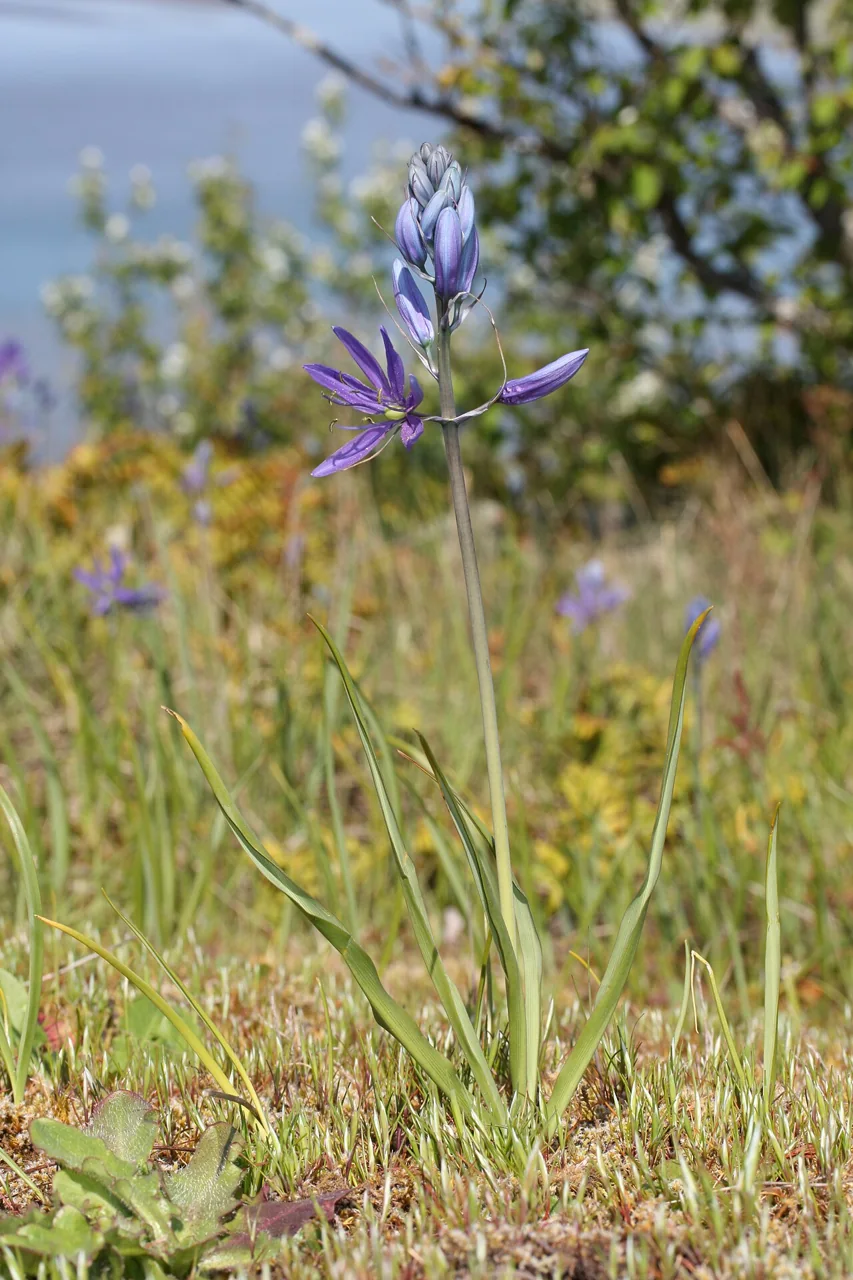
Camassia quamash in flower.
Walter Siegmund (talk) / Wikimedia Commons / CC BY-SA 3.0

Photo details
Resized and converted to WebP. No content edits.
Source: File:Camassia quamash 6374.JPG
Reviewed . Source identification, photograph and license reviewed. The image illustrates the named plant; it does not verify dimensions or other plant traits.
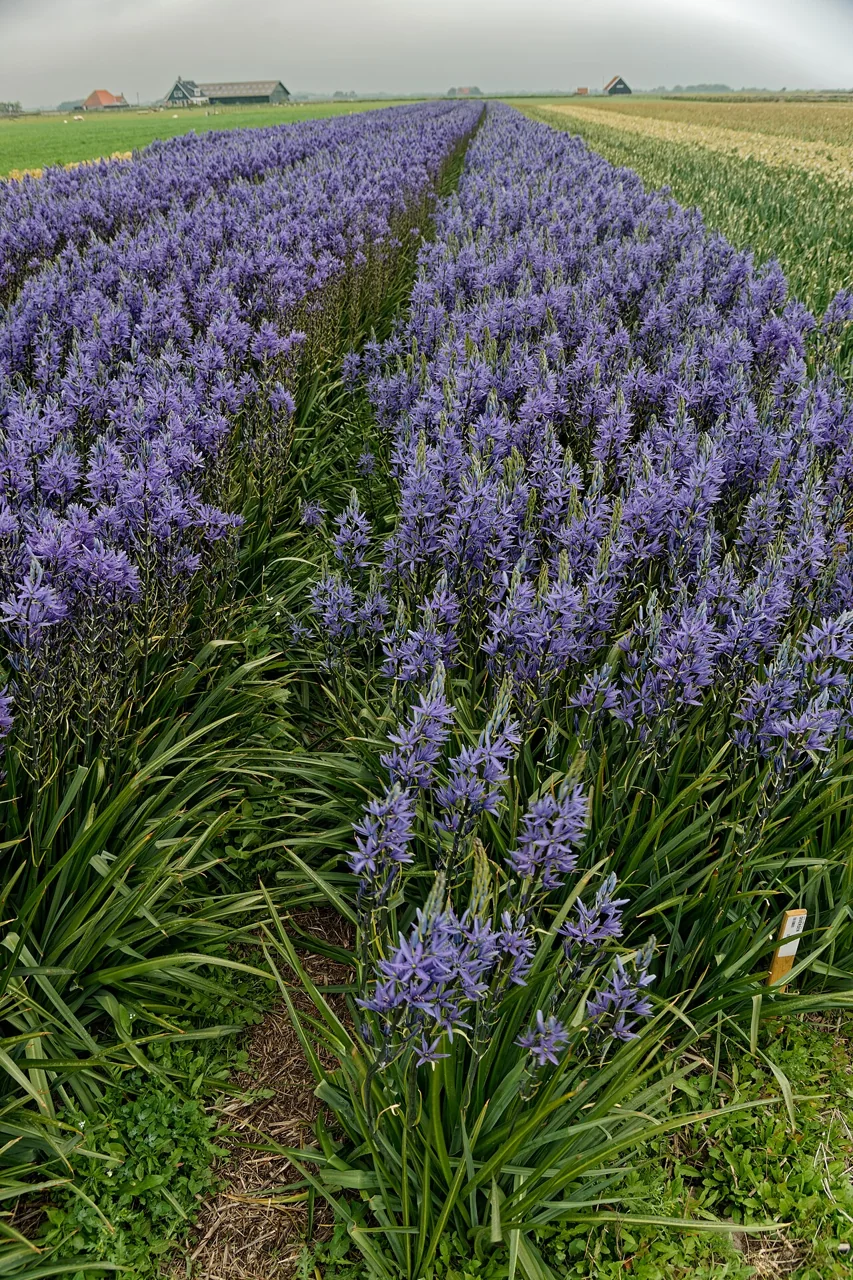
Rows of flowering Camassia quamash in cultivation.
Txllxt TxllxT / Wikimedia Commons / CC BY-SA 4.0

Photo details
Resized and converted to WebP. No content edits.
Source: File:Texel - Den Hoorn - Camassia quamash 03.jpg
Reviewed . Source identification, photograph and license reviewed. The image illustrates the named plant; it does not verify dimensions or other plant traits.
Common names
23 names · 14 languages- EnglishYour language
-
- Quamash
- Small camas[1]
- Utah small camas
+1 more nameShow fewer names
- Walpole's small camas
Other languages (13)
- Dutch
-
- Gewone camassia[1]
- Indianenbloem
- Indianenlelie
+2 more namesShow fewer names
- Prairiekaars
- Prairielelie
- French
-
- Camassia
- camassie camash[1]
- Chinese (Traditional)
-
- 小霞花[1]
- Downriver Halkomelem
-
- spé:nxʷ[1]
- Finnish
-
- sinitähtihyasintti[1]
- Japanese
-
- ヒナユリ[1]
- Nuuchahnulth
-
- kʷan̓usmapt[1]
- Polish
-
- kamasja jadalna[1]
- Russian
-
- Камассия квамаш[1]
- Slovak
-
- kamasia jedlá[1]
- Swedish
-
- ätlig stjärnhyacint[1]
- Upriver Halkomelem
-
- speenhw[1]
Sources & name notes (1)
Names recorded in our plant catalogue and botanical sources, grouped by language. Usage can vary by region.
Numbered references identify names recorded by an external source. Other names are from our plant catalogue.
Community-curated iNaturalist taxonomy; common-name attestation, not an independent botanical determination.
Source records
- small camas — results[0].names[1]; taxon id 62220; Camassia quamash.
- ヒナユリ — results[0].names[2]; taxon id 62220; Camassia quamash.
- Камассия квамаш — results[0].names[3]; taxon id 62220; Camassia quamash.
- ätlig stjärnhyacint — results[0].names[4]; taxon id 62220; Camassia quamash.
- kamasja jadalna — results[0].names[5]; taxon id 62220; Camassia quamash.
- camassie camash — results[0].names[6]; taxon id 62220; Camassia quamash.
- 小霞花 — results[0].names[7]; taxon id 62220; Camassia quamash.
- 小霞花 — results[0].names[8]; taxon id 62220; Camassia quamash.
- sinitähtihyasintti — results[0].names[9]; taxon id 62220; Camassia quamash.
- 糠百合 — results[0].names[10]; taxon id 62220; Camassia quamash.
- kamasia jedlá — results[0].names[11]; taxon id 62220; Camassia quamash.
- spé:nxʷ — results[0].names[12]; taxon id 62220; Camassia quamash.
- Gewone camassia — results[0].names[13]; taxon id 62220; Camassia quamash.
- kʷan̓usmapt — results[0].names[14]; taxon id 62220; Camassia quamash.
- speenhw — results[0].names[15]; taxon id 62220; Camassia quamash.
General information
Kew's family placement for the genus Camassia (WCVP v16).
Sources [1]Plant characteristics
Growing conditions
Moist
Sand (light) Loam (medium) Clay (heavy)
Acidic Neutral Alkaline
Partial shade, Full sun
Uses
Root
Bee forage
Description
Bulb: raw or cooked. The bulb can reach a diameter of 5 cm. In its raw state, it has a mild, starchy flavor and a sticky texture. Cooked, the bulb is tastier, with a delightful sweet flavor comparable to chestnuts. Moreover, the bulb is highly nutritious and can be slowly fried for a different delicious result. The bulb can also be dried and turned into powder, which can serve as a thickening agent in stews or be mixed with grain flour to make bread or pastries. Additionally, it can be boiled down to molasses, which was once used by indigenous tribes during festive occasions. The bulbs can be harvested year-round, but are best in early summer when the seeds are ripe. These bulbs contain inulin, which dissolves when slowly cooked and transforms into fructose, a sweet sugar.
Harvest
Sources and references
References for the information marked with source numbers on this page.
-
Royal Botanic Gardens, Kew
World Checklist of Vascular Plants, version 16, extracted 4 June 2026
Relevant sections
- Botanical family: WCVP v16, wcvp_names.csv row 271935; name ID 301831; Camassia Lindl.. Family column.
- Taxonomy: WCVP v16, wcvp_names.csv row 1174050; name ID 301849; Camassia quamash (Pursh) Greene.
Source checked on .
Source data licence: CC BY 3.0.
-
Catalogue of Life
Catalogue of Life 2026-08-20 — Camassia quamash
Taxonomic data from WCVP, version 16.0, reproduced in Catalogue of Life 2026-08-20. This shares the Kew WCVP evidence base cited on this page.
Supports: TaxonomyRelevant sections
- Taxonomy: COL 2026-08-20, NameUsage.tsv line 5097046, ID Q93P: Camassia quamash (Pursh) Greene (accepted).
Source checked on .