Calendula officinalis
Marigold, Pot marigold
Explore the size, hardiness, soil, light, edible uses and harvest period of Calendula officinalis.
Plant photos
2 photos · Select to enlarge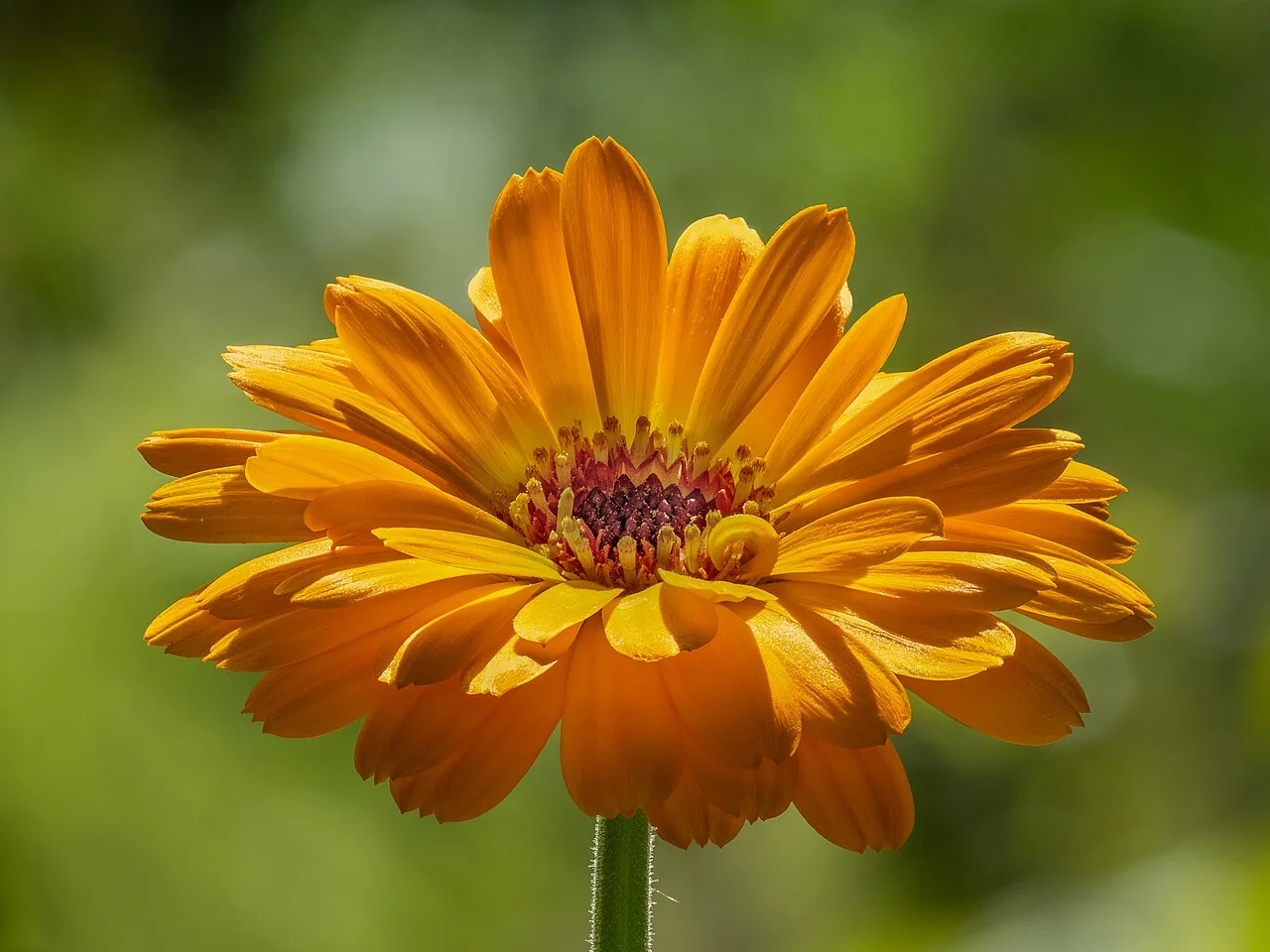
An open pot marigold flower head.
Ermell / Wikimedia Commons / CC BY-SA 4.0
_Bl%C3%BCte_focus_stack-20220619-RM-165610.jpg)
Photo details
Resized and converted to WebP. No content edits.
Source: File:Ringelblume (Calendula officinalis) Blüte focus stack-20220619-RM-165610.jpg
Reviewed . Source identification and visible plant parts reviewed against this plant record.
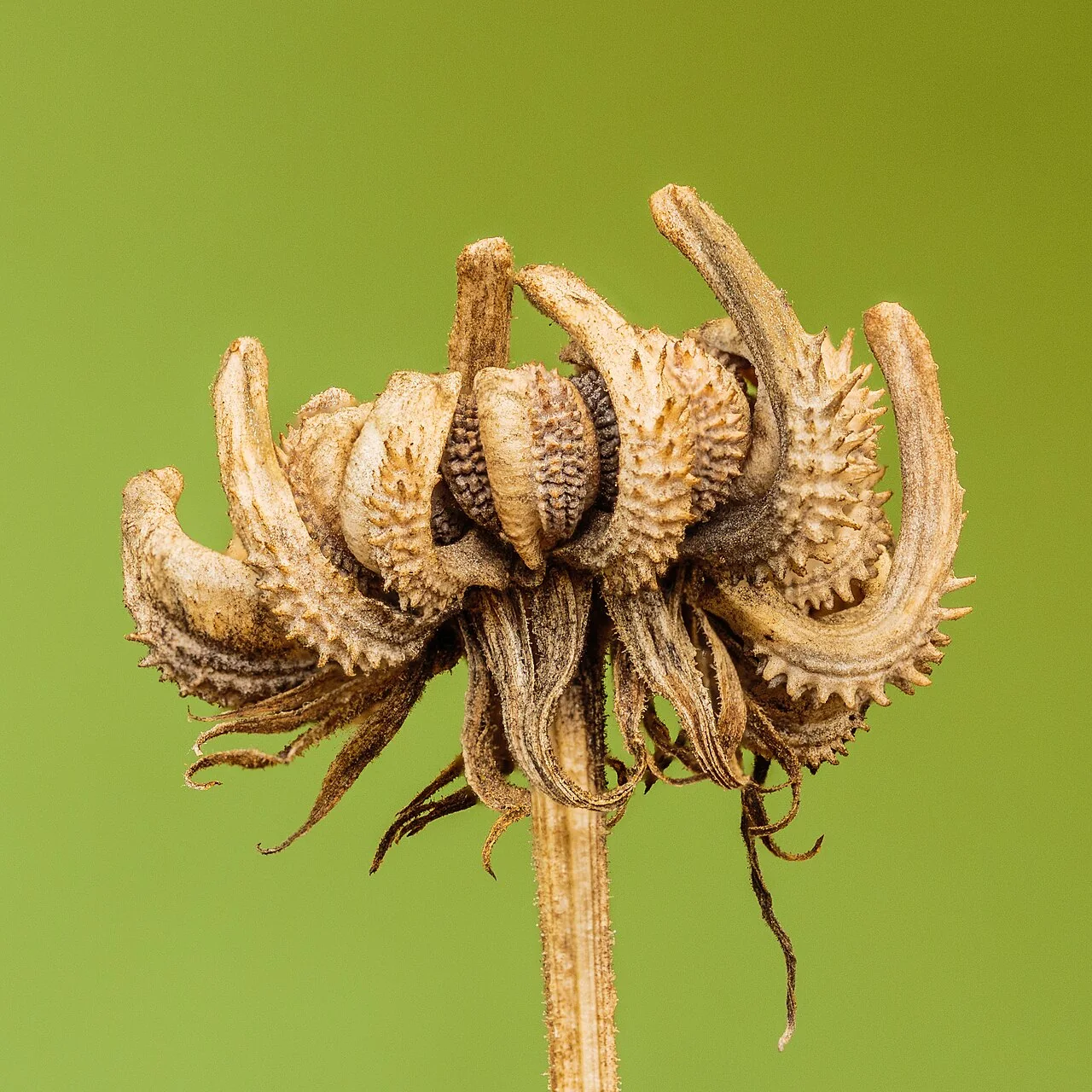
A dried pot marigold seed head.
Dominicus Johannes Bergsma / Wikimedia Commons / CC BY-SA 4.0
_11-09-2020_(d.j.b.).jpg)
Photo details
Resized and converted to WebP. No content edits.
Source: File:Zaaddoos van een goudsbloem (Calendula officinalis) 11-09-2020 (d.j.b.).jpg
Reviewed . Source identification and visible plant parts reviewed against this plant record.
Common names
40 names · 28 languagesOther languages (27)
- French
-
- Souci officinal[2]
- Catalan
-
- Boixac de jardí[2]
- Chinese (Simplified)
-
- 金盏花[2]
- Chinese (Traditional)
-
- 金盞花[2]
- Croatian
-
- Ljekoviti neven[2]
- Czech
-
- měsíček lékařský[2]
- Estonian
-
- harilik saialill[2]
- Finnish
-
- tarhakehäkukka[2]
- Hungarian
-
- orvosi körömvirág[2]
- Italian
-
- Calendula[2]
- Lithuanian
-
- Vaistinė medetka[2]
- Norwegian
-
- ringblom[2]
- Polish
-
- Nagietek lekarski[2]
- Portuguese
-
- calêndula[2]
- Slovak
-
- nechtík lekársky[2]
- Slovenian
-
- vrtni ognjič[2]
- Swedish
-
- ringblomma[2]
- Turkish
-
- aynısafa[2]
- Welsh
-
- Melyn Mair[2]
Sources & name notes (2)
Names recorded in our plant catalogue and botanical sources, grouped by language. Usage can vary by region.
Numbered references identify names recorded by an external source. Other names are from our plant catalogue.
Common names from World Plants, version 26.05, reproduced in Catalogue of Life 2026-08-20. License: CC BY.
Source records
- Garten-Ringelblume (DE); Maravilla de muerto (ES) — VernacularName.tsv, line 143123; taxon PJDZ.
- Pot Marigold (EN) — VernacularName.tsv, line 143124; taxon PJDZ.
Community-curated iNaturalist taxonomy; common-name attestation, not an independent botanical determination.
Source records
- pot marigold — results[0].names[1]; taxon id 75931; Calendula officinalis.
- pot-marigold — results[0].names[2]; taxon id 75931; Calendula officinalis.
- calendula — results[0].names[3]; taxon id 75931; Calendula officinalis.
- Caléndula del Mediterráneo — results[0].names[4]; taxon id 75931; Calendula officinalis.
- marigold — results[0].names[5]; taxon id 75931; Calendula officinalis.
- Ringelblume — results[0].names[6]; taxon id 75931; Calendula officinalis.
- Garten-Ringelblume — results[0].names[7]; taxon id 75931; Calendula officinalis.
- souci officinal — results[0].names[8]; taxon id 75931; Calendula officinalis.
- měsíček lékařský — results[0].names[9]; taxon id 75931; Calendula officinalis.
- calêndula — results[0].names[10]; taxon id 75931; Calendula officinalis.
- Have-morgenfrue — results[0].names[11]; taxon id 75931; Calendula officinalis.
- harilik saialill — results[0].names[12]; taxon id 75931; Calendula officinalis.
- Календула лекарственная — results[0].names[13]; taxon id 75931; Calendula officinalis.
- ringblom — results[0].names[14]; taxon id 75931; Calendula officinalis.
- Calendula — results[0].names[15]; taxon id 75931; Calendula officinalis.
- tarhakehäkukka — results[0].names[16]; taxon id 75931; Calendula officinalis.
- Nagietek lekarski — results[0].names[17]; taxon id 75931; Calendula officinalis.
- Boixac de jardí — results[0].names[18]; taxon id 75931; Calendula officinalis.
- Vaistinė medetka — results[0].names[19]; taxon id 75931; Calendula officinalis.
- トウキンセンカ — results[0].names[20]; taxon id 75931; Calendula officinalis.
- キンセンカ — results[0].names[21]; taxon id 75931; Calendula officinalis.
- Caléndula — results[0].names[22]; taxon id 75931; Calendula officinalis.
- Ljekoviti neven — results[0].names[23]; taxon id 75931; Calendula officinalis.
- ringblomma — results[0].names[24]; taxon id 75931; Calendula officinalis.
- 金盏花 — results[0].names[25]; taxon id 75931; Calendula officinalis.
- 金盞花 — results[0].names[26]; taxon id 75931; Calendula officinalis.
- Tuingoudsbloem — results[0].names[27]; taxon id 75931; Calendula officinalis.
- Goudsbloem — results[0].names[28]; taxon id 75931; Calendula officinalis.
- Morgenfrue — results[0].names[29]; taxon id 75931; Calendula officinalis.
- بكورية طبية — results[0].names[30]; taxon id 75931; Calendula officinalis.
- أذريون الطبي — results[0].names[31]; taxon id 75931; Calendula officinalis.
- vrtni ognjič — results[0].names[32]; taxon id 75931; Calendula officinalis.
- orvosi körömvirág — results[0].names[33]; taxon id 75931; Calendula officinalis.
- Нагідки лікарські — results[0].names[34]; taxon id 75931; Calendula officinalis.
- Календула лікарська — results[0].names[35]; taxon id 75931; Calendula officinalis.
- ноготки лекарственные — results[0].names[36]; taxon id 75931; Calendula officinalis.
- aynısafa — results[0].names[37]; taxon id 75931; Calendula officinalis.
- nechtík lekársky — results[0].names[38]; taxon id 75931; Calendula officinalis.
- Melyn Mair — results[0].names[39]; taxon id 75931; Calendula officinalis.
General information
Plant characteristics
NC State landscape size range; converted from feet and inches. Size varies with site, age and management.
Sources [3]NC State landscape size range; converted from feet and inches. Size varies with site, age and management.
Sources [3]Growing conditions
USDA zones listed by NC State; winter survival does not establish reliable cropping.
Sources [3]Uses
kleur, Tea, Leaves, Flowers
Cosmetic use, Dye, Essential oil, Repellent, Bee forage, Fragrant
Description
Leaves: raw. The leaves have a sweet taste followed by a strong, salty flavor. They are high in vitamins and minerals, similar to dandelion leaves. Fresh petals can be chopped and added to salads. Dried petals have a more concentrated taste and are used as a seasoning in soups, pastries, and so on. The flowers are rich in vitamins A and C and can be used to obtain an edible yellow dye or as a saffron substitute. They can also be used to add golden tones to brown hair when rinsing/washing the hair. Petals and leaves can be used to brew tea, with the petals providing a less bitter taste.
Harvest
Sources and references
References for the information marked with source numbers on this page.
-
Royal Botanic Gardens, Kew
World Checklist of Vascular Plants, version 16, extracted 4 June 2026
Relevant sections
- Botanical family: WCVP v16, wcvp_names.csv row 554828; name ID 3133177; Calendula L.. Family column.
- Taxonomy: WCVP v16, wcvp_names.csv row 835621; name ID 2910167; Calendula officinalis L..
Source checked on .
Source data licence: CC BY 3.0.
-
Catalogue of Life
Catalogue of Life 2026-08-20 — Calendula officinalis
Taxonomic data from World Plants, version 26.05, reproduced in Catalogue of Life 2026-08-20.
Supports: TaxonomyRelevant sections
- Taxonomy: COL 2026-08-20, NameUsage.tsv line 5077515, ID PJDZ: Calendula officinalis L. (accepted).
Source checked on .
-
NC State Extension, North Carolina State University
Calendula officinalis — Extension Gardener Plant Toolbox
Relevant sections
- Height: Dimensions > Height; Height: 1 ft. 0 in. - 2 ft. 0 in.
- Spread: Dimensions > Width; Width: 1 ft. 0 in. - 2 ft. 0 in.
- Growth habit: Habit/Form
- Life cycle: Life Cycle
- Light: Light
- Soil moisture: Soil Drainage
- Soil texture: Soil Texture
- Soil pH: Soil pH
- USDA hardiness: USDA Plant Hardiness Zone
Source checked on .