Brassica juncea
Brown mustard
Explore the size, hardiness, soil, light, edible uses and harvest period of Brassica juncea.
Plant photos
2 photos · Select to enlarge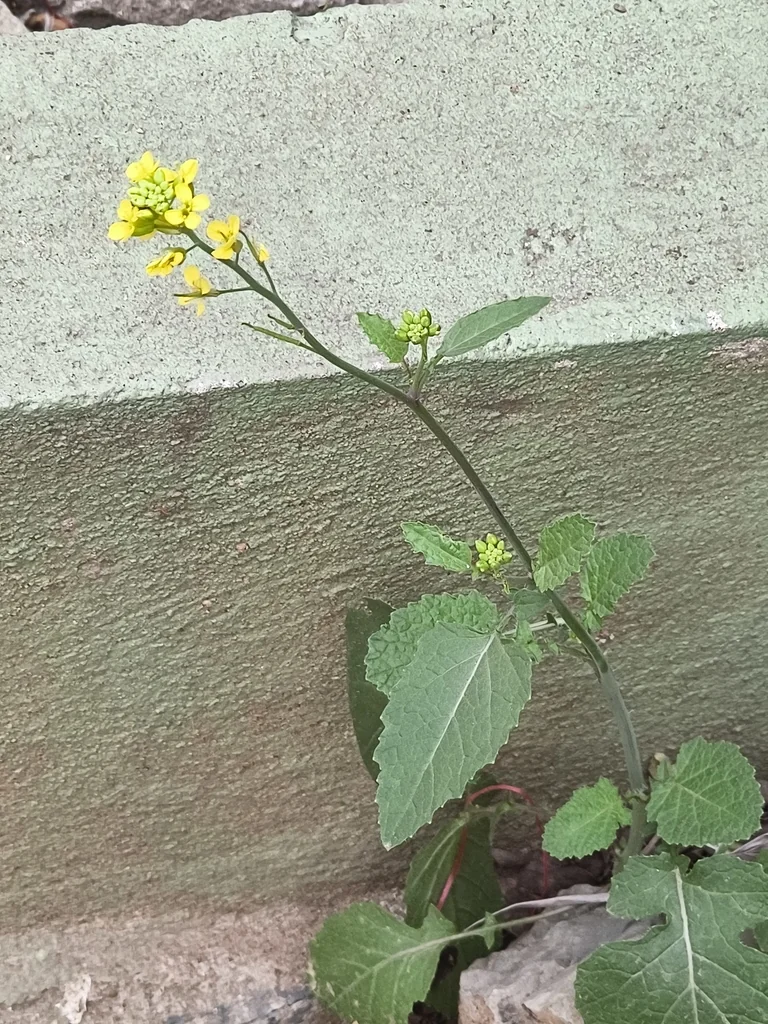
A young flowering Brassica juncea plant with broad lower leaves.
(c) Raja Sekhar Chimirala / iNaturalist / CC BY 4.0
Photo details
Resized and converted to WebP. No content edits.
Source: iNaturalist photo 581965849
View the observation and community identifications on iNaturalist.
Reviewed . The photographed view, exact taxon scope, current community identifications, per-photo license and source attribution were reviewed. The observation has at least two current agreeing community identifiers and no conflicting current species identification. The image illustrates plant appearance; it does not establish botanical measurements.
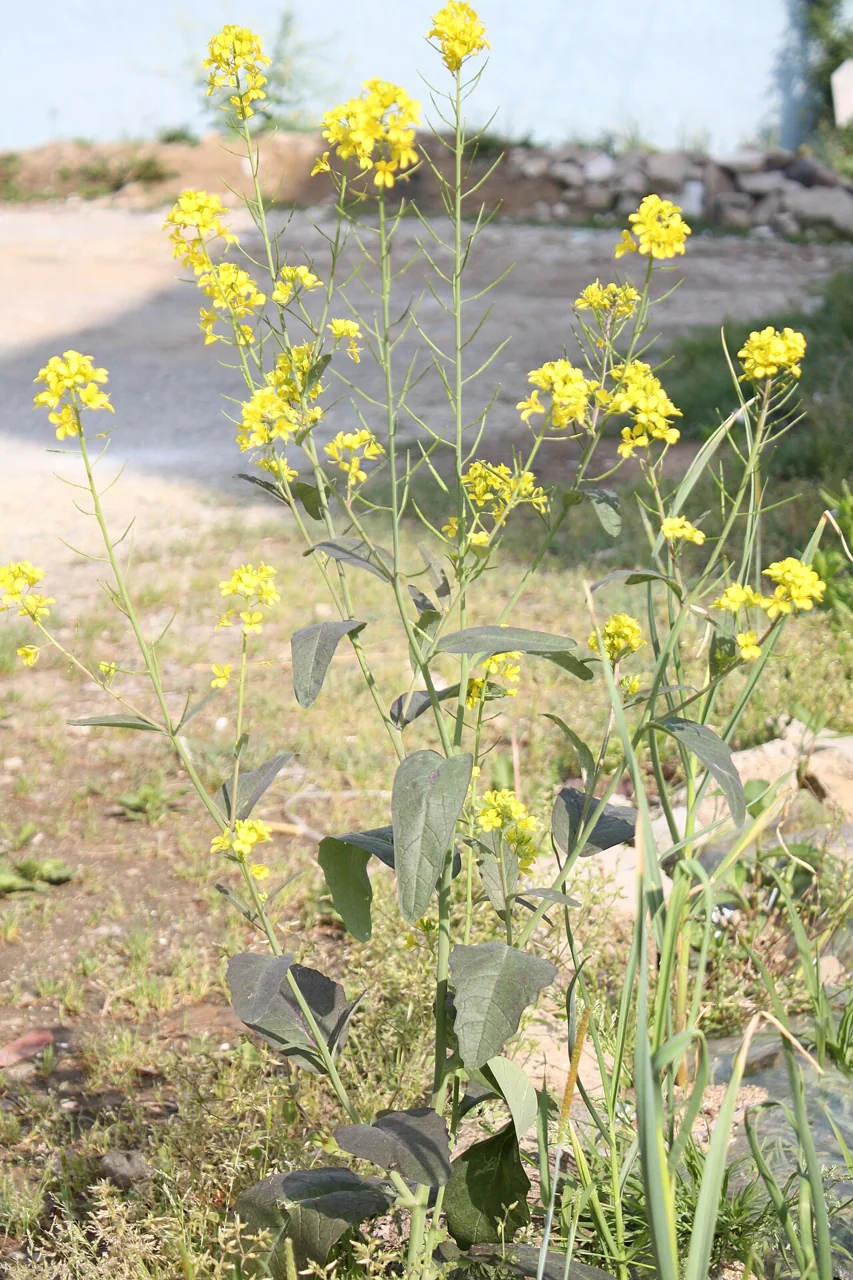
Brassica juncea var. juncea in flower.
Dalgial / Wikimedia Commons / CC BY-SA 3.0

Photo details
Resized and converted to WebP. No content edits.
Source: File:Brassica juncea var. juncea.JPG
Reviewed . Source identification, photograph and license reviewed. The image illustrates the named plant; it does not verify dimensions or other plant traits.
Common names
3 names · 3 languages- EnglishYour language
-
- Brown mustard
Other languages (2)
- Dutch
-
- Bladmosterd
- French
-
- Moutarde brune
Sources & name notes
Names recorded in our plant catalogue, grouped by language. Usage can vary by region.
General information
Accepted in the cited taxonomic treatment. Botanical references may use alternative names.
Sources [1]Kew's family placement for the genus Brassica (WCVP v16).
Sources [1]Plant characteristics
NC State landscape size range; converted from feet and inches. Size varies with site, age and management.
Sources [2]NC State landscape size range; converted from feet and inches. Size varies with site, age and management.
Sources [2]Uses
Leaves, Flowers, Condiment, Root, Oil, Seed
Nitrogen fixer, Oil, Repellent
Description
Leaves of this plant can be eaten both raw and cooked, and have a peppery flavor that ranges from mild to hot. They are a popular vegetable in the Orient and can also be finely chopped and added raw to salads. The protein from the leaves can be well mixed with banana pulp and used as filling for pies. The flowers and young flower stalks of the plant are sweet and juicy and can also be eaten raw or cooked. Edible oil can be extracted from the seeds of the plant, which can be used as a mustard flavoring. The seeds of this plant are the source of brown mustard, and the sharpness of mustard is revealed when cold water is added to the ground seeds. The plant has edible roots, and the sprouted seeds can be added to salads.
Harvest
Sources and references
References for the information marked with source numbers on this page.
-
Royal Botanic Gardens, Kew
World Checklist of Vascular Plants, version 16, extracted 4 June 2026
Relevant sections
- Taxonomy: WCVP version 16, wcvp_names.csv: Brassica × juncea (L.) Czern., name ID 2682298, row 751220; × Brassarda juncea (L.) Su Liu & Z.H.Feng, name ID 3312646, row 735923
- Botanical family: WCVP v16, wcvp_names.csv row 750150; name ID 2681967; Brassica L.. Family column.
Source checked on .
Source data licence: CC BY 3.0.
-
NC State Extension, North Carolina State University
Brassica juncea — Extension Gardener Plant Toolbox
Relevant sections
- Height: Dimensions > Height; Height: 1 ft. 0 in. - 1 ft. 6 in.
- Spread: Dimensions > Width; Width: 1 ft. 0 in. - 1 ft. 6 in.
- Growth rate: Growth Rate
- Foliage: Woody Plant Leaf Characteristics
- Growth habit: Habit/Form
- Life cycle: Life Cycle
- Light: Light
- Soil moisture: Soil Drainage
- Soil texture: Soil Texture
- Soil pH: Soil pH
Source checked on .