Borago officinalis
Borage, Common borage,Cool-tankard, Tailwort
Explore the size, hardiness, soil, light, edible uses and harvest period of Borago officinalis.
Plant photos
2 photos · Select to enlarge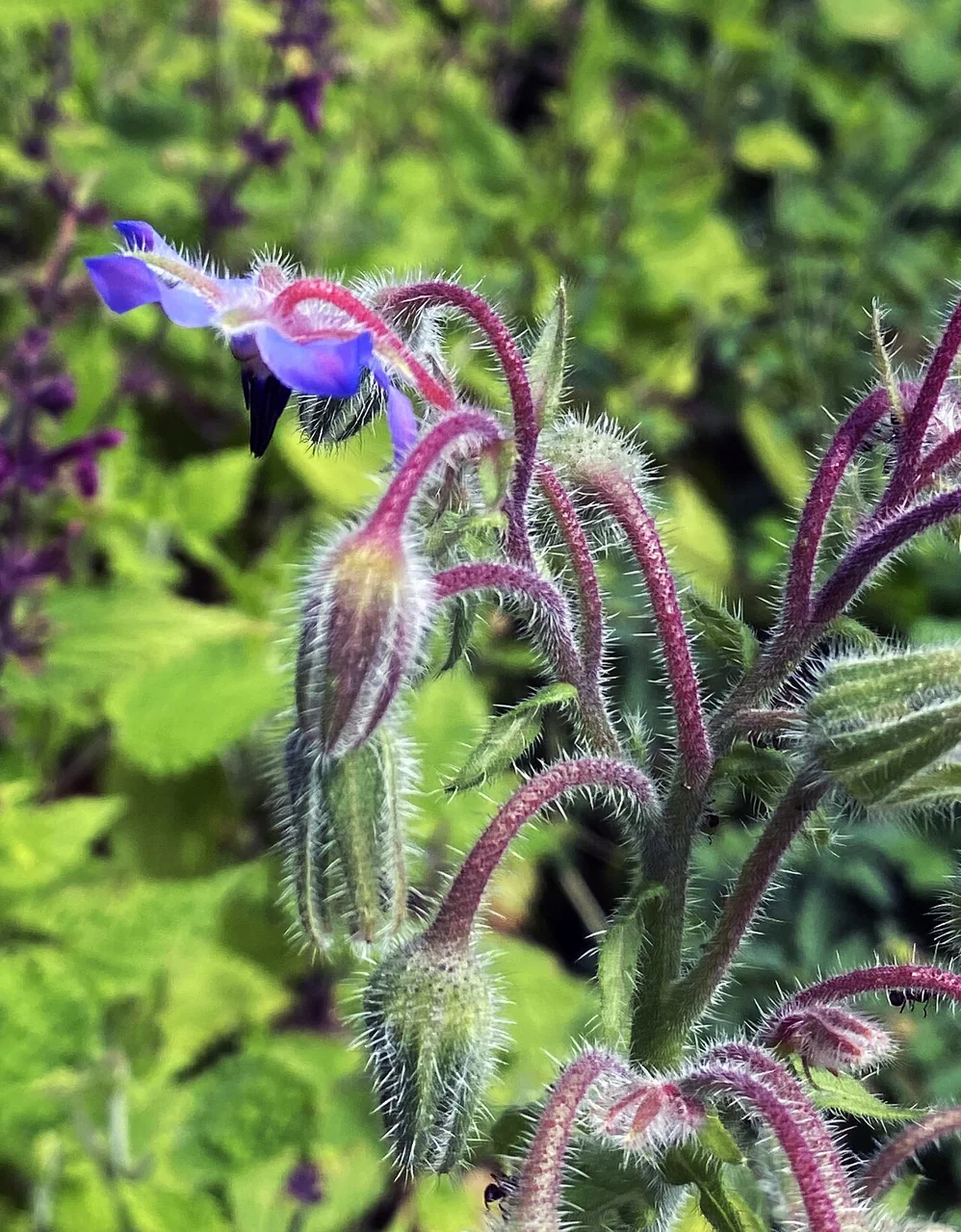
Borage with hairy stems, leaves and nodding flowers.
W. Bulach / Wikimedia Commons / CC BY-SA 4.0
.jpg)
Photo details
Resized and converted to WebP. No content edits.
Source: File:00 2100 Borretsch (Borago officinalis).jpg
Reviewed . Source identification and visible plant parts reviewed against this plant record.
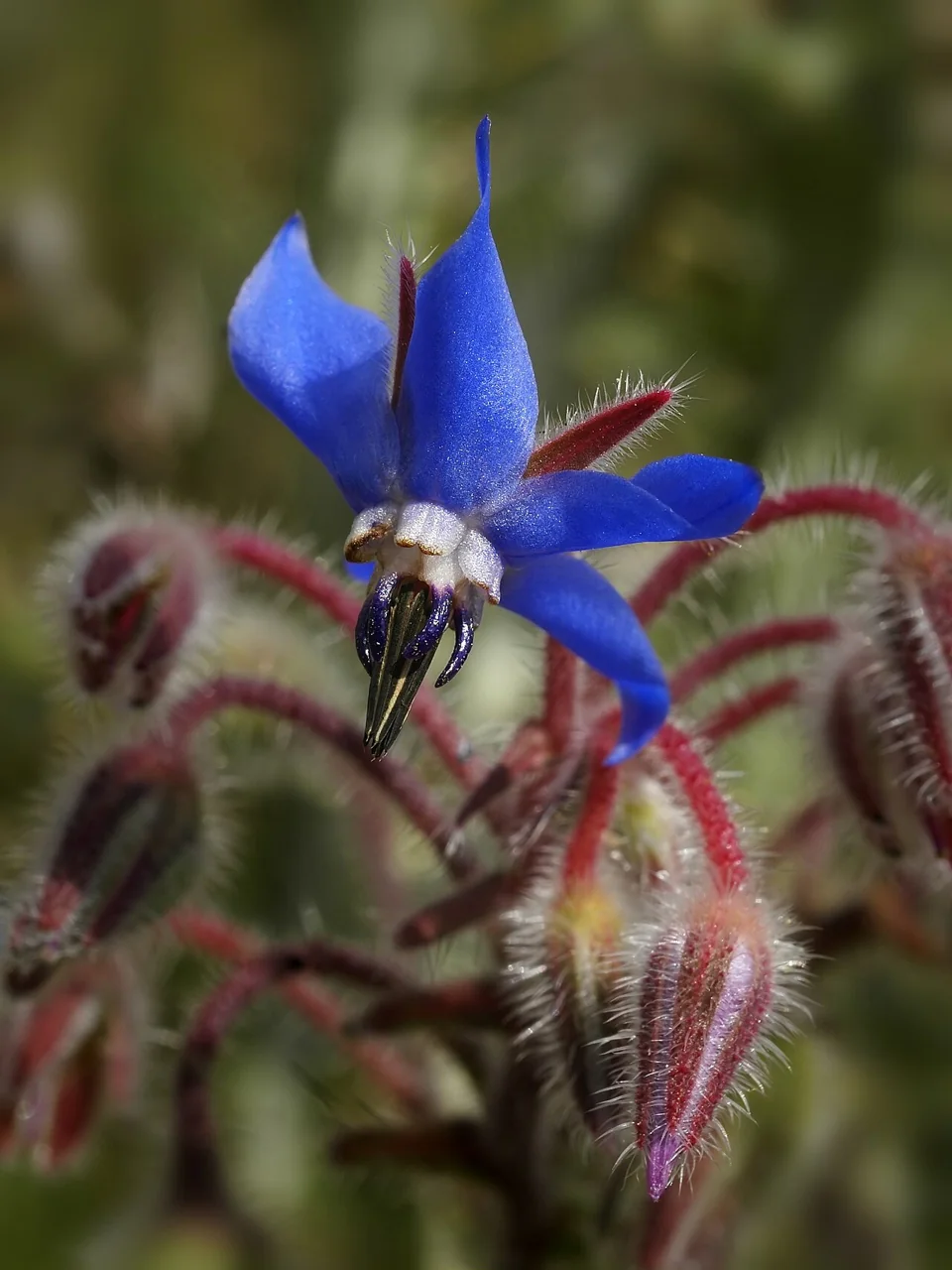
A close view of a borage flower.
© Hans Hillewaert / Wikimedia Commons / CC BY-SA 3.0
.jpg)
Photo details
Resized and converted to WebP. No content edits.
Source: File:Borago officinalis (flower).jpg
Reviewed . Source identification and visible plant parts reviewed against this plant record.
Common names
43 names · 30 languagesOther languages (29)
- Dutch
-
- Bernagie[2]
- Borage
- French
-
- Bourrache officinale[2]
- Chinese (Simplified)
-
- 琉璃苣[2]
- Czech
-
- brutnák lékařský[2]
- Danish
-
- Hjulkrone[2]
- Estonian
-
- harilik kurgirohi[2]
- Finnish
-
- rohtopurasruoho[2]
- Greek
-
- Μποράντζα[2]
- Hungarian
-
- kerti borágó[2]
- Irish
-
- Borráiste gorm[2]
- Japanese
-
- ルリヂシャ[2]
- Kabyle
-
- Chikh Lavqul[2]
- Lithuanian
-
- Vaistinė agurklė[2]
- Norwegian
-
- agurkurt[2]
- Polish
-
- Ogórecznik lekarski[2]
- Portuguese
-
- Borragem[2]
- Russian
-
- Бурачник лекарственный[2]
- Slovak
-
- borák lekársky[2]
- Swedish
-
- gurkört[2]
- Ukrainian
-
- Огірочник лікарський[2]
- Welsh
-
- Tafod yr ych[2]
Sources & name notes (2)
Names recorded in our plant catalogue and botanical sources, grouped by language. Usage can vary by region.
Numbered references identify names recorded by an external source. Other names are from our plant catalogue.
Common names from World Plants, version 26.05, reproduced in Catalogue of Life 2026-08-20. License: CC BY.
Source records
- Garten-Borretsch (DE); Borage (EN); Borraja (ES) — VernacularName.tsv, line 145347; taxon MJ92.
Community-curated iNaturalist taxonomy; common-name attestation, not an independent botanical determination.
Source records
- Borage — results[0].names[1]; taxon id 52287; Borago officinalis.
- borraja — results[0].names[2]; taxon id 52287; Borago officinalis.
- Boraja — results[0].names[3]; taxon id 52287; Borago officinalis.
- Borraina — results[0].names[5]; taxon id 52287; Borago officinalis.
- Borragem — results[0].names[6]; taxon id 52287; Borago officinalis.
- Borragine — results[0].names[7]; taxon id 52287; Borago officinalis.
- Borretsch — results[0].names[8]; taxon id 52287; Borago officinalis.
- Bourrache officinale — results[0].names[9]; taxon id 52287; Borago officinalis.
- brutnák lékařský — results[0].names[10]; taxon id 52287; Borago officinalis.
- Hjulkrone — results[0].names[11]; taxon id 52287; Borago officinalis.
- Bernagie — results[0].names[12]; taxon id 52287; Borago officinalis.
- agurkurt — results[0].names[13]; taxon id 52287; Borago officinalis.
- Бурачник лекарственный — results[0].names[14]; taxon id 52287; Borago officinalis.
- rohtopurasruoho — results[0].names[15]; taxon id 52287; Borago officinalis.
- Μποράντζα — results[0].names[16]; taxon id 52287; Borago officinalis.
- Ogórecznik lekarski — results[0].names[17]; taxon id 52287; Borago officinalis.
- ルリヂシャ — results[0].names[18]; taxon id 52287; Borago officinalis.
- harilik kurgirohi — results[0].names[19]; taxon id 52287; Borago officinalis.
- 琉璃苣 — results[0].names[20]; taxon id 52287; Borago officinalis.
- 琉璃苣 — results[0].names[21]; taxon id 52287; Borago officinalis.
- gurkört — results[0].names[22]; taxon id 52287; Borago officinalis.
- Vaistinė agurklė — results[0].names[23]; taxon id 52287; Borago officinalis.
- Borraggine comune — results[0].names[24]; taxon id 52287; Borago officinalis.
- Borraxe — results[0].names[25]; taxon id 52287; Borago officinalis.
- Soaxe — results[0].names[26]; taxon id 52287; Borago officinalis.
- 玻璃苣、琉璃苣 — results[0].names[27]; taxon id 52287; Borago officinalis.
- Zdravilna boraga — results[0].names[28]; taxon id 52287; Borago officinalis.
- kerti borágó — results[0].names[29]; taxon id 52287; Borago officinalis.
- borratja — results[0].names[30]; taxon id 52287; Borago officinalis.
- Borráiste gorm — results[0].names[31]; taxon id 52287; Borago officinalis.
- Огірочник лікарський — results[0].names[32]; taxon id 52287; Borago officinalis.
- Boražina — results[0].names[33]; taxon id 52287; Borago officinalis.
- borák lekársky — results[0].names[34]; taxon id 52287; Borago officinalis.
- Tafod yr ych — results[0].names[35]; taxon id 52287; Borago officinalis.
- Chikh Lavqul — results[0].names[36]; taxon id 52287; Borago officinalis.
- boreč — results[0].names[37]; taxon id 52287; Borago officinalis.
- Hodan — results[0].names[38]; taxon id 52287; Borago officinalis.
- Kaldırık — results[0].names[39]; taxon id 52287; Borago officinalis.
General information
Plant characteristics
NC State landscape size range; converted from feet and inches. Size varies with site, age and management.
Sources [3]NC State landscape size range; converted from feet and inches. Size varies with site, age and management.
Sources [3]Growing conditions
USDA zones listed by NC State; winter survival does not establish reliable cropping.
Sources [3]Well-drained, Occasionally Dry
Moisture and drainage conditions listed by NC State.
Sources [3]Uses
Leaves, Flowers, Oil, Tea
Nitrogen fixer, Dye, Oil, Repellent, Bee forage
Description
Leaves can be eaten both raw and cooked. They can serve as an herb in dishes or be added to salads. The leaves have a salty taste and are rich in potassium and calcium. It is best to finely chop the hairy leaves and add them to other leafy greens in a salad due to their texture. Fresh use of the leaves is recommended since they lose flavor and color when dried. The flowers can be eaten raw and are often used as decoration on salads and in summer drinks. They have a sweet, slightly cucumber-like flavor and are also used to make refreshing tea. The dried stems of the plant are used to flavor beverages. The seeds of the plant contain 30% oil, of which 20% is gamma-linolenic acid. The yields from the plant range between 0.35-0.65 tons per hectare. Harvesting the seeds can be challenging because they ripen at different times and fall off the plant when ripe. The flowers of the plant can be used to obtain an edible blue dye that is also used to color vinegar.
Harvest
Sources and references
References for the information marked with source numbers on this page.
-
Royal Botanic Gardens, Kew
World Checklist of Vascular Plants, version 16, extracted 4 June 2026
Relevant sections
- Botanical family: WCVP v16, wcvp_names.csv row 744087; name ID 2679678; Borago L.. Family column.
- Taxonomy: WCVP v16, wcvp_names.csv row 1327530; name ID 2679695; Borago officinalis L..
Source checked on .
Source data licence: CC BY 3.0.
-
Catalogue of Life
Catalogue of Life 2026-08-20 — Borago officinalis
Taxonomic data from World Plants, version 26.05, reproduced in Catalogue of Life 2026-08-20.
Supports: TaxonomyRelevant sections
- Taxonomy: COL 2026-08-20, NameUsage.tsv line 5022490, ID MJ92: Borago officinalis L. (accepted).
Source checked on .
-
NC State Extension, North Carolina State University
Borago officinalis — Extension Gardener Plant Toolbox
Supports: HeightSpreadGrowth rateFoliageGrowth habitLife cycleLightSoil moistureSoil textureSoil pHUSDA hardiness
Relevant sections
- Height: Dimensions > Height; Height: 1 ft. 7 in. - 3 ft. 2 in.
- Spread: Dimensions > Width; Width: 1 ft. 0 in. - 1 ft. 4 in.
- Growth rate: Growth Rate
- Foliage: Woody Plant Leaf Characteristics
- Growth habit: Habit/Form
- Life cycle: Life Cycle
- Light: Light
- Soil moisture: Soil Drainage
- Soil texture: Soil Texture
- Soil pH: Soil pH
- USDA hardiness: USDA Plant Hardiness Zone
Source checked on .