Betula nigra
River birch, Black birch, Red birch, Water birch
Explore the size, hardiness, soil, light, edible uses and harvest period of Betula nigra.
Plant photos
2 photos · Select to enlarge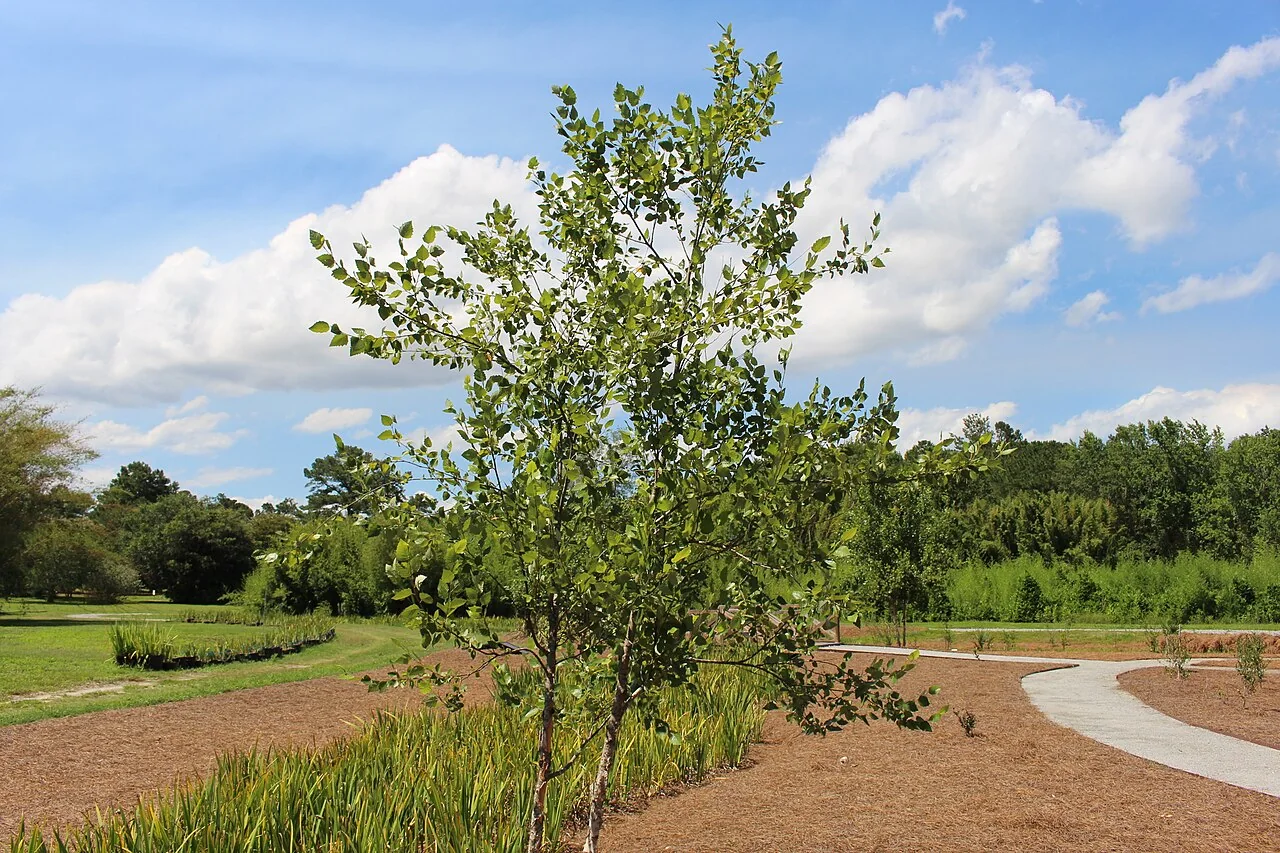
The growth habit of Betula nigra cultivar 'Cully' (Heritage).
Michael Rivera / Wikimedia Commons / CC BY-SA 4.0

Photo details
Resized and converted to WebP. No content edits.
Source: File:Coastal Georgia Botanical Gardens, Heritage River Birch Betula nigra 'Cully'.jpg
Reviewed . Source identification, photograph and license reviewed. The image illustrates the named plant; it does not verify dimensions or other plant traits.
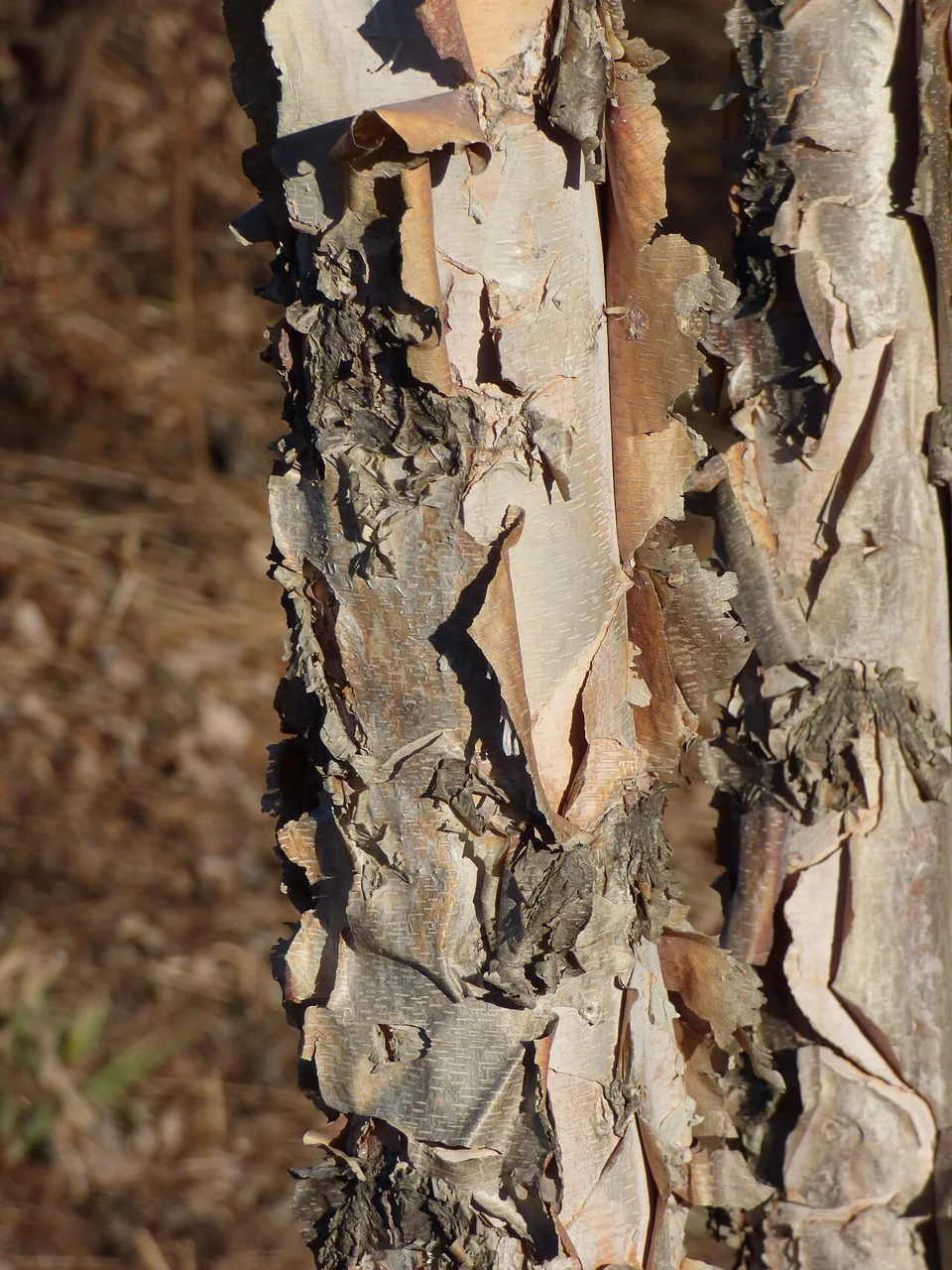
Trunk and bark of Betula nigra.
Greg Hume / Wikimedia Commons / CC BY-SA 4.0

Photo details
Resized and converted to WebP. No content edits.
Source: File:RiverBirchBark01.JPG
Reviewed . Source identification, photograph and license reviewed. The image illustrates the named plant; it does not verify dimensions or other plant traits.
Common names
26 names · 21 languagesOther languages (20)
- Dutch
-
- Rode berk[2]
- Zwarte berk
- French
-
- Bouleau noir[2]
- Cherokee
-
- ᎦᏁᏗᏍᎩ[2]
- Chinese (Simplified)
-
- 河桦[2]
- Chinese (Traditional)
-
- 河樺[2]
- Czech
-
- bříza černá[2]
- Estonian
-
- must kask[2]
- Finnish
-
- mustakoivu[2]
- Hungarian
-
- Fekete nyír[2]
- Italian
-
- betulla nera[2]
- Japanese
-
- リバーバーチ[2]
- Lithuanian
-
- Juodasis beržas[2]
- Mvskoke
-
- akcelvlaskv[2]
- Polish
-
- Brzoza nadrzeczna[2]
- Portuguese
-
- Vidoeiro-ribeirinho[2]
- Romani
-
- Lin brezâ[2]
- Russian
-
- Берёза чёрная[2]
- Slovak
-
- breza čierna[2]
- Spanish
-
- Abedul negro[2]
Sources & name notes (2)
Names recorded in our plant catalogue and botanical sources, grouped by language. Usage can vary by region.
Numbered references identify names recorded by an external source. Other names are from our plant catalogue.
Common names from World Plants, version 26.05, reproduced in Catalogue of Life 2026-08-20. License: CC BY.
Source records
- River birch (EN) — VernacularName.tsv, line 154459; taxon LPBV.
Community-curated iNaturalist taxonomy; common-name attestation, not an independent botanical determination.
Source records
- river birch — results[0].names[1]; taxon id 117429; Betula nigra.
- black birch — results[0].names[2]; taxon id 117429; Betula nigra.
- Bouleau noir — results[0].names[3]; taxon id 117429; Betula nigra.
- Vidoeiro-ribeirinho — results[0].names[4]; taxon id 117429; Betula nigra.
- 河樺 — results[0].names[5]; taxon id 117429; Betula nigra.
- Берёза чёрная — results[0].names[6]; taxon id 117429; Betula nigra.
- must kask — results[0].names[7]; taxon id 117429; Betula nigra.
- bříza černá — results[0].names[8]; taxon id 117429; Betula nigra.
- Brzoza nadrzeczna — results[0].names[9]; taxon id 117429; Betula nigra.
- 河桦 — results[0].names[10]; taxon id 117429; Betula nigra.
- Rode berk — results[0].names[11]; taxon id 117429; Betula nigra.
- リバーバーチ — results[0].names[12]; taxon id 117429; Betula nigra.
- Juodasis beržas — results[0].names[13]; taxon id 117429; Betula nigra.
- ᎦᏁᏗᏍᎩ — results[0].names[14]; taxon id 117429; Betula nigra.
- Fekete nyír — results[0].names[15]; taxon id 117429; Betula nigra.
- betulla nera — results[0].names[16]; taxon id 117429; Betula nigra.
- Lin brezâ — results[0].names[17]; taxon id 117429; Betula nigra.
- Abedul negro — results[0].names[18]; taxon id 117429; Betula nigra.
- mustakoivu — results[0].names[19]; taxon id 117429; Betula nigra.
- breza čierna — results[0].names[20]; taxon id 117429; Betula nigra.
- akcelvlaskv — results[0].names[21]; taxon id 117429; Betula nigra.
- Schwarz-Birke — results[0].names[22]; taxon id 117429; Betula nigra.
- Fluss-Birke — results[0].names[23]; taxon id 117429; Betula nigra.
General information
Plant characteristics
NC State landscape size range; converted from feet and inches. Size varies with site, age and management.
Sources [3]NC State landscape size range; converted from feet and inches. Size varies with site, age and management.
Sources [3]Whole-plant habit and form as described by NC State.
Sources [3]Growing conditions
USDA zones listed by NC State; winter survival does not establish reliable cropping.
Sources [3]Well-drained, Moist, Occasionally Dry, Occasionally Wet
Moisture and drainage conditions listed by NC State.
Sources [3]Uses
Sap
Pioneer species, Wood
Description
Birch sap can be consumed both raw and cooked, and has a sweet flavor. It is collected in early spring, before the tree's leaves begin to grow. To obtain the sap, a hole approximately 6 mm wide and 4 cm deep is drilled into the trunk. The sap flows best on warm, sunny days after a period of severe frost. The sap can be drunk pure as a refreshing beverage, or it can be concentrated into syrup or sugar. It can even be fermented to make birch beer or vinegar. An old English recipe for brewing birch beer involves mixing birch sap with honey, boiling it with cloves and lime peel, and adding beer for fermentation. The resulting beer is described as mild and safe to consume, increases appetite, and is best drunk before meals.
Harvest
Crown
Sources and references
References for the information marked with source numbers on this page.
-
Royal Botanic Gardens, Kew
World Checklist of Vascular Plants, version 16, extracted 4 June 2026
Relevant sections
- Botanical family: WCVP v16, wcvp_names.csv row 962990; name ID 21065; Betula L.. Family column.
- Taxonomy: WCVP v16, wcvp_names.csv row 963384; name ID 21527; Betula nigra L..
Source checked on .
Source data licence: CC BY 3.0.
-
Catalogue of Life
Catalogue of Life 2026-08-20 — Betula nigra
Taxonomic data from World Plants, version 26.05, reproduced in Catalogue of Life 2026-08-20.
Supports: TaxonomyRelevant sections
- Taxonomy: COL 2026-08-20, NameUsage.tsv line 4999562, ID LPBV: Betula nigra L. (accepted).
Source checked on .
-
NC State Extension, North Carolina State University
Betula nigra — Extension Gardener Plant Toolbox
Supports: HeightSpreadGrowth rateFoliageGrowth habitLife cycleLightSoil moistureSoil textureSoil pHUSDA hardiness
Relevant sections
- Height: Dimensions > Height; Height: 30 ft. 0 in. - 70 ft. 0 in.
- Spread: Dimensions > Width; Width: 40 ft. 0 in. - 60 ft. 0 in.
- Growth rate: Growth Rate
- Foliage: Woody Plant Leaf Characteristics
- Growth habit: Habit/Form
- Life cycle: Life Cycle
- Light: Light
- Soil moisture: Soil Drainage
- Soil texture: Soil Texture
- Soil pH: Soil pH
- USDA hardiness: USDA Plant Hardiness Zone
Source checked on .