Berberis wilsoniae
Wilson's barberry
Explore the size, hardiness, soil, light, edible uses and harvest period of Berberis wilsoniae.
Plant photos
2 photos · Select to enlarge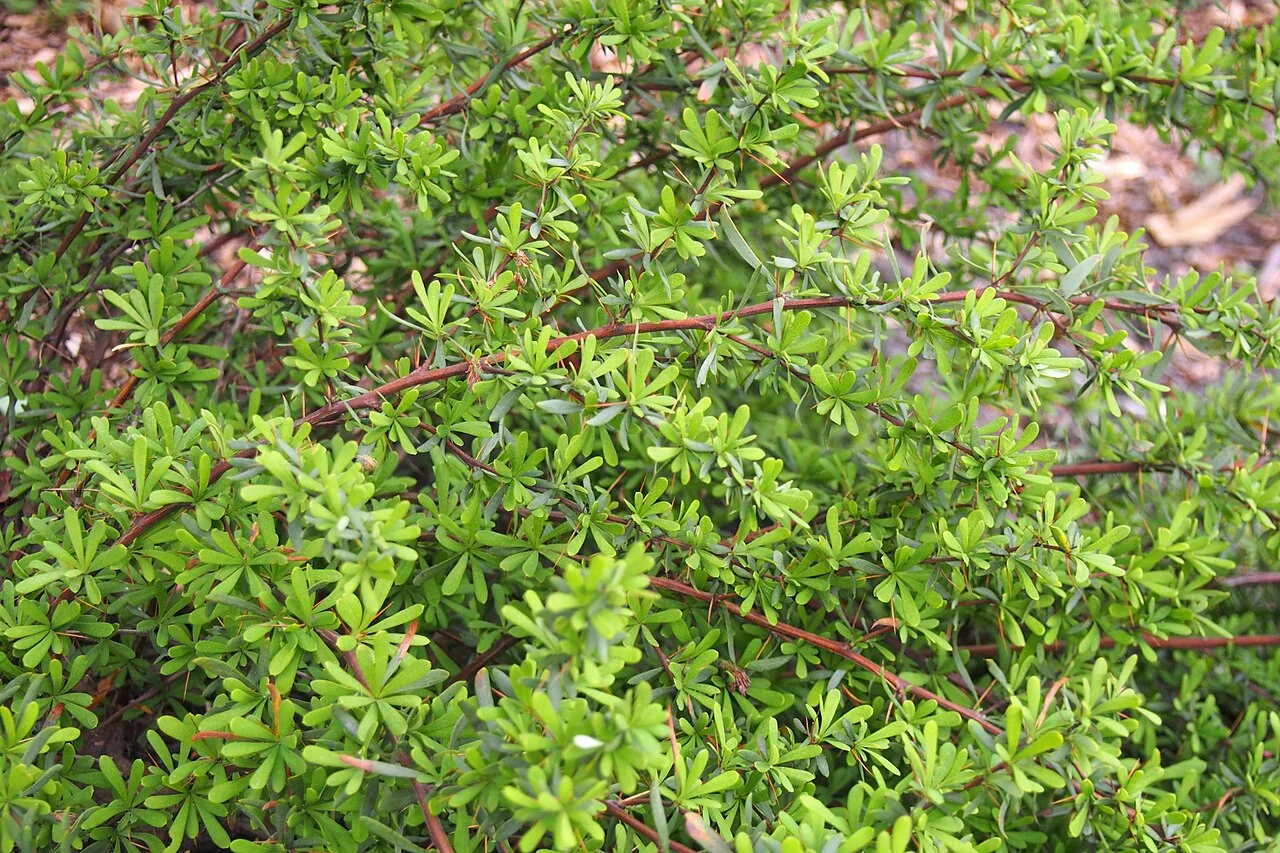
The branching growth of Berberis wilsoniae.
Agnieszka Kwiecień, Nova / Wikimedia Commons / CC BY-SA 4.0

Photo details
Resized and converted to WebP. No content edits.
Source: File:Berberis wilsoniae 2019-04-28 01.jpg
Reviewed . Source identification, photograph and license reviewed. The image illustrates the named plant; it does not verify dimensions or other plant traits.
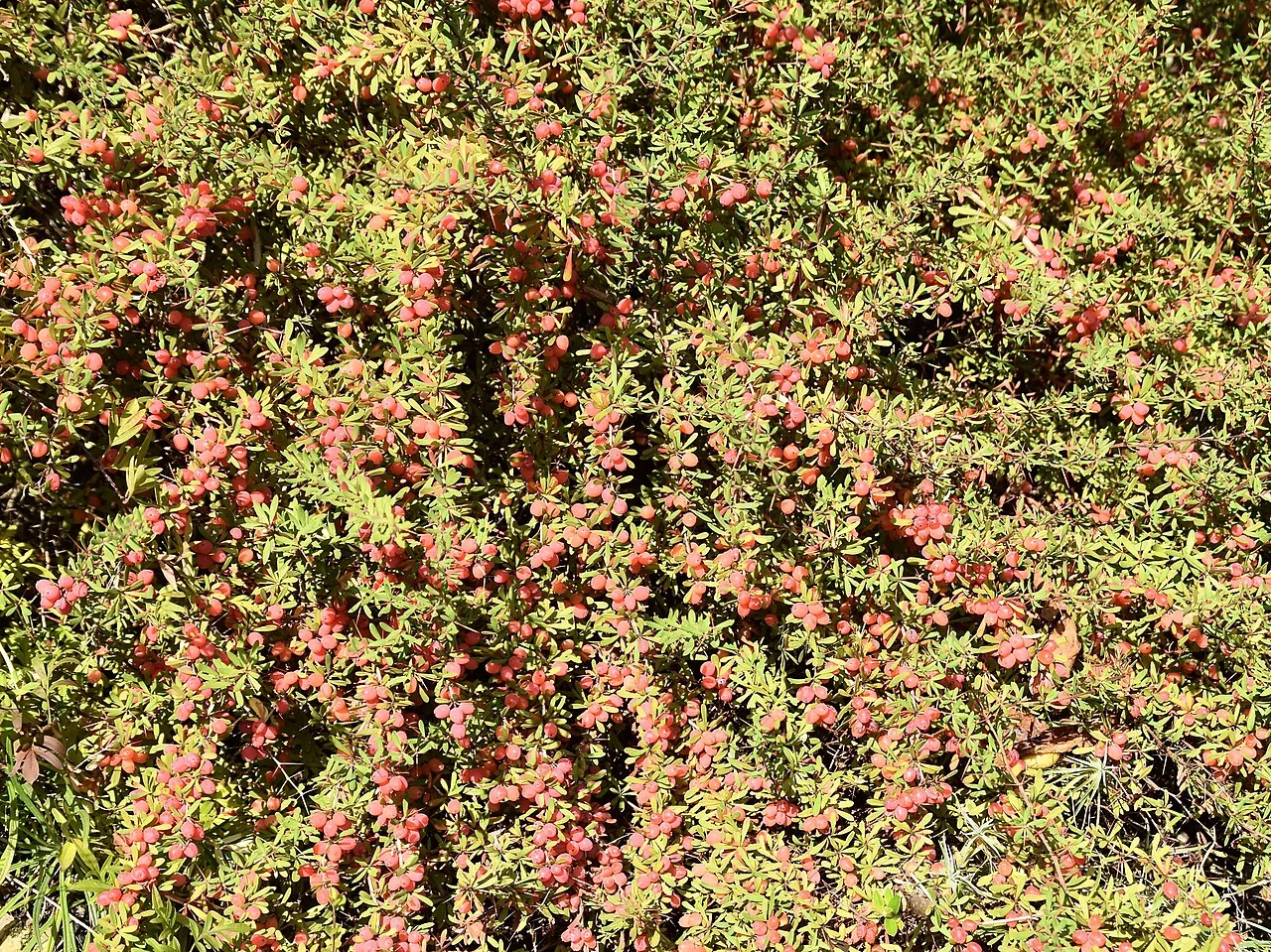
A fruiting Berberis wilsoniae plant.
NasserHalaweh / Wikimedia Commons / CC BY-SA 4.0

Photo details
Resized and converted to WebP. No content edits.
Source: File:Berberidaceae Berberis wilsoniae 1.jpg
Reviewed . Source identification, photograph and license reviewed. The image illustrates the named plant; it does not verify dimensions or other plant traits.
Common names
9 names · 7 languages- EnglishYour language
-
- Mrs. Wilson's Barberry[1]
- Wilson's barberry
Other languages (6)
Sources & name notes (1)
Names recorded in our plant catalogue and botanical sources, grouped by language. Usage can vary by region.
Numbered references identify names recorded by an external source. Other names are from our plant catalogue.
Community-curated iNaturalist taxonomy; common-name attestation, not an independent botanical determination.
Source records
- Mrs. Wilson's Barberry — results[0].names[1]; taxon id 447897; Berberis wilsoniae.
- dřišťál Wilsonové — results[0].names[2]; taxon id 447897; Berberis wilsoniae.
- 金花小檗 — results[0].names[3]; taxon id 447897; Berberis wilsoniae.
- 金花小檗 — results[0].names[4]; taxon id 447897; Berberis wilsoniae.
- dráč Wilsonovej — results[0].names[5]; taxon id 447897; Berberis wilsoniae.
- Wilsons berberis — results[0].names[6]; taxon id 447897; Berberis wilsoniae.
General information
Kew's family placement for the genus Berberis (WCVP v16).
Sources [1]Plant characteristics
Growing conditions
Well-drained, Moist
Sand (light) Loam (medium) Clay (heavy)
Acidic Neutral Alkaline
Partial shade, Full sun
Uses
Fruit
Dye
Description
The fruit can be eaten both raw and cooked. It has a sour taste similar to lemon and is a good addition to muesli. Children and some adults enjoy the fruit raw, especially in small amounts. However, most adults prefer to cook it and use it in pies, jam, etc. The fruits are about 6 mm long.
Harvest
Sources and references
References for the information marked with source numbers on this page.
-
Royal Botanic Gardens, Kew
World Checklist of Vascular Plants, version 16, extracted 4 June 2026
Relevant sections
- Botanical family: WCVP v16, wcvp_names.csv row 1324406; name ID 2673360; Berberis L.. Family column.
- Taxonomy: WCVP v16, wcvp_names.csv row 762803; name ID 2674666; Berberis wilsoniae Hemsl..
Source checked on .
Source data licence: CC BY 3.0.
-
Catalogue of Life
Catalogue of Life 2026-08-20 — Berberis wilsoniae
Taxonomic data from World Plants, version 26.05, reproduced in Catalogue of Life 2026-08-20.
Supports: TaxonomyRelevant sections
- Taxonomy: COL 2026-08-20, NameUsage.tsv line 4995744, ID LKC5: Berberis wilsoniae Hemsl. (accepted).
Source checked on .