Berberis darwinii
Darwin's Barberry, Darwin's berberis
Explore the size, hardiness, soil, light, edible uses and harvest period of Berberis darwinii.
Plant photos
2 photos · Select to enlarge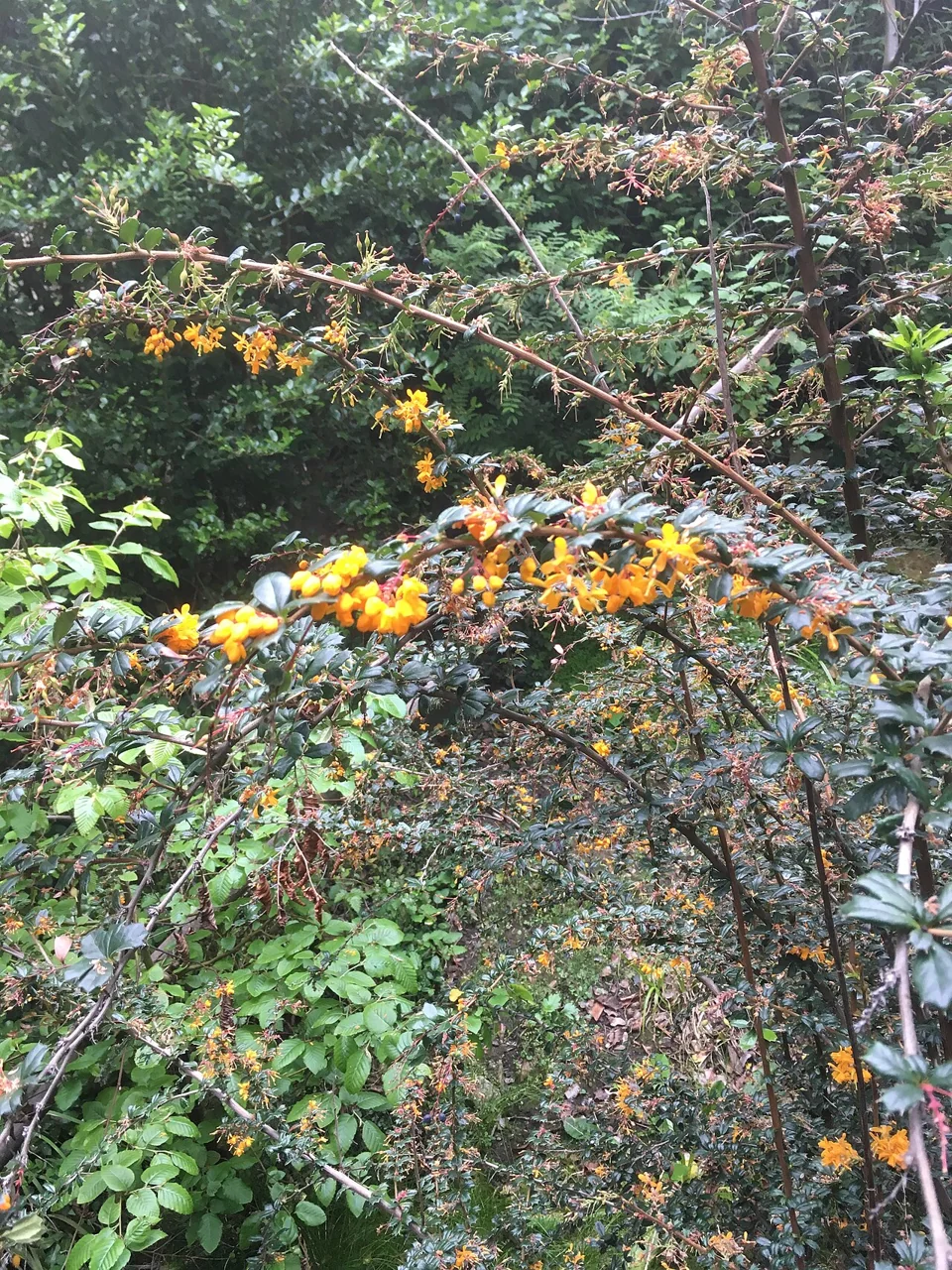
Berberis darwinii in flower.
Patricio Novoa Quezada from Valparaíso, Chile / Wikimedia Commons / CC BY 2.0
.jpg)
Photo details
Resized and converted to WebP. No content edits.
Source: File:Berberis darwinii (31147629178).jpg
Reviewed . Source identification, photograph and license reviewed. The image illustrates the named plant; it does not verify dimensions or other plant traits.
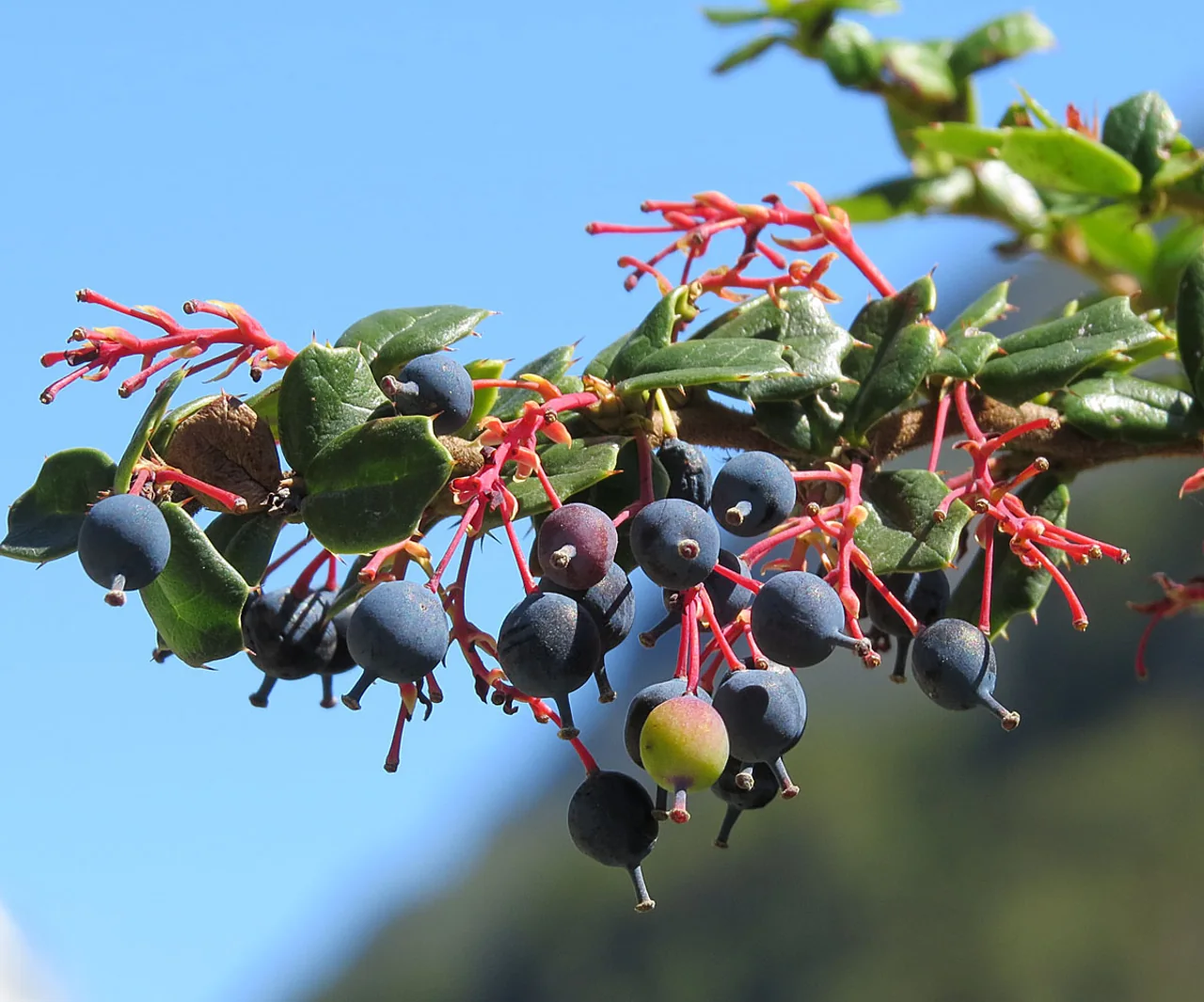
Fruit of Berberis darwinii.
Dick Culbert from Gibsons, B.C., Canada / Wikimedia Commons / CC BY 2.0

Photo details
Resized and converted to WebP. No content edits.
Source: File:Berberis darwinii - Flickr - Dick Culbert.jpg
Reviewed . Source identification, photograph and license reviewed. The image illustrates the named plant; it does not verify dimensions or other plant traits.
Common names
17 names · 14 languagesOther languages (13)
- Dutch
-
- Darwins berberis[2]
- French
-
- Épine-vinette de Darwin[2]
- Chinese (Simplified)
-
- 达尔文小檗[2]
- Chinese (Traditional)
-
- 達爾文小檗[2]
- Czech
-
- dřišťál Darwinův[2]
- Finnish
-
- chilenhappomarja[2]
- Mapudungun
-
- Chakaywa[2]
- Russian
-
- Барбарис Дарвина[2]
- Slovak
-
- dráč Darwinov[2]
- Swedish
-
- darwinberberis[2]
- Language not specified
-
- quelung [Chile][1]
Sources & name notes (2)
Names recorded in our plant catalogue and botanical sources, grouped by language. Usage can vary by region.
Numbered references identify names recorded by an external source. Other names are from our plant catalogue.
Common names from World Plants, version 26.05, reproduced in Catalogue of Life 2026-08-20. License: CC BY.
Source records
- Michay — VernacularName.tsv, line 166589; taxon 68KB8.
- quelung [Chile]; Darwin's Barberry (EN); Darwin-Berberitze (DE) — VernacularName.tsv, line 166590; taxon 68KB8.
Community-curated iNaturalist taxonomy; common-name attestation, not an independent botanical determination.
Source records
- Darwin's Barberry — results[0].names[1]; taxon id 75751; Berberis darwinii.
- Darwins Barberry — results[0].names[2]; taxon id 75751; Berberis darwinii.
- Darwins berberis — results[0].names[3]; taxon id 75751; Berberis darwinii.
- dřišťál Darwinův — results[0].names[4]; taxon id 75751; Berberis darwinii.
- Michay — results[0].names[5]; taxon id 75751; Berberis darwinii.
- darwinberberis — results[0].names[6]; taxon id 75751; Berberis darwinii.
- 達爾文小檗 — results[0].names[7]; taxon id 75751; Berberis darwinii.
- 达尔文小檗 — results[0].names[8]; taxon id 75751; Berberis darwinii.
- Барбарис Дарвина — results[0].names[9]; taxon id 75751; Berberis darwinii.
- chilenhappomarja — results[0].names[10]; taxon id 75751; Berberis darwinii.
- Darwins Berberitze — results[0].names[11]; taxon id 75751; Berberis darwinii.
- Épine-vinette de Darwin — results[0].names[12]; taxon id 75751; Berberis darwinii.
- Chakaywa — results[0].names[13]; taxon id 75751; Berberis darwinii.
- dráč Darwinov — results[0].names[14]; taxon id 75751; Berberis darwinii.
General information
Kew's family placement for the genus Berberis (WCVP v16).
Sources [1]Plant characteristics
NC State landscape size range; converted from feet and inches. Size varies with site, age and management.
Sources [3]NC State landscape size range; converted from feet and inches. Size varies with site, age and management.
Sources [3]Growing conditions
USDA zones listed by NC State; winter survival does not establish reliable cropping.
Sources [3]Uses
Fruit
Dye, Hedge, Food forest
Description
Fruit - can be eaten raw or cooked and used in preserves. It has a sour but nevertheless pleasant taste that is especially loved by children. When the fruit is fully ripe, it loses most of its sour flavor and becomes very delicious. Unfortunately, the fruit contains a lot of seeds in relation to the amount of pulp, which somewhat detracts from the enjoyment of eating. The fruit tastes wonderful in raw muesli or cooked in porridge. The fruits are about 7 mm long.
Harvest
Sources and references
References for the information marked with source numbers on this page.
-
Royal Botanic Gardens, Kew
World Checklist of Vascular Plants, version 16, extracted 4 June 2026
Relevant sections
- Botanical family: WCVP v16, wcvp_names.csv row 1324406; name ID 2673360; Berberis L.. Family column.
- Taxonomy: WCVP v16, wcvp_names.csv row 1324702; name ID 2673673; Berberis darwinii Hook..
Source checked on .
Source data licence: CC BY 3.0.
-
Catalogue of Life
Catalogue of Life 2026-08-20 — Berberis darwinii
Taxonomic data from World Plants, version 26.05, reproduced in Catalogue of Life 2026-08-20.
Supports: TaxonomyRelevant sections
- Taxonomy: COL 2026-08-20, NameUsage.tsv line 1997714, ID 68KB8: Berberis darwinii Hook. (accepted).
Source checked on .
-
NC State Extension, North Carolina State University
Berberis darwinii — Extension Gardener Plant Toolbox
Supports: HeightSpreadGrowth rateFoliageGrowth habitLife cycleLightSoil moistureSoil textureSoil pHUSDA hardiness
Relevant sections
- Height: Dimensions > Height; Height: 5 ft. 0 in. - 10 ft. 0 in.
- Spread: Dimensions > Width; Width: 4 ft. 0 in. - 10 ft. 0 in.
- Growth rate: Growth Rate
- Foliage: Woody Plant Leaf Characteristics
- Growth habit: Habit/Form
- Life cycle: Life Cycle
- Light: Light
- Soil moisture: Soil Drainage
- Soil texture: Soil Texture
- Soil pH: Soil pH
- USDA hardiness: USDA Plant Hardiness Zone
Source checked on .