Asimina triloba
Papaw
Explore the size, hardiness, soil, light, edible uses and harvest period of Asimina triloba.
Plant photos
3 photos · Select to enlarge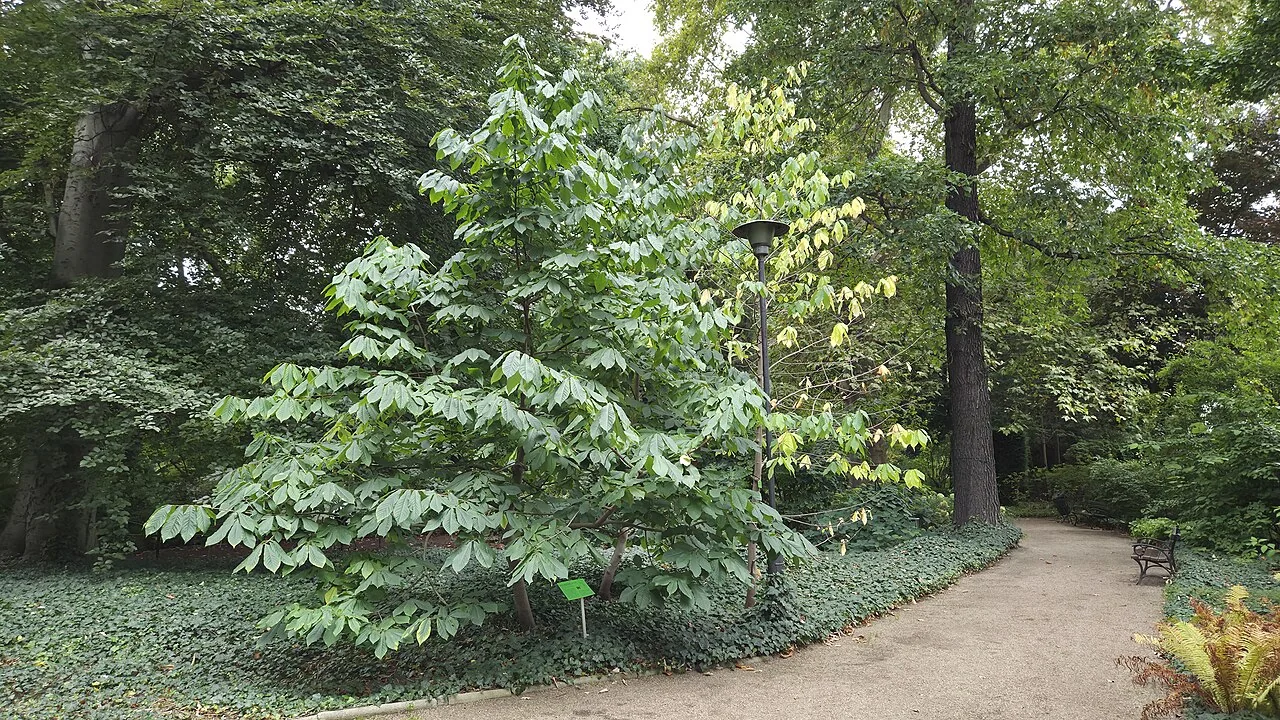
Asimina triloba growing in the botanical garden in Wrocław, Poland.
Crusier / Wikimedia Commons / CC BY 4.0

Photo details
Resized and converted to WebP. No content edits.
Source: File:Asimina triloba OB Wrocław.jpg
Reviewed . Source identification, photograph and license reviewed. This image illustrates the named plant; it does not verify dimensions or other plant traits.
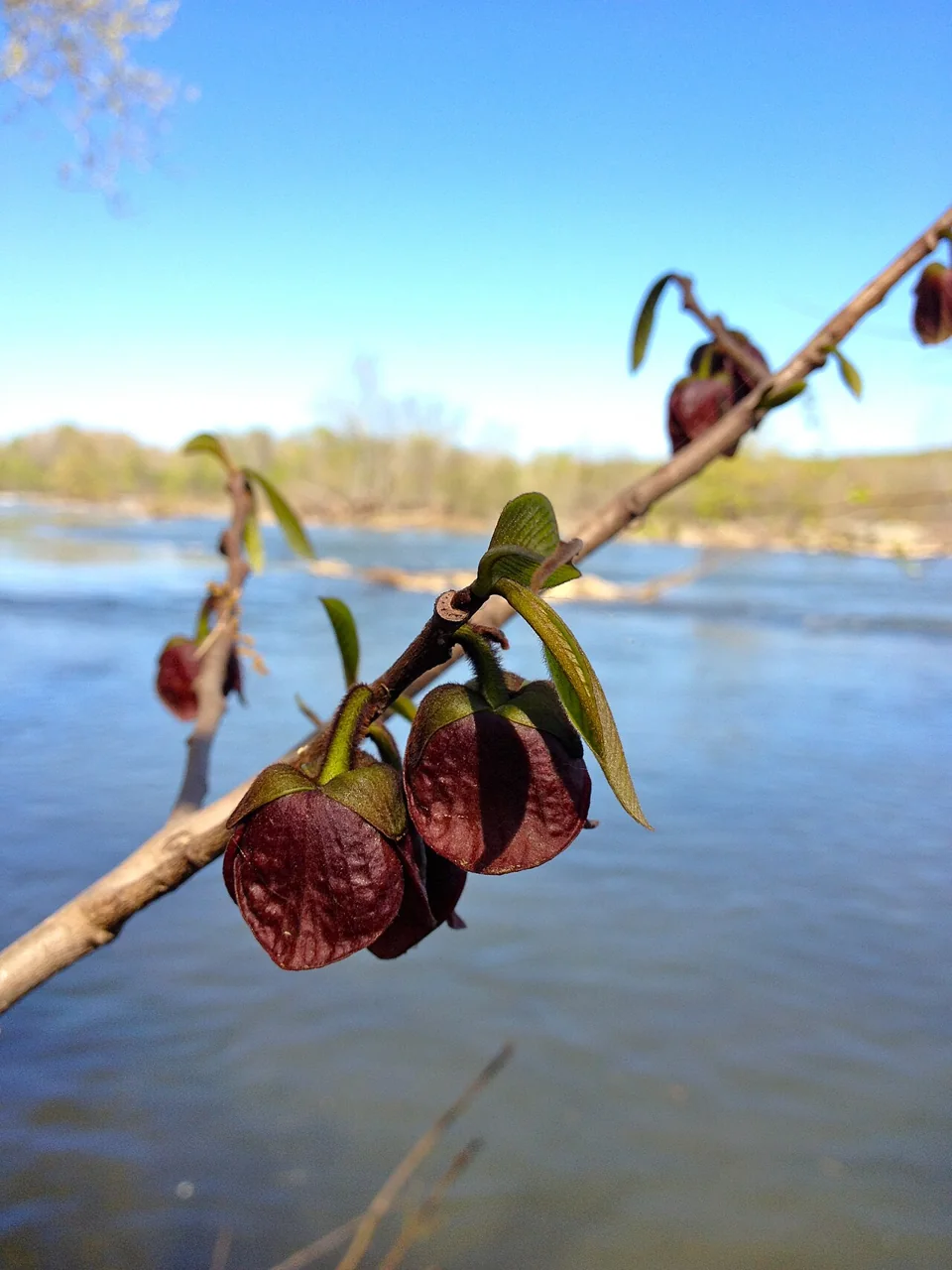
Dark red flowers of Asimina triloba on a branch.
Fritzflohrreynolds / Wikimedia Commons / CC BY-SA 3.0

Photo details
Resized and converted to WebP. No content edits.
Source: File:Asimina triloba - Pawpaw.jpg
Reviewed . Source identification, photograph and license reviewed. This image illustrates the named plant; it does not verify dimensions or other plant traits.
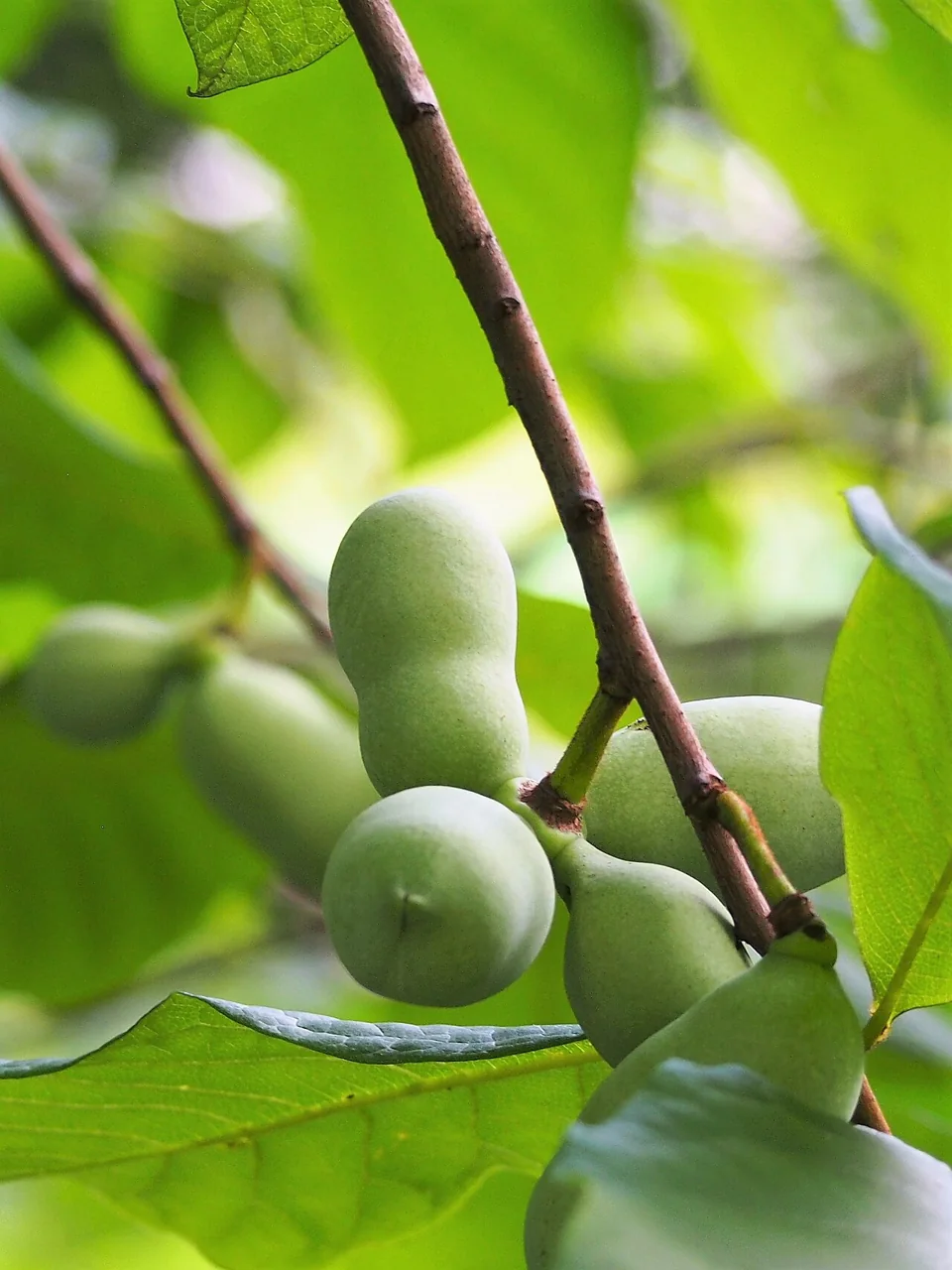
Developing fruit of Asimina triloba.
Agnieszka Kwiecień, Nova / Wikimedia Commons / CC BY-SA 4.0

Photo details
Resized and converted to WebP. No content edits.
Source: File:Asimina triloba Asymina trójklapowa 2020-07-18 02.jpg
Reviewed . Source identification, photograph and license reviewed. The image illustrates the named plant; it does not verify dimensions or other plant traits.
Common names
38 names · 23 languagesOther languages (22)
- Dutch
-
- Pawpaw[2]
- roomappel
- French
-
- Asiminier trilobé[2]
- Chinese (Simplified)
-
- 泡泡树[2]
- Chinese (Traditional)
-
- 泡泡樹[2]
- Choctaw
-
- Umbi[2]
- Czech
-
- muďoul trojlaločný[2]
- Danish
-
- Pawpaw[2]
- Finnish
-
- metsäpapavi[2]
- Italian
-
- Banano del nord[2]
- Lithuanian
-
- Triskiautė azimina[2]
- Miami
-
- mihsiimišaahkwi[2]
- Polish
-
- asymina trójklapowa[2]
- Portuguese
-
- Pawpaw[2]
- Russian
-
- Азимина трёхлопастная[2]
- Slovak
-
- asimina ovocná[2]
- Spanish
-
- chirimoyo de la Florida[2]
- Tunica
-
- Yukula[2]
- Turkish
-
- Bayağı Papav[2]
- Ukrainian
-
- Азиміна трилопатева[2]
- Language not specified
-
- Pawpaw[1]
Sources & name notes (2)
Names recorded in our plant catalogue and botanical sources, grouped by language. Usage can vary by region.
Numbered references identify names recorded by an external source. Other names are from our plant catalogue.
Common names from World Plants, version 26.05, reproduced in Catalogue of Life 2026-08-20. License: CC BY.
Source records
- Pawpaw — VernacularName.tsv, line 160632; taxon 67TV7.
Community-curated iNaturalist taxonomy; common-name attestation, not an independent botanical determination.
Source records
- common pawpaw — results[0].names[1]; taxon id 50897; Asimina triloba.
- Banano del nord — results[0].names[2]; taxon id 50897; Asimina triloba.
- common paw paw — results[0].names[3]; taxon id 50897; Asimina triloba.
- pawpaw — results[0].names[4]; taxon id 50897; Asimina triloba.
- paw paw — results[0].names[5]; taxon id 50897; Asimina triloba.
- paw-paw — results[0].names[6]; taxon id 50897; Asimina triloba.
- papaw — results[0].names[7]; taxon id 50897; Asimina triloba.
- Pawpaw — results[0].names[8]; taxon id 50897; Asimina triloba.
- Indiana banana — results[0].names[9]; taxon id 50897; Asimina triloba.
- fetid-bush — results[0].names[10]; taxon id 50897; Asimina triloba.
- bandango — results[0].names[11]; taxon id 50897; Asimina triloba.
- muďoul trojlaločný — results[0].names[12]; taxon id 50897; Asimina triloba.
- ポポー — results[0].names[13]; taxon id 50897; Asimina triloba.
- chirimoyo de la Florida — results[0].names[14]; taxon id 50897; Asimina triloba.
- アケビガキ — results[0].names[15]; taxon id 50897; Asimina triloba.
- 泡泡树 — results[0].names[16]; taxon id 50897; Asimina triloba.
- 泡泡樹 — results[0].names[17]; taxon id 50897; Asimina triloba.
- Umbi — results[0].names[18]; taxon id 50897; Asimina triloba.
- Yukula — results[0].names[19]; taxon id 50897; Asimina triloba.
- Азимина трёхлопастная — results[0].names[20]; taxon id 50897; Asimina triloba.
- asiminier trilobé — results[0].names[21]; taxon id 50897; Asimina triloba.
- Pawpaw — results[0].names[22]; taxon id 50897; Asimina triloba.
- custard apple — results[0].names[23]; taxon id 50897; Asimina triloba.
- false-banana — results[0].names[24]; taxon id 50897; Asimina triloba.
- mihsiimišaahkwi — results[0].names[25]; taxon id 50897; Asimina triloba.
- asymina trójklapowa — results[0].names[26]; taxon id 50897; Asimina triloba.
- Triskiautė azimina — results[0].names[27]; taxon id 50897; Asimina triloba.
- Pawpaw — results[0].names[28]; taxon id 50897; Asimina triloba.
- Dreilappige Papau — results[0].names[29]; taxon id 50897; Asimina triloba.
- Indianerbanane — results[0].names[30]; taxon id 50897; Asimina triloba.
- Pawpaw — results[0].names[31]; taxon id 50897; Asimina triloba.
- American paw paw — results[0].names[32]; taxon id 50897; Asimina triloba.
- metsäpapavi — results[0].names[33]; taxon id 50897; Asimina triloba.
- asimina ovocná — results[0].names[34]; taxon id 50897; Asimina triloba.
- Азиміна трилопатева — results[0].names[35]; taxon id 50897; Asimina triloba.
- Bayağı Papav — results[0].names[36]; taxon id 50897; Asimina triloba.
General information
Plant characteristics
NC State landscape size range; converted from feet and inches. Size varies with site, age and management.
Sources [1]NC State landscape size range; converted from feet and inches. Size varies with site, age and management.
Sources [1]Growing conditions
USDA zones listed by NC State; winter survival does not establish reliable cropping.
Sources [1]Moist, Well-drained
Loam (medium)
Uses
Fruit
Dye, Fibre, Insecticide, Parasiticide, Wood
Description
Asimina triloba is a deciduous fruit tree. Ripe fruits have soft, custard-like flesh and skin that is green to yellow and may darken after harvest. Only the ripe pulp is described here as food; remove the skin and seeds. Underripe fruit can cause gastrointestinal distress, and even ripe fruit can cause stomach or skin irritation in some people. Harvest timing varies with region and cultivar. For cultivation, provide moist, well-drained soil; established trees crop best in sun, while young seedlings need shade.
Harvest
Crown
Sources and references
References for the information marked with source numbers on this page.
-
North Carolina State University
Asimina triloba (Common Pawpaw, Pawpaw) | North Carolina Extension Gardener Plant Toolbox
Supports: DescriptionSoil moistureHeightSpreadGrowth rateFoliageGrowth habitLife cycleSoil pHUSDA hardiness
Relevant sections
- Description: Description; Whole Plant Traits; Edibility; Poison Symptoms and Toxic Principle, where applicable
- Soil moisture: Cultural Conditions: Soil Drainage
- Height: Dimensions > Height; Height: 15 ft. 0 in. - 30 ft. 0 in.
- Spread: Dimensions > Width; Width: 15 ft. 0 in. - 30 ft. 0 in.
- Growth rate: Growth Rate
- Foliage: Woody Plant Leaf Characteristics
- Growth habit: Habit/Form
- Life cycle: Life Cycle
- Soil pH: Soil pH
- USDA hardiness: USDA Plant Hardiness Zone
Source checked on .
-
Kentucky State University Cooperative Extension Program
Pawpaw Planting Guide
Relevant sections
- Description: Soil requirements and shade requirements of young seedlings
- Light: Soil requirements and shade requirements of young seedlings
- Soil moisture: Soil requirements and shade requirements of young seedlings
Source checked on .
-
Kentucky State University Cooperative Extension Program
Pawpaw Description and Nutritional Information
Supports: Description
Relevant sections
- Description: Fruit description and nutritional information
Source checked on .
-
Alabama Cooperative Extension System
Pawpaw Production Guide
Relevant sections
- Description: Site selection, harvest and fruit handling sections
- Light: Site selection, harvest and fruit handling sections
Source checked on .
-
Royal Botanic Gardens, Kew
World Checklist of Vascular Plants, version 16, extracted 4 June 2026
Relevant sections
- Botanical family: WCVP v16, wcvp_names.csv row 723450; name ID 2655401; Asimina Adans.. Family column.
- Taxonomy: WCVP v16, wcvp_names.csv row 1315860; name ID 2655435; Asimina triloba (L.) Dunal.
Source checked on .
Source data licence: CC BY 3.0.
-
Catalogue of Life
Catalogue of Life 2026-08-20 — Asimina triloba
Taxonomic data from World Plants, version 26.05, reproduced in Catalogue of Life 2026-08-20.
Supports: TaxonomyRelevant sections
- Taxonomy: COL 2026-08-20, NameUsage.tsv line 1982106, ID 67TV7: Asimina triloba (L.) Dunal (accepted).
Source checked on .