Aronia arbutifolia
Red Chokeberry
Explore the size, hardiness, soil, light, edible uses and harvest period of Aronia arbutifolia.
Plant photos
2 photos · Select to enlarge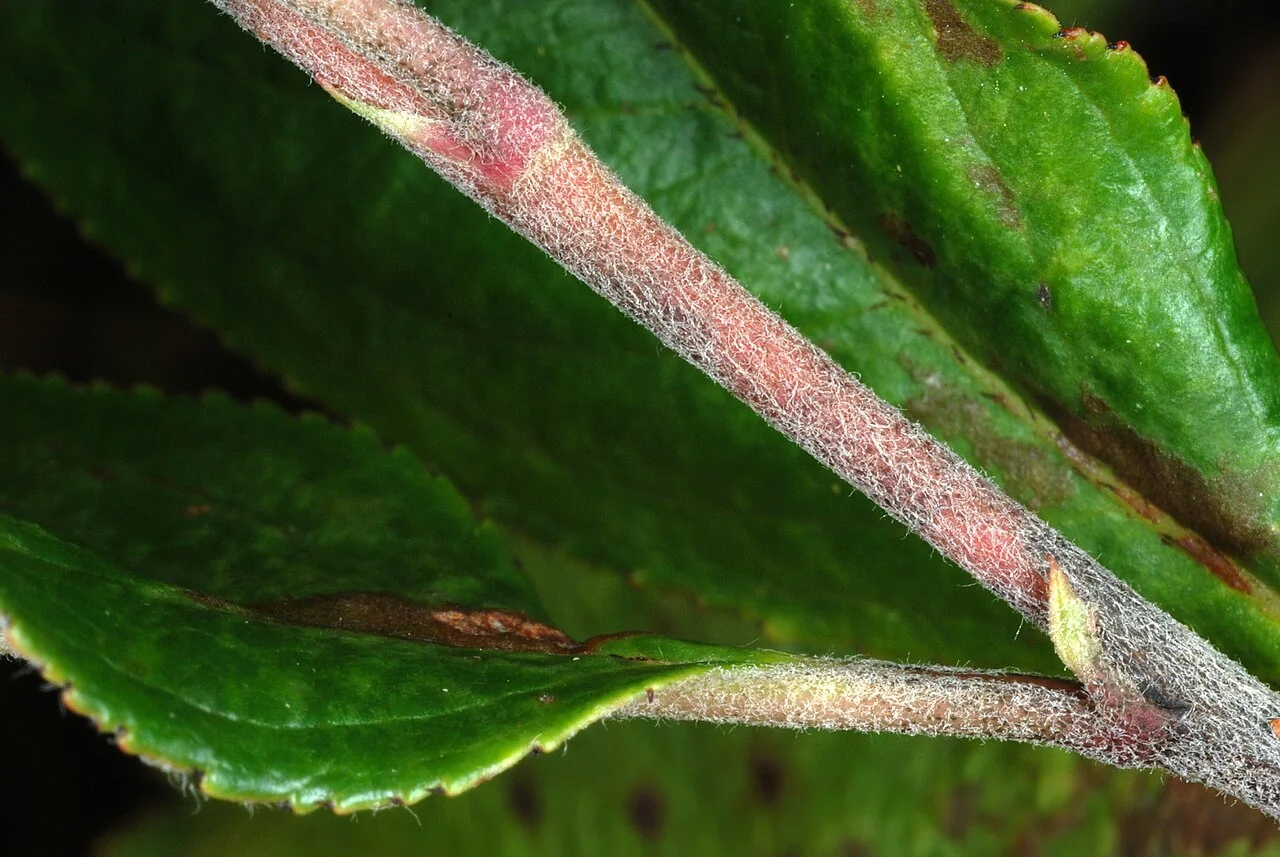
A close view of stems and foliage of Aronia arbutifolia.
DouglasGoldman / Wikimedia Commons / CC BY-SA 4.0

Photo details
Resized and converted to WebP. No content edits.
Source: File:Aronia arbutifolia5.jpg
Reviewed . Source identification, photograph and license reviewed. The image illustrates the named plant; it does not verify dimensions or other plant traits.
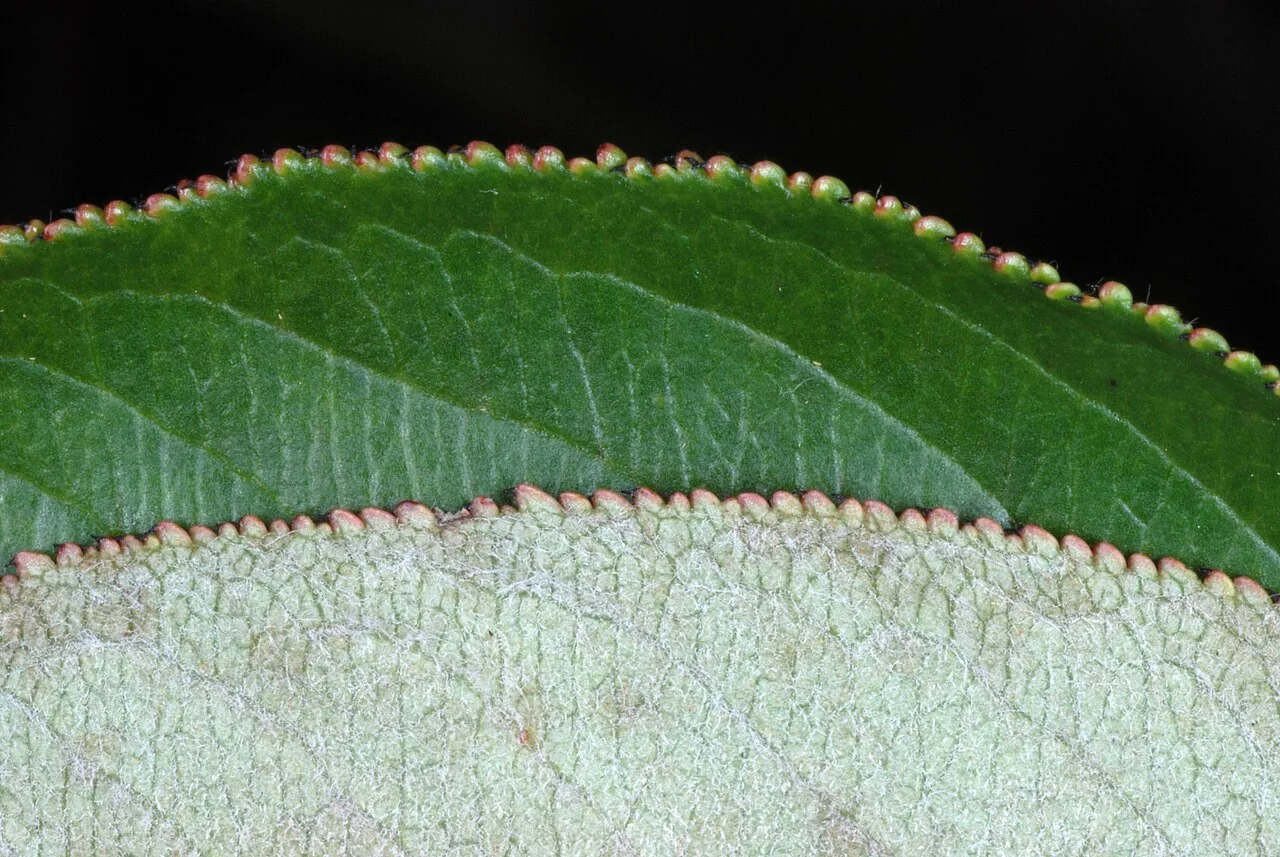
Leaf surfaces and margins of Aronia arbutifolia.
DouglasGoldman / Wikimedia Commons / CC BY-SA 4.0

Photo details
Resized and converted to WebP. No content edits.
Source: File:Aronia arbutifolia7.jpg
Reviewed . Source identification, photograph and license reviewed. The image illustrates the named plant; it does not verify dimensions or other plant traits.
Common names
17 names · 13 languagesOther languages (12)
Sources & name notes (2)
Names recorded in our plant catalogue and botanical sources, grouped by language. Usage can vary by region.
Numbered references identify names recorded by an external source. Other names are from our plant catalogue.
Common names from World Plants, version 26.05, reproduced in Catalogue of Life 2026-08-20. License: CC BY.
Source records
- Red chokeberry (EN) — VernacularName.tsv, line 171829; taxon GTSG.
- Rotfrüchtige Apfelbeere (DE) — VernacularName.tsv, line 171830; taxon GTSG.
Community-curated iNaturalist taxonomy; common-name attestation, not an independent botanical determination.
Source records
- red chokeberry — results[0].names[1]; taxon id 151797; Aronia arbutifolia.
- Brunfrugtet surbær — results[0].names[2]; taxon id 151797; Aronia arbutifolia.
- Rode appelbes — results[0].names[3]; taxon id 151797; Aronia arbutifolia.
- puna-aronia — results[0].names[4]; taxon id 151797; Aronia arbutifolia.
- temnoplodec planikolistý — results[0].names[5]; taxon id 151797; Aronia arbutifolia.
- Арония арбутусолистная — results[0].names[6]; taxon id 151797; Aronia arbutifolia.
- rödaronia — results[0].names[7]; taxon id 151797; Aronia arbutifolia.
- röd aronia — results[0].names[8]; taxon id 151797; Aronia arbutifolia.
- 红苦味果 — results[0].names[9]; taxon id 151797; Aronia arbutifolia.
- 紅山楸梅 — results[0].names[10]; taxon id 151797; Aronia arbutifolia.
- 红山楸梅 — results[0].names[11]; taxon id 151797; Aronia arbutifolia.
- Raudonvaisė aronija — results[0].names[12]; taxon id 151797; Aronia arbutifolia.
- Aronie à feuilles d'arbousier — results[0].names[13]; taxon id 151797; Aronia arbutifolia.
- Aronie à fruits rouges — results[0].names[14]; taxon id 151797; Aronia arbutifolia.
- arónia jahodovcovitá — results[0].names[15]; taxon id 151797; Aronia arbutifolia.
General information
Plant characteristics
NC State landscape size range; converted from feet and inches. Size varies with site, age and management.
Sources [3]NC State landscape size range; converted from feet and inches. Size varies with site, age and management.
Sources [3]Whole-plant habit and form as described by NC State.
Sources [3]Growing conditions
USDA zones listed by NC State; winter survival does not establish reliable cropping.
Sources [3]Frequent Standing Water, Well-drained, Moist, Occasionally Wet
Moisture and drainage conditions listed by NC State.
Sources [3]Uses
Fruit
None
Description
Fruit can be eaten both raw and cooked. It is also possible to dry it and use it to make pemmican. The quality of the fruit varies widely; some forms are quite pleasant when ripe, especially if they have had some frost. The fruit has a diameter of about 7 mm and can hang on the plant for several months.
Harvest
Sources and references
References for the information marked with source numbers on this page.
-
Royal Botanic Gardens, Kew
World Checklist of Vascular Plants, version 16, extracted 4 June 2026
Relevant sections
- Botanical family: WCVP v16, wcvp_names.csv row 838120; name ID 2942273; Aronia Medik.. Family column.
- Taxonomy: WCVP v16, wcvp_names.csv row 838156; name ID 2942281; Aronia arbutifolia (L.) Pers..
Source checked on .
Source data licence: CC BY 3.0.
-
Catalogue of Life
Catalogue of Life 2026-08-20 — Aronia arbutifolia
Taxonomic data from World Plants, version 26.05, reproduced in Catalogue of Life 2026-08-20.
Supports: TaxonomyRelevant sections
- Taxonomy: COL 2026-08-20, NameUsage.tsv line 4851978, ID GTSG: Aronia arbutifolia (L.) Pers. (accepted).
Source checked on .
-
NC State Extension, North Carolina State University
Aronia arbutifolia — Extension Gardener Plant Toolbox
Supports: HeightSpreadGrowth rateFoliageGrowth habitLightSoil moistureSoil textureSoil pHUSDA hardiness
Relevant sections
- Height: Dimensions > Height; Height: 6 ft. 0 in. - 12 ft. 0 in.
- Spread: Dimensions > Width; Width: 3 ft. 0 in. - 5 ft. 0 in.
- Growth rate: Growth Rate
- Foliage: Woody Plant Leaf Characteristics
- Growth habit: Habit/Form
- Light: Light
- Soil moisture: Soil Drainage
- Soil texture: Soil Texture
- Soil pH: Soil pH
- USDA hardiness: USDA Plant Hardiness Zone
Source checked on .