Armoracia rusticana
Horseradish
Explore the size, hardiness, soil, light, edible uses and harvest period of Armoracia rusticana.
Plant photos
2 photos · Select to enlarge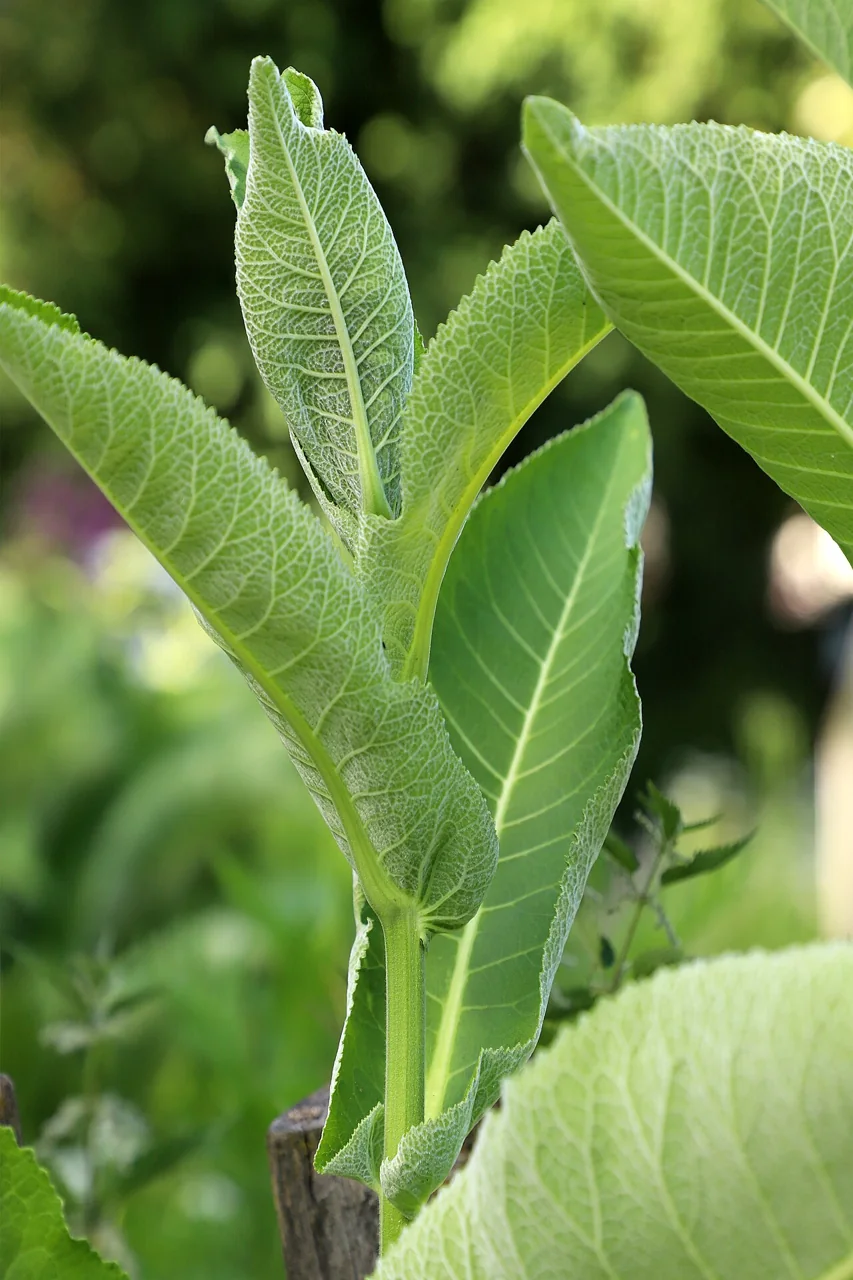
Leaves of Armoracia rusticana.
W. Bulach / Wikimedia Commons / CC BY-SA 4.0
.jpg)
Photo details
Resized and converted to WebP. No content edits.
Source: File:,00 3773 Meerrettich (Armoracia rusticana).jpg
Reviewed . Source identification, photograph and license reviewed. The image illustrates the named plant; it does not verify dimensions or other plant traits.
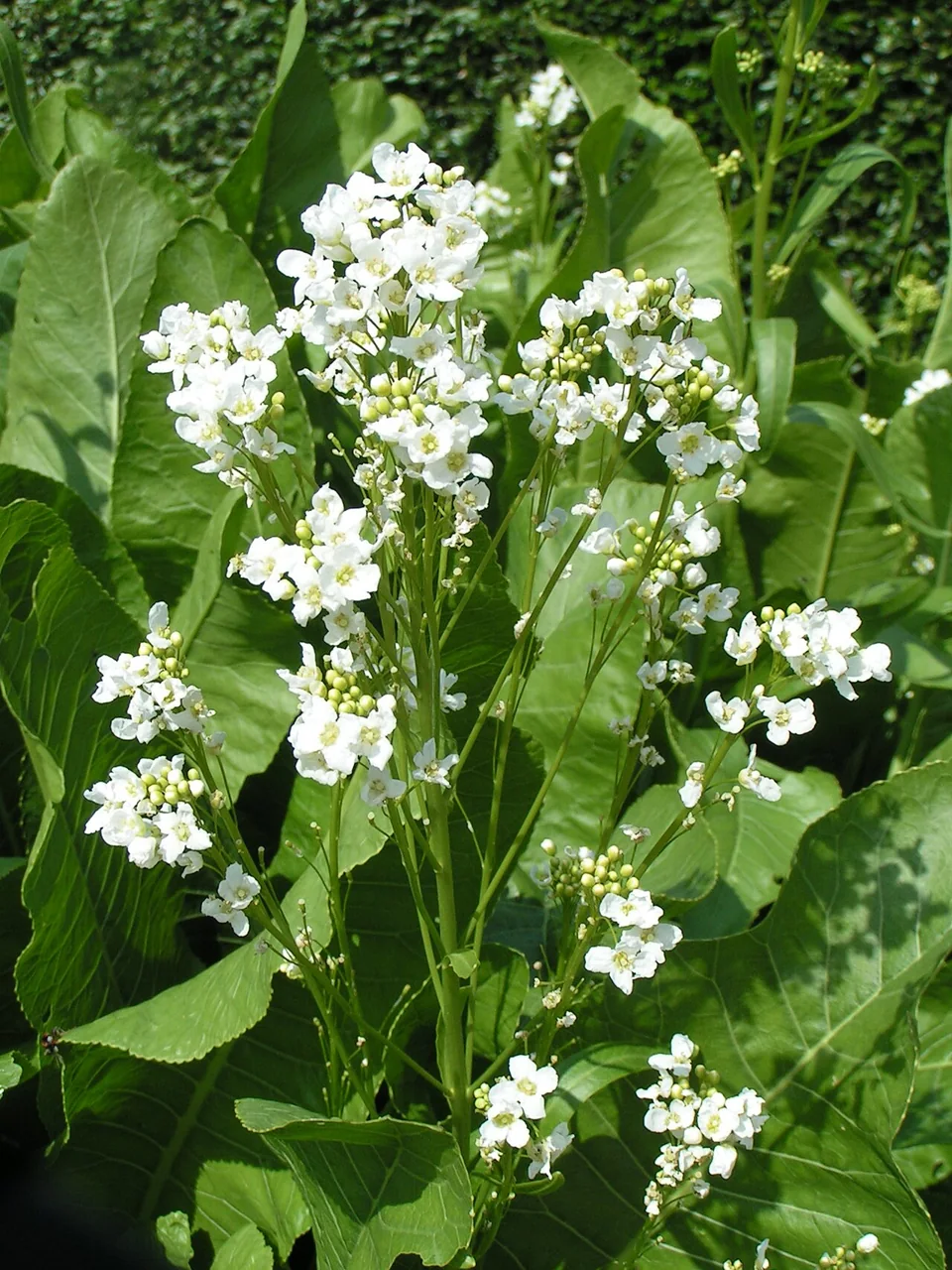
Flowers of Armoracia rusticana.
Pethan / Wikimedia Commons / CC BY-SA 3.0

Photo details
Resized and converted to WebP. No content edits.
Source: File:Armoracia rusticana.jpg
Reviewed . Source identification, photograph and license reviewed. The image illustrates the named plant; it does not verify dimensions or other plant traits.
Common names
30 names · 24 languagesOther languages (23)
- French
-
- Raifort[2]
- Belarusian
-
- Хрэн звычайны[2]
- Chinese (Simplified)
-
- 辣根[2]
- Chinese (Traditional)
-
- 辣根[2]
- Czech
-
- křen selský[2]
- Danish
-
- Peberrod[2]
- Estonian
-
- aed-mädarõigas[2]
- Hungarian
-
- közönséges torma[2]
- Italian
-
- Rafano[2]
- Latvian
-
- Mārrutks[2]
- Lithuanian
-
- Valgomasis krienas[2]
- Norwegian
-
- pepperrot[2]
- Polish
-
- Chrzan pospolity[2]
- Russian
-
- Хрен обыкновенный[2]
- Slovak
-
- chren dedinský[2]
- Slovenian
-
- navadni hren[2]
- Swedish
-
- Pepparrot[2]
- Turkish
-
- kaşık otu[2]
- Ukrainian
-
- Хрін звичайний[2]
Sources & name notes (2)
Names recorded in our plant catalogue and botanical sources, grouped by language. Usage can vary by region.
Numbered references identify names recorded by an external source. Other names are from our plant catalogue.
Common names from World Plants, version 26.05, reproduced in Catalogue of Life 2026-08-20. License: CC BY.
Source records
- Garten-Meerrettich (DE) — VernacularName.tsv, line 146444; taxon VJT6M.
- Horse-radish (EN) — VernacularName.tsv, line 146445; taxon VJT6M.
Community-curated iNaturalist taxonomy; common-name attestation, not an independent botanical determination.
Source records
- Horseradish — results[0].names[1]; taxon id 75566; Armoracia rusticana.
- Raifort — results[0].names[3]; taxon id 75566; Armoracia rusticana.
- Piparjuuri — results[0].names[4]; taxon id 75566; Armoracia rusticana.
- Meerrettich — results[0].names[5]; taxon id 75566; Armoracia rusticana.
- křen selský — results[0].names[6]; taxon id 75566; Armoracia rusticana.
- Pepparrot — results[0].names[7]; taxon id 75566; Armoracia rusticana.
- Peberrod — results[0].names[8]; taxon id 75566; Armoracia rusticana.
- aed-mädarõigas — results[0].names[9]; taxon id 75566; Armoracia rusticana.
- Хрен обыкновенный — results[0].names[10]; taxon id 75566; Armoracia rusticana.
- Хрін звичайний — results[0].names[11]; taxon id 75566; Armoracia rusticana.
- pepperrot — results[0].names[12]; taxon id 75566; Armoracia rusticana.
- Rafano — results[0].names[13]; taxon id 75566; Armoracia rusticana.
- Valgomasis krienas — results[0].names[14]; taxon id 75566; Armoracia rusticana.
- maustepiparjuuri — results[0].names[15]; taxon id 75566; Armoracia rusticana.
- Chrzan pospolity — results[0].names[16]; taxon id 75566; Armoracia rusticana.
- ウマダイコン — results[0].names[17]; taxon id 75566; Armoracia rusticana.
- 辣根 — results[0].names[18]; taxon id 75566; Armoracia rusticana.
- Mierikswortel — results[0].names[19]; taxon id 75566; Armoracia rusticana.
- kaşık otu — results[0].names[20]; taxon id 75566; Armoracia rusticana.
- Kren — results[0].names[21]; taxon id 75566; Armoracia rusticana.
- navadni hren — results[0].names[22]; taxon id 75566; Armoracia rusticana.
- Хрэн звычайны — results[0].names[23]; taxon id 75566; Armoracia rusticana.
- 辣根 — results[0].names[24]; taxon id 75566; Armoracia rusticana.
- セイヨウワサビ — results[0].names[25]; taxon id 75566; Armoracia rusticana.
- Mierik — results[0].names[26]; taxon id 75566; Armoracia rusticana.
- közönséges torma — results[0].names[27]; taxon id 75566; Armoracia rusticana.
- Mārrutks — results[0].names[28]; taxon id 75566; Armoracia rusticana.
- chren dedinský — results[0].names[29]; taxon id 75566; Armoracia rusticana.
General information
Kew's family placement for the genus Armoracia (WCVP v16).
Sources [1]Plant characteristics
NC State landscape size range; converted from feet and inches. Size varies with site, age and management.
Sources [3]NC State landscape size range; converted from feet and inches. Size varies with site, age and management.
Sources [3]Growing conditions
USDA zones listed by NC State; winter survival does not establish reliable cropping.
Sources [3]Uses
Leaves, Condiment, Root, Tea
Fungicide, Repellent
Description
Young root - raw or cooked. Grated root is used to make horseradish sauce, which has a spicy mustard-like flavor. The sauce is best used uncooked or gently warmed, as too much heat can destroy the volatile oils responsible for the sharpness. In Germany, the roots are sometimes sliced and cooked, similar to parsnips. Carrots are a rich source of sulfur. Fresh carrots contain sinigrin glycoside, which produces mustard oil in the presence of water with the help of the enzyme myrosin, giving it the sharp taste. The thick roots can grow up to 60 cm long and 5 cm thick. The plant is hardy and can be harvested from the ground throughout the winter. Alternatively, the roots can be harvested early in winter and stored for later use. They maintain their juicy state for some time when kept in dry sand. Young leaves - raw or cooked. They have a strong flavor that is pleasant in small amounts in salads. According to some reports, they have a mild, pleasant taste. Seeds can be germinated and eaten in salads.
Harvest
Sources and references
References for the information marked with source numbers on this page.
-
Royal Botanic Gardens, Kew
World Checklist of Vascular Plants, version 16, extracted 4 June 2026
Relevant sections
- Botanical family: WCVP v16, wcvp_names.csv row 721175; name ID 2652936; Armoracia G.Gaertn., B.Mey. & Scherb.. Family column.
- Taxonomy: WCVP v16, wcvp_names.csv row 1313613; name ID 2652952; Armoracia rusticana G.Gaertn., B.Mey. & Scherb..
Source checked on .
Source data licence: CC BY 3.0.
-
Catalogue of Life
Catalogue of Life 2026-08-20 — Armoracia rusticana
Taxonomic data from World Plants, version 26.05, reproduced in Catalogue of Life 2026-08-20.
Supports: TaxonomyRelevant sections
- Taxonomy: COL 2026-08-20, NameUsage.tsv line 5293776, ID VJT6M: Armoracia rusticana G.Gaertn., B.Mey. & Scherb. (accepted).
Source checked on .
-
NC State Extension, North Carolina State University
Armoracia rusticana — Extension Gardener Plant Toolbox
Supports: HeightSpreadGrowth rateGrowth habitLife cycleLightSoil moistureSoil textureSoil pHUSDA hardiness
Relevant sections
- Height: Dimensions > Height; Height: 2 ft. 0 in. - 5 ft. 0 in.
- Spread: Dimensions > Width; Width: 2 ft. 6 in. - 4 ft. 0 in.
- Growth rate: Growth Rate
- Growth habit: Habit/Form
- Life cycle: Life Cycle
- Light: Light
- Soil moisture: Soil Drainage
- Soil texture: Soil Texture
- Soil pH: Soil pH
- USDA hardiness: USDA Plant Hardiness Zone
Source checked on .