Arctium minus
Lesser Burdock
Explore the size, hardiness, soil, light, edible uses and harvest period of Arctium minus.
Plant photos
2 photos · Select to enlarge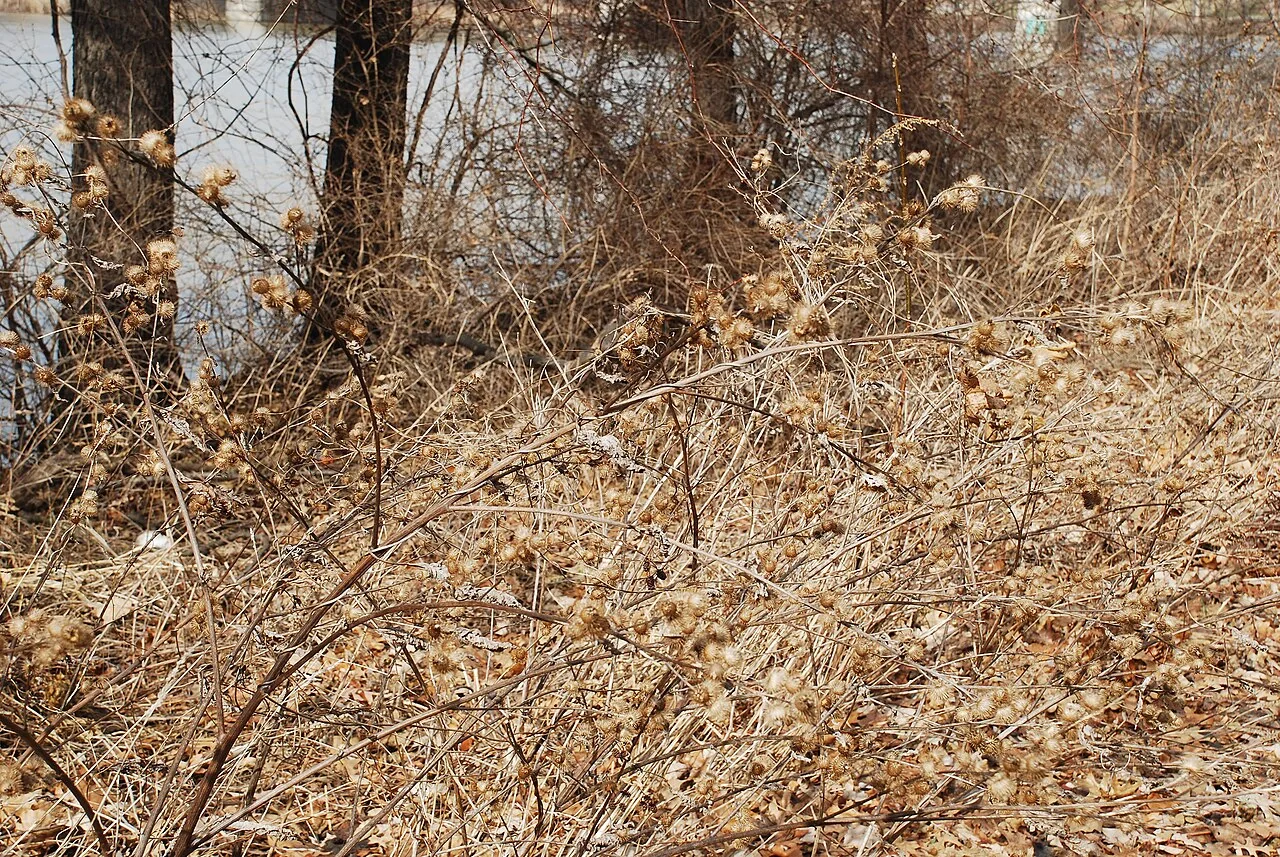
Dry stems and burrs of Arctium minus in winter.
DouglasGoldman / Wikimedia Commons / CC BY-SA 4.0

Photo details
Resized and converted to WebP. No content edits.
Source: File:Arctium minus6.jpg
Reviewed . Source identification, photograph and license reviewed. The image illustrates the named plant; it does not verify dimensions or other plant traits.
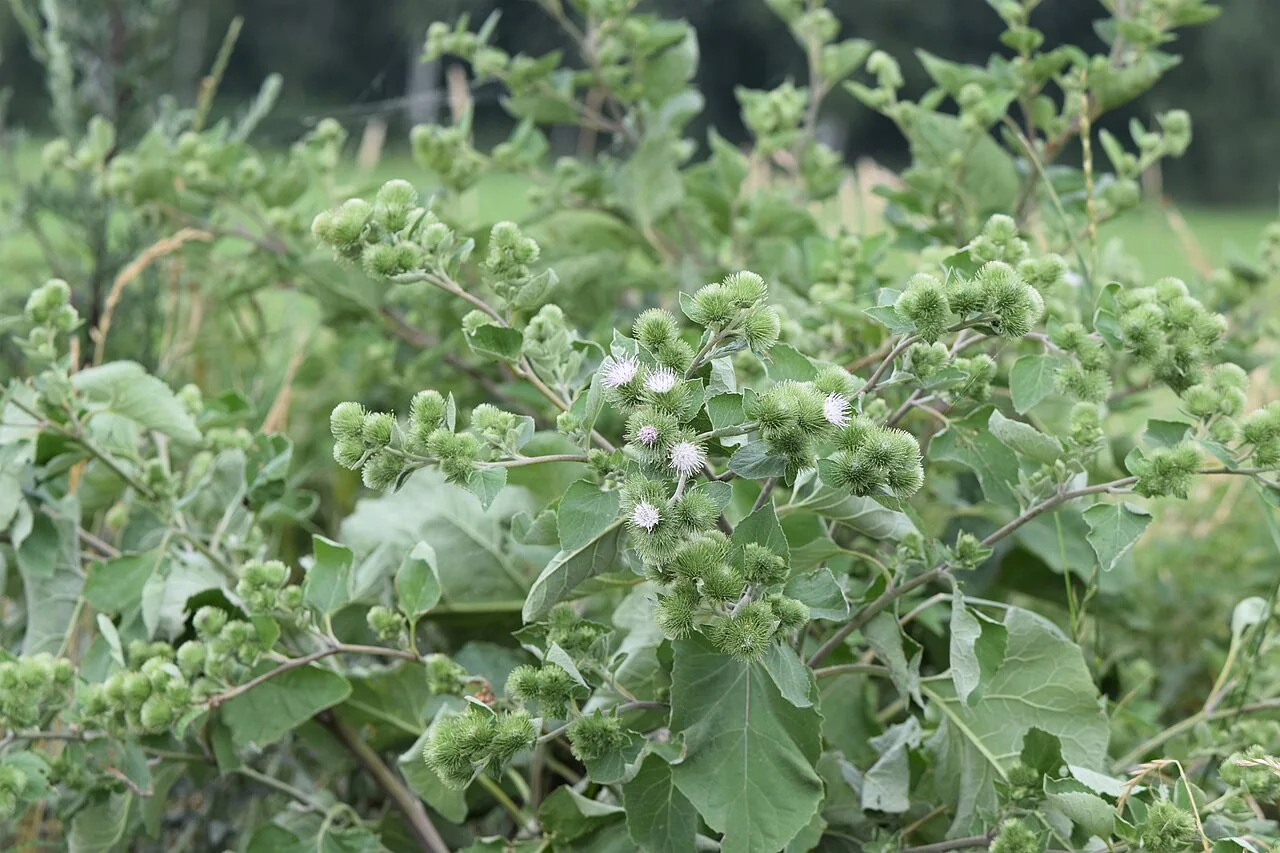
Arctium minus in flower.
Krzysztof Ziarnek, Kenraiz / Wikimedia Commons / CC BY-SA 4.0

Photo details
Resized and converted to WebP. No content edits.
Source: File:Arctium minus kz01.jpg
Reviewed . Source identification, photograph and license reviewed. The image illustrates the named plant; it does not verify dimensions or other plant traits.
Common names
41 names · 29 languagesOther languages (28)
- Arabic
-
- أرقطيون صغير[1]
- Basque
-
- Lapa belar txikia[1]
- Chinese (Simplified)
-
- 小牛蒡[1]
- Chinese (Traditional)
-
- 小牛蒡[1]
- Danish
-
- Liden burre[1]
- Estonian
-
- väike takjas[1]
- Finnish
-
- pikkutakiainen[1]
- Galician
-
- Herba dos amores[1]
- Hungarian
-
- kis bojtorján[1]
- Italian
-
- Bardana minore[1]
- Lithuanian
-
- Mažoji varnalėša[1]
- Norwegian
-
- småborre[1]
- Ojibwe
-
- Gichi Masan (Wi’sûgibûg’, Gi’masan)[1]
- Polish
-
- Łopian mniejszy[1]
- Russian
-
- Лопух малый[1]
- Slovak
-
- lopúch menší[1]
- Slovenian
-
- mali repinec[1]
- Spanish
-
- lampazo[1]
- Swedish
-
- liten kardborre[1]
- Ukrainian
-
- Лопух малий[1]
- Upriver Halkomelem
-
- sexum[1]
- Welsh
-
- Cacamwci[1]
Sources & name notes (1)
Names recorded in our plant catalogue and botanical sources, grouped by language. Usage can vary by region.
Numbered references identify names recorded by an external source. Other names are from our plant catalogue.
Community-curated iNaturalist taxonomy; common-name attestation, not an independent botanical determination.
Source records
- lesser burdock — results[1].names[1]; taxon id 59570; Arctium minus.
- Common Burdock — results[1].names[3]; taxon id 59570; Arctium minus.
- Petite bardane — results[1].names[4]; taxon id 59570; Arctium minus.
- Bardane à petites têtes — results[1].names[5]; taxon id 59570; Arctium minus.
- Bardane à petits capitules — results[1].names[6]; taxon id 59570; Arctium minus.
- Kleine Klette — results[1].names[7]; taxon id 59570; Arctium minus.
- lopuch menší — results[1].names[8]; taxon id 59570; Arctium minus.
- lopuch pýřitý — results[1].names[9]; taxon id 59570; Arctium minus.
- Liden burre — results[1].names[10]; taxon id 59570; Arctium minus.
- Лопух малый — results[1].names[11]; taxon id 59570; Arctium minus.
- småborre — results[1].names[12]; taxon id 59570; Arctium minus.
- Bardana minore — results[1].names[13]; taxon id 59570; Arctium minus.
- liten kardborre — results[1].names[14]; taxon id 59570; Arctium minus.
- pikkutakiainen — results[1].names[15]; taxon id 59570; Arctium minus.
- Mažoji varnalėša — results[1].names[16]; taxon id 59570; Arctium minus.
- Łopian mniejszy — results[1].names[17]; taxon id 59570; Arctium minus.
- Gichi Masan (Wi’sûgibûg’, Gi’masan) — results[1].names[18]; taxon id 59570; Arctium minus.
- 小牛蒡 — results[1].names[19]; taxon id 59570; Arctium minus.
- 小牛蒡 — results[1].names[20]; taxon id 59570; Arctium minus.
- väike takjas — results[1].names[21]; taxon id 59570; Arctium minus.
- lampazo — results[1].names[22]; taxon id 59570; Arctium minus.
- repalassa — results[1].names[23]; taxon id 59570; Arctium minus.
- repalassa petita — results[1].names[24]; taxon id 59570; Arctium minus.
- repalassa menor — results[1].names[25]; taxon id 59570; Arctium minus.
- llepassa — results[1].names[26]; taxon id 59570; Arctium minus.
- Gewone klit — results[1].names[27]; taxon id 59570; Arctium minus.
- Лопух малий — results[1].names[28]; taxon id 59570; Arctium minus.
- Herba dos amores — results[1].names[29]; taxon id 59570; Arctium minus.
- أرقطيون صغير — results[1].names[30]; taxon id 59570; Arctium minus.
- lopúch menší — results[1].names[31]; taxon id 59570; Arctium minus.
- kis bojtorján — results[1].names[32]; taxon id 59570; Arctium minus.
- Cacamwci — results[1].names[33]; taxon id 59570; Arctium minus.
- Middelste klit — results[1].names[34]; taxon id 59570; Arctium minus.
- Kleine klit — results[1].names[35]; taxon id 59570; Arctium minus.
- Gewöhnliche Kleine Klette — results[1].names[36]; taxon id 59570; Arctium minus.
- mali repinec — results[1].names[37]; taxon id 59570; Arctium minus.
- Lapa belar txikia — results[1].names[38]; taxon id 59570; Arctium minus.
- sexum — results[1].names[39]; taxon id 59570; Arctium minus.
- Löşgek — results[1].names[40]; taxon id 59570; Arctium minus.
- Löşlek — results[1].names[41]; taxon id 59570; Arctium minus.
General information
Growing conditions
USDA zones listed by NC State; winter survival does not establish reliable cropping.
Sources [3]Uses
Leaves, Coffee, Root, Stem, Seed
Bee forage, Paper
Description
Roots can be eaten both raw and cooked, and the best roots come from young plants. They are usually peeled and cut into pieces. Roasted roots can serve as a coffee substitute. The young leaves and leaf stems can be eaten both raw and cooked and are used as a potherb. It is best to remove the skin from the stalk. Young flower stems can be peeled and eaten raw or cooked, similar to asparagus. Seed sprouts are also edible, but further details are lacking.
Harvest
Sources and references
References for the information marked with source numbers on this page.
-
Royal Botanic Gardens, Kew
World Checklist of Vascular Plants, version 16, extracted 4 June 2026
Relevant sections
- Botanical family: WCVP v16, wcvp_names.csv row 560674; name ID 3134433; Arctium L.. Family column.
- Taxonomy: WCVP v16, wcvp_names.csv row 1428544; name ID 2922436; Arctium minus (Hill) Bernh..
Source checked on .
Source data licence: CC BY 3.0.
-
Catalogue of Life
Catalogue of Life 2026-08-20 — Arctium minus
Taxonomic data from World Plants, version 26.05, reproduced in Catalogue of Life 2026-08-20.
Supports: TaxonomyRelevant sections
- Taxonomy: COL 2026-08-20, NameUsage.tsv line 1798177, ID 5W3Q6: Arctium minus (Hill) Bernh. (accepted).
Source checked on .
-
NC State Extension, North Carolina State University
Arctium minus — Extension Gardener Plant Toolbox
Relevant sections
- Growth rate: Growth Rate
- Growth habit: Habit/Form
- Life cycle: Life Cycle
- Light: Light
- Soil moisture: Soil Drainage
- Soil texture: Soil Texture
- Soil pH: Soil pH
- USDA hardiness: USDA Plant Hardiness Zone
Source checked on .