Angelica archangelica
Angelica, Norwegian angelica
Explore the size, hardiness, soil, light, edible uses and harvest period of Angelica archangelica.
Plant photos
2 photos · Select to enlarge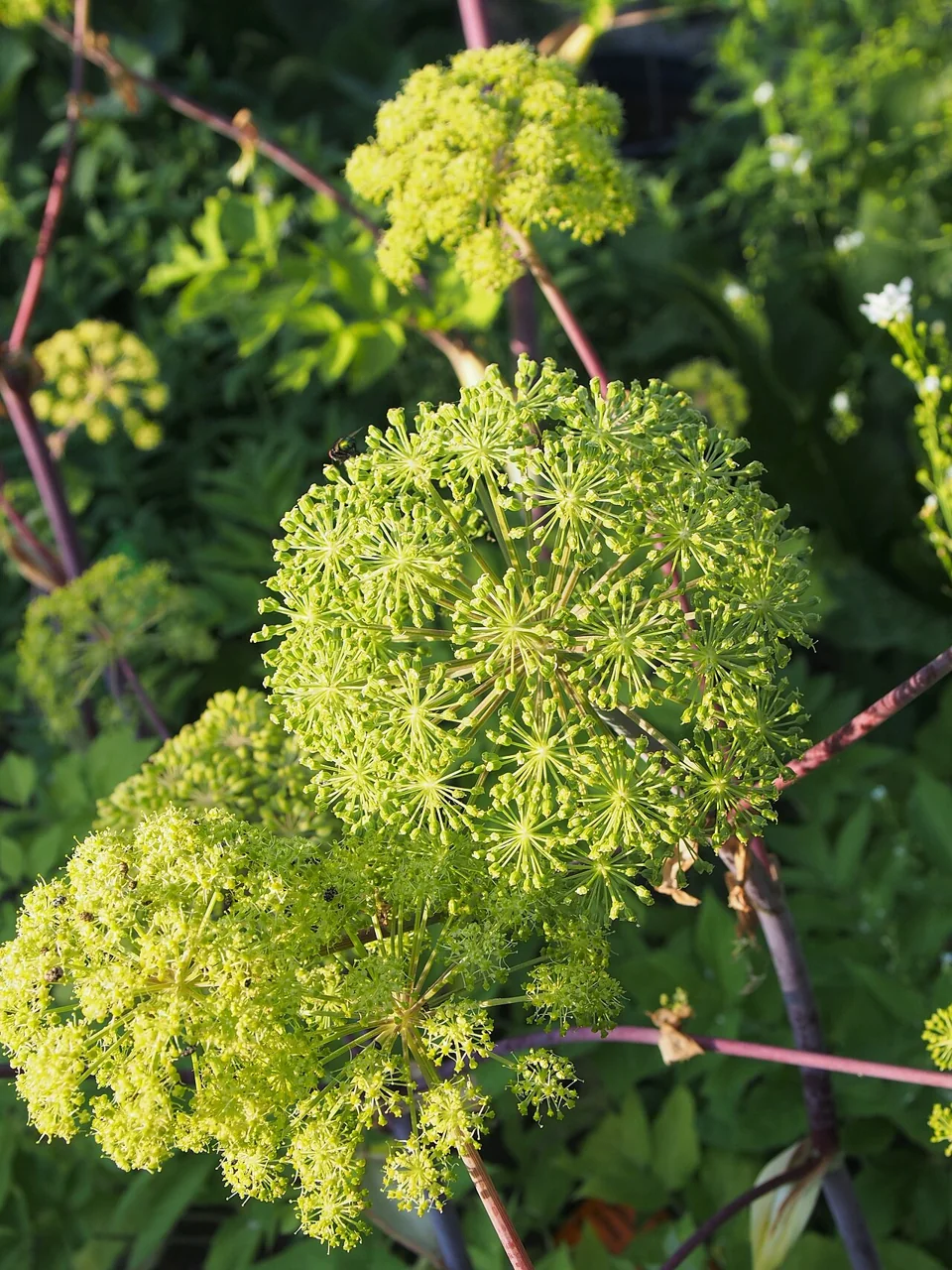
Flowering and fruiting umbels of Angelica archangelica subsp. archangelica.
Agnieszka Kwiecień, Nova / Wikimedia Commons / CC BY-SA 4.0

Photo details
Resized and converted to WebP. No content edits.
Source: File:Angelica archangelica subsp. archangelica Dzięgiel litwor 2019-06-07 03.jpg
Reviewed . Source identification, photograph and license reviewed. The image illustrates the named plant; it does not verify dimensions or other plant traits.
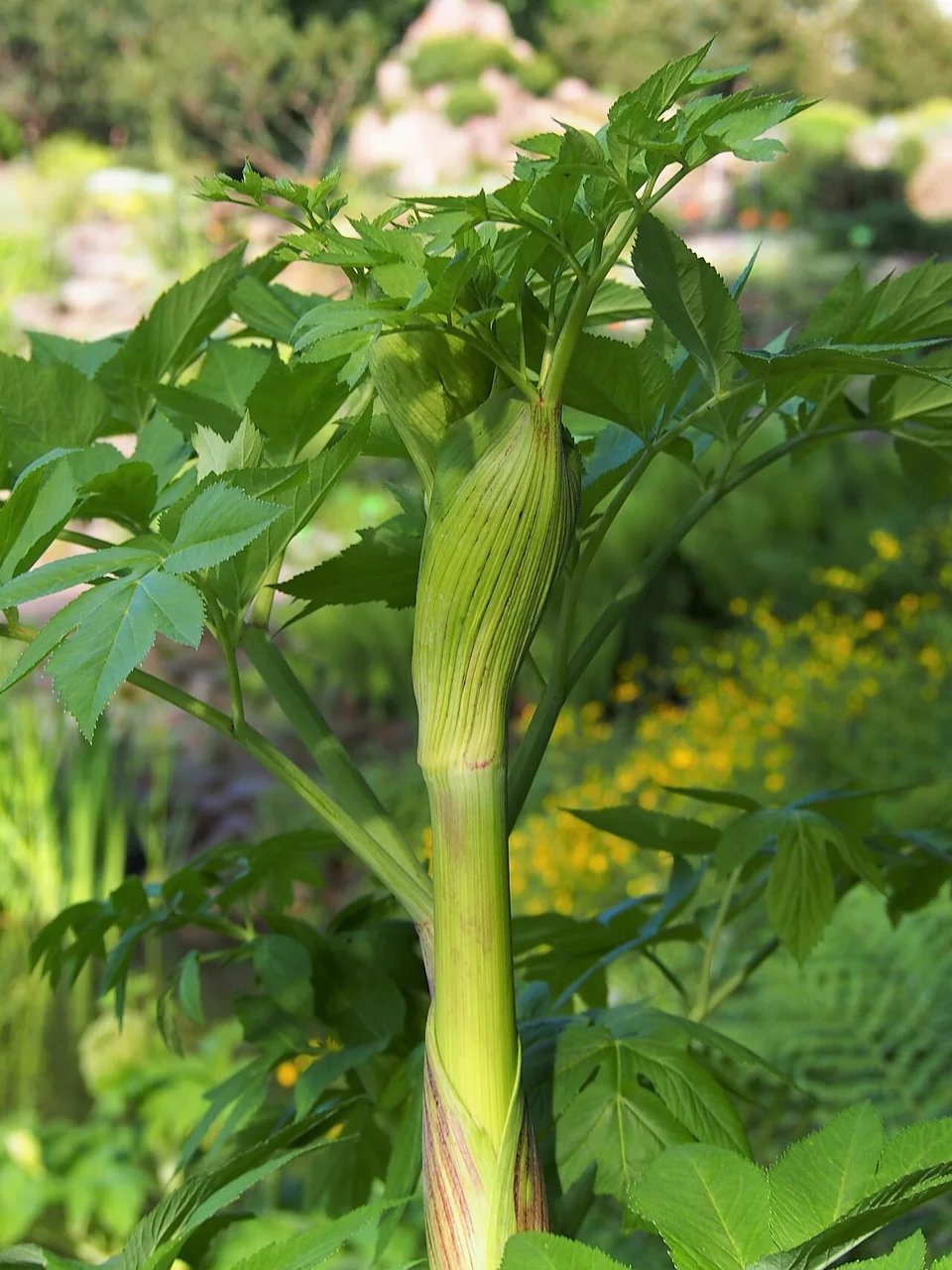
A developing flower bud of Angelica archangelica subsp. archangelica.
Agnieszka Kwiecień, Nova / Wikimedia Commons / CC BY-SA 4.0

Photo details
Resized and converted to WebP. No content edits.
Source: File:Angelica archangelica subsp. archangelica Dzięgiel litwor 2019-05-24 01.jpg
Reviewed . Source identification, photograph and license reviewed. The image illustrates the named plant; it does not verify dimensions or other plant traits.
Common names
43 names · 27 languagesOther languages (26)
- Dutch
-
- aartsengelwortel
- Grote engelwortel[1]
- French
-
+1 more nameShow fewer names
- Archangélique[1]
- Chinese (Traditional)
-
- 歐白芷[1]
- Czech
-
- andělika lékařská[1]
- Estonian
-
- harilik kikkaputk[1]
- Finnish
-
- Väinönputki[1]
- Hungarian
-
- orvosi angyalgyökér[1]
- Icelandic
-
- Ætihvönn[1]
- Latvian
-
- Dižzirdzene[1]
- Lithuanian
-
- Vaistinė šventagaršvė[1]
- Norwegian
-
- kvann[1]
- Russian
-
- Дягиль лекарственный[1]
- Slovak
-
- angelika lekárska[1]
- Spanish
-
- Angélica[1]
- Swedish
-
- kvanne[1]
- Turkish
-
- melek otu[1]
- Ukrainian
-
- Дягель лікарський[1]
Sources & name notes (1)
Names recorded in our plant catalogue and botanical sources, grouped by language. Usage can vary by region.
Numbered references identify names recorded by an external source. Other names are from our plant catalogue.
Community-curated iNaturalist taxonomy; common-name attestation, not an independent botanical determination.
Source records
- Garden angelica — results[0].names[1]; taxon id 62336; Angelica archangelica.
- Arcydzięgiel litwor — results[0].names[2]; taxon id 62336; Angelica archangelica.
- Angélique officinale — results[0].names[3]; taxon id 62336; Angelica archangelica.
- Angélique vraie — results[0].names[4]; taxon id 62336; Angelica archangelica.
- Archangélique — results[0].names[5]; taxon id 62336; Angelica archangelica.
- andělika lékařská — results[0].names[6]; taxon id 62336; Angelica archangelica.
- Väinönputki — results[0].names[7]; taxon id 62336; Angelica archangelica.
- Kvan — results[0].names[8]; taxon id 62336; Angelica archangelica.
- Arznei-Engelwurz — results[0].names[9]; taxon id 62336; Angelica archangelica.
- Echte Engelwurz — results[0].names[10]; taxon id 62336; Angelica archangelica.
- Дягиль лекарственный — results[0].names[11]; taxon id 62336; Angelica archangelica.
- grote engelwortel — results[0].names[12]; taxon id 62336; Angelica archangelica.
- kvann — results[0].names[13]; taxon id 62336; Angelica archangelica.
- Vaistinė šventagaršvė — results[0].names[14]; taxon id 62336; Angelica archangelica.
- Dzięgiel litwor — results[0].names[15]; taxon id 62336; Angelica archangelica.
- angélica — results[0].names[16]; taxon id 62336; Angelica archangelica.
- erva-do-espírito-santo — results[0].names[17]; taxon id 62336; Angelica archangelica.
- Angélica — results[0].names[18]; taxon id 62336; Angelica archangelica.
- kvanne — results[0].names[19]; taxon id 62336; Angelica archangelica.
- アンゼリカ — results[0].names[20]; taxon id 62336; Angelica archangelica.
- harilik kikkaputk — results[0].names[21]; taxon id 62336; Angelica archangelica.
- 欧白芷 — results[0].names[22]; taxon id 62336; Angelica archangelica.
- 圆叶当归 — results[0].names[23]; taxon id 62336; Angelica archangelica.
- 歐白芷 — results[0].names[24]; taxon id 62336; Angelica archangelica.
- melek otu — results[0].names[25]; taxon id 62336; Angelica archangelica.
- Angelika — results[0].names[26]; taxon id 62336; Angelica archangelica.
- Engelwortel — results[0].names[27]; taxon id 62336; Angelica archangelica.
- heimahvonn — results[0].names[29]; taxon id 62336; Angelica archangelica.
- bjargahvonn — results[0].names[30]; taxon id 62336; Angelica archangelica.
- Анђелика — results[0].names[31]; taxon id 62336; Angelica archangelica.
- Anđelika — results[0].names[32]; taxon id 62336; Angelica archangelica.
- Dižzirdzene — results[0].names[33]; taxon id 62336; Angelica archangelica.
- orvosi angyalgyökér — results[0].names[34]; taxon id 62336; Angelica archangelica.
- Ætihvönn — results[0].names[35]; taxon id 62336; Angelica archangelica.
- Дягель лікарський — results[0].names[36]; taxon id 62336; Angelica archangelica.
- 西洋当帰 — results[0].names[37]; taxon id 62336; Angelica archangelica.
- Strand-Kvan — results[0].names[38]; taxon id 62336; Angelica archangelica.
- angelika lekárska — results[0].names[39]; taxon id 62336; Angelica archangelica.
- Ætihvönn — results[0].names[40]; taxon id 62336; Angelica archangelica.
General information
Plant characteristics
NC State landscape size range; converted from feet and inches. Size varies with site, age and management.
Sources [3]NC State landscape size range; converted from feet and inches. Size varies with site, age and management.
Sources [3]Uses
Leaves, Flowers, Condiment, Root
Essential oil, Bee forage, Fragrant
Description
Leaves can be eaten both raw and cooked and have a licorice-like flavor that makes them suitable as a seasoning in salads and for enhancing the taste of fruit pies. The stems and young shoots can also be consumed raw or cooked. Once the stems are peeled, they can be used as a substitute for celery or for sweetening fruity pies and jams. They are often crystallized in sugar and used as a sweet treat or decoration on cakes. The stems are best harvested in the spring. Essential oil is extracted from the roots and seeds, which serves as a food flavoring. The roots themselves can be cooked, and the seeds are used to enhance the flavor of liqueurs such as Chartreuse. Tea can be made from the leaves, seeds, or roots of this plant.
Harvest
Sources and references
References for the information marked with source numbers on this page.
-
Royal Botanic Gardens, Kew
World Checklist of Vascular Plants, version 16, extracted 4 June 2026
Relevant sections
- Botanical family: WCVP v16, wcvp_names.csv row 705582; name ID 2638971; Angelica L.. Family column.
- Taxonomy: WCVP v16, wcvp_names.csv row 1305254; name ID 2638995; Angelica archangelica L..
Source checked on .
Source data licence: CC BY 3.0.
-
Catalogue of Life
Catalogue of Life 2026-08-20 — Angelica archangelica
Taxonomic data from World Plants, version 26.05, reproduced in Catalogue of Life 2026-08-20.
Supports: TaxonomyRelevant sections
- Taxonomy: COL 2026-08-20, NameUsage.tsv line 4807538, ID DYRP: Angelica archangelica L. (accepted).
Source checked on .
-
NC State Extension, North Carolina State University
Angelica archangelica — Extension Gardener Plant Toolbox
Supports: HeightSpreadGrowth rateGrowth habitLife cycleLightSoil moistureSoil textureSoil pHUSDA hardiness
Relevant sections
- Height: Dimensions > Height; Height: 3 ft. 0 in. - 6 ft. 0 in.
- Spread: Dimensions > Width; Width: 2 ft. 0 in. - 4 ft. 0 in.
- Growth rate: Growth Rate
- Growth habit: Habit/Form
- Life cycle: Life Cycle
- Light: Light
- Soil moisture: Soil Drainage
- Soil texture: Soil Texture
- Soil pH: Soil pH
- USDA hardiness: USDA Plant Hardiness Zone
Source checked on .