Amphicarpaea bracteata
Hog Peanut, American hogpeanut
Explore the size, hardiness, soil, light, edible uses and harvest period of Amphicarpaea bracteata.
Plant photos
2 photos · Select to enlarge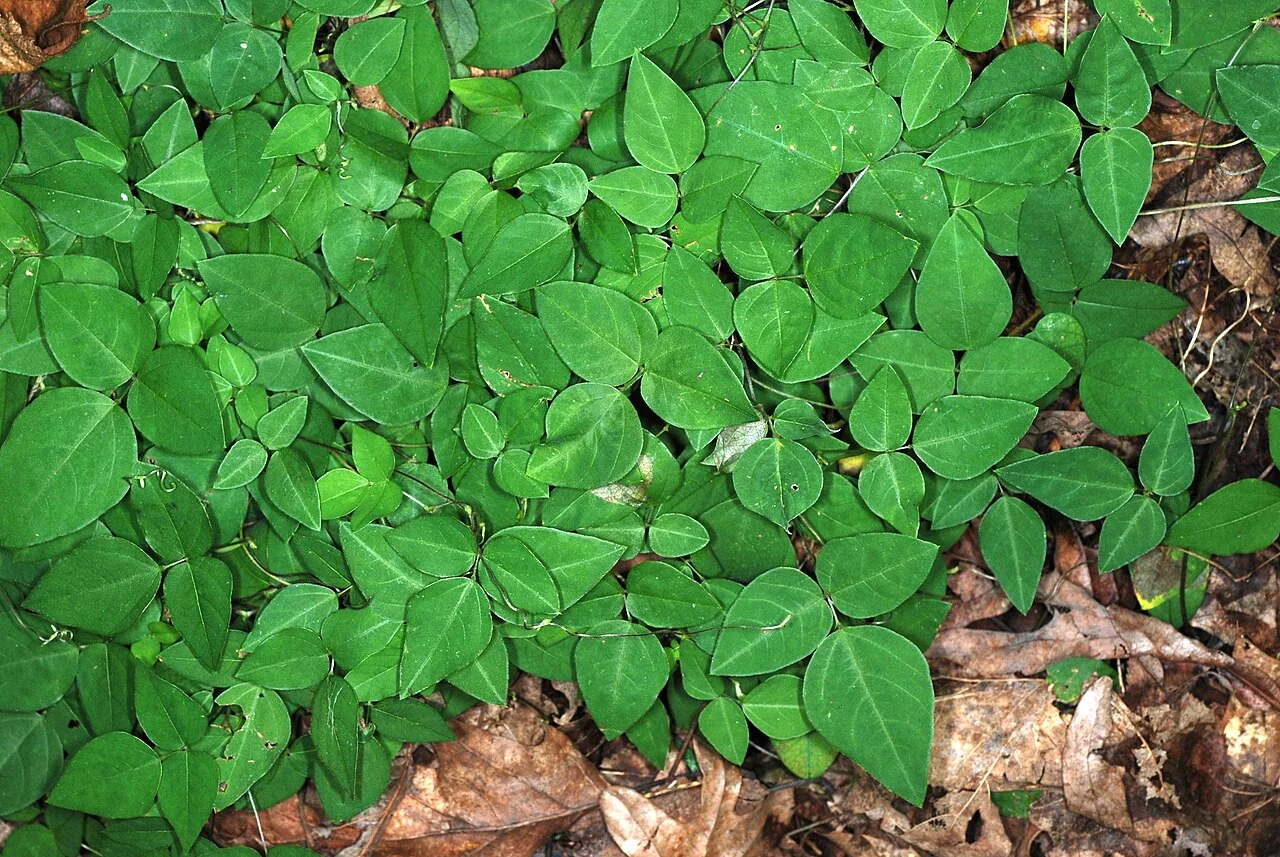
Leaves of Amphicarpaea bracteata.
Douglas Goldman / Wikimedia Commons / CC BY-SA 4.0

Photo details
Resized and converted to WebP. No content edits.
Source: File:AmphicarpaeaBracteata7.jpg
Reviewed . Source identification, photograph and license reviewed. The image illustrates the named plant; it does not verify dimensions or other plant traits.
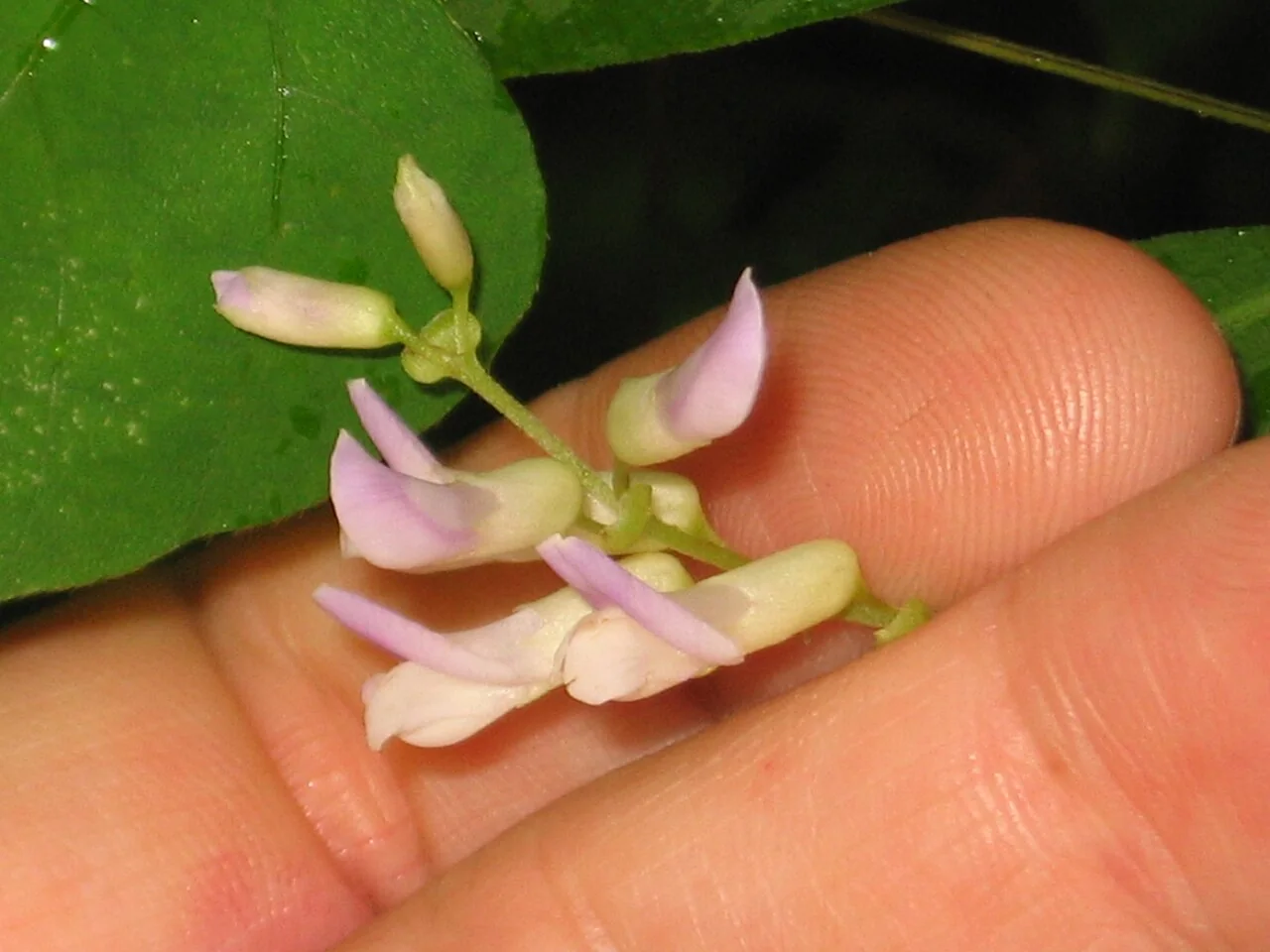
Flowers of Amphicarpaea bracteata.
Jomegat / Wikimedia Commons / CC BY-SA 3.0

Photo details
Resized and converted to WebP. No content edits.
Source: File:Amphicarpaea bracteata inflorescence.jpg
Reviewed . Source identification, photograph and license reviewed. The image illustrates the named plant; it does not verify dimensions or other plant traits.
Common names
18 names · 12 languagesOther languages (11)
Sources & name notes (1)
Names recorded in our plant catalogue and botanical sources, grouped by language. Usage can vary by region.
Numbered references identify names recorded by an external source. Other names are from our plant catalogue.
Community-curated iNaturalist taxonomy; common-name attestation, not an independent botanical determination.
Source records
- American hog-peanut — results[0].names[1]; taxon id 85485; Amphicarpaea bracteata.
- Ground bean — results[0].names[3]; taxon id 85485; Amphicarpaea bracteata.
- Hog peanut — results[0].names[4]; taxon id 85485; Amphicarpaea bracteata.
- sianpapu — results[0].names[5]; taxon id 85485; Amphicarpaea bracteata.
- Амфикарпеа прицветниковая — results[0].names[6]; taxon id 85485; Amphicarpaea bracteata.
- Bagwaji-miskodiisimin — results[0].names[7]; taxon id 85485; Amphicarpaea bracteata.
- 阴阳豆 — results[0].names[8]; taxon id 85485; Amphicarpaea bracteata.
- 陰陽豆 — results[0].names[9]; taxon id 85485; Amphicarpaea bracteata.
- amphicarpe bractéolée — results[0].names[10]; taxon id 85485; Amphicarpaea bracteata.
- underböna — results[0].names[11]; taxon id 85485; Amphicarpaea bracteata.
- ᏚᏯ ᎢᎾᎨᎢ — results[0].names[12]; taxon id 85485; Amphicarpaea bracteata.
- sójovka listenatá — results[0].names[13]; taxon id 85485; Amphicarpaea bracteata.
- Амфикарпея прицветниковая — results[0].names[14]; taxon id 85485; Amphicarpaea bracteata.
- mouse bean — results[0].names[15]; taxon id 85485; Amphicarpaea bracteata.
- Амфікарпея приквіткова — results[0].names[16]; taxon id 85485; Amphicarpaea bracteata.
General information
Kew's family placement for the genus Amphicarpaea (WCVP v16).
Sources [1]Plant characteristics
Growing conditions
Moist
Sand (light) Loam (medium) Clay (heavy)
Acidic Neutral Alkaline
Shade, Partial shade
Uses
Root, Seed
Nitrogen fixer, Carbon farming
Description
Seeds - raw or cooked. Two types of seeds are produced - flowers close to the ground produce pods that lie just below soil level. These pods contain individual seeds up to 15 mm in diameter that can be eaten as an alternative to peanuts. They can be harvested throughout the winter and eaten both raw and cooked. The taste is sweet and delicious, similar to peeled broad beans rather than peanuts. The yield is relatively low, and it can be a challenge to find the seeds, but they make a pleasant and nutritious snack. Other flowers higher up on the plant have seeds in pods that are not underground. These seeds are smaller and are usually cooked before being eaten. They can be used in the same way as lentils and are a good source of protein. The overall yield of these seeds is also low, and they are difficult to harvest. Root - cooked. The root is peeled, boiled, and then eaten. It is meaty and nutritious, according to some reports, while others say that the root is too small to offer much nutritional value. Our plants only produce small and fibrous roots.
Harvest
Sources and references
References for the information marked with source numbers on this page.
-
Royal Botanic Gardens, Kew
World Checklist of Vascular Plants, version 16, extracted 4 June 2026
Relevant sections
- Botanical family: WCVP v16, wcvp_names.csv row 715814; name ID 2634646; Amphicarpaea Elliott ex Nutt.. Family column.
- Taxonomy: WCVP v16, wcvp_names.csv row 1303185; name ID 2634649; Amphicarpaea bracteata (L.) Fernald.
Source checked on .
Source data licence: CC BY 3.0.
-
Catalogue of Life
Catalogue of Life 2026-08-20 — Amphicarpaea bracteata
Taxonomic data from WCVP-Fabaceae, version 2026, v.7, reproduced in Catalogue of Life 2026-08-20. This shares the Kew WCVP evidence base cited on this page.
Supports: TaxonomyRelevant sections
- Taxonomy: COL 2026-08-20, NameUsage.tsv line 1950902, ID 66F45: Amphicarpaea bracteata (L.) Fernald (accepted).
Source checked on .