Amelanchier canadensis
Juneberry, Canadian serviceberry
Explore the size, hardiness, soil, light, edible uses and harvest period of Amelanchier canadensis.
Plant photos
2 photos · Select to enlarge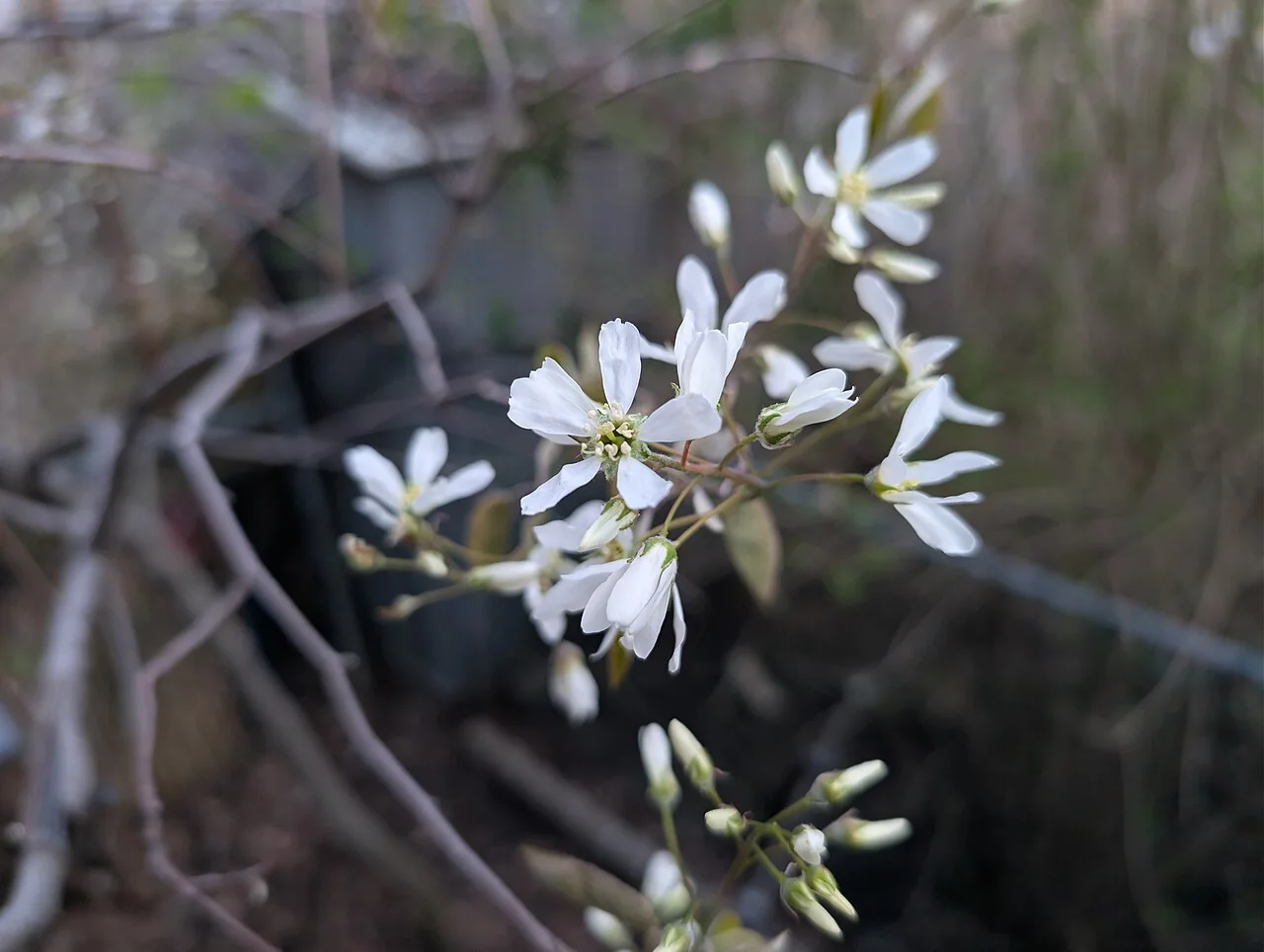
Flowers of Amelanchier canadensis.
Maxime Laterreur / Wikimedia Commons / CC BY 4.0
.jpg)
Photo details
Resized and converted to WebP. No content edits.
Source: File:Fleurs de l'amélanchier du Canada (Amelanchier canadensis).jpg
Reviewed . Source identification, photograph and license reviewed. The image illustrates the named plant; it does not verify dimensions or other plant traits.
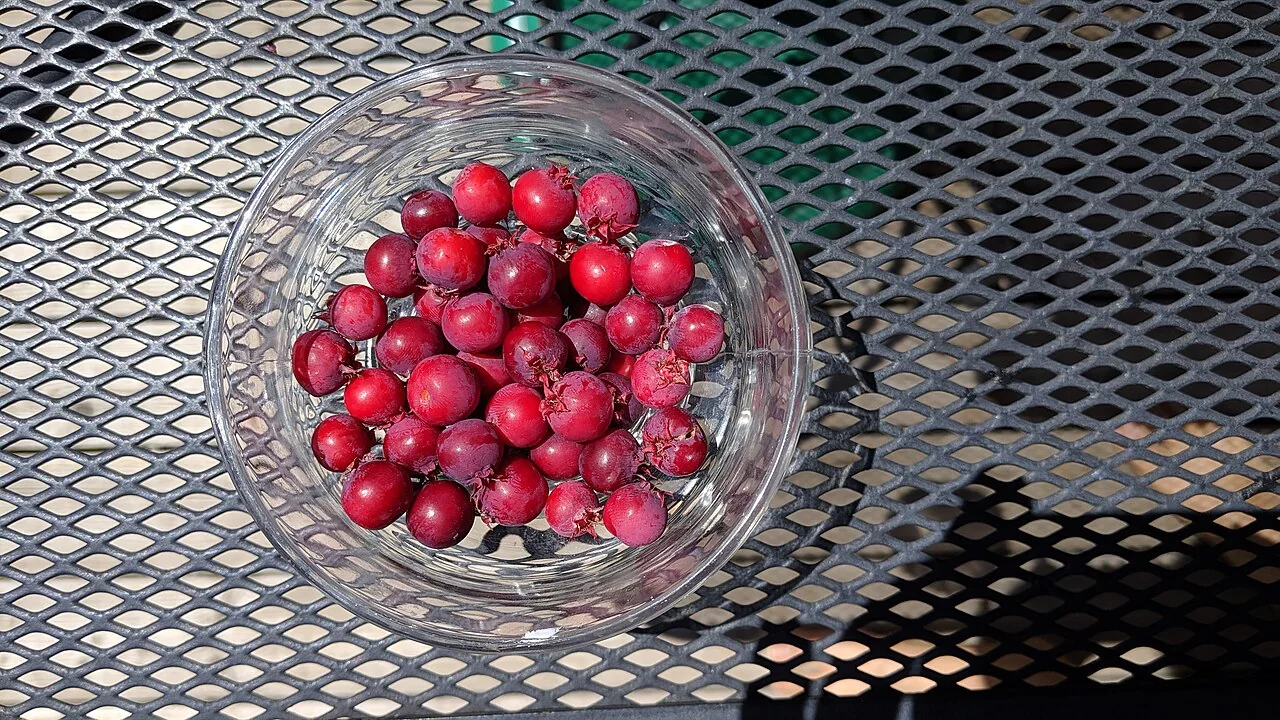
Fruit of Amelanchier canadensis.
Maxime Laterreur / Wikimedia Commons / CC BY-SA 4.0
.jpg)
Photo details
Resized and converted to WebP. No content edits.
Source: File:Fruits de l'amélanchier du Canada (Amelanchier canadensis).jpg
Reviewed . Source identification, photograph and license reviewed. The image illustrates the named plant; it does not verify dimensions or other plant traits.
Common names
14 names · 12 languagesOther languages (11)
- Dutch
-
- Canadees krentenboompje
- French
-
- Amélanchier du Canada[1]
- Chinese (Simplified)
-
- 加拿大唐棣[1]
- Chinese (Traditional)
-
- 加拿大唐棣[1]
- Czech
-
- muchovník kanadský[1]
- German
-
- Kanadische Felsenbirne[1]
- Japanese
-
- ジューンベリー[1]
- Ojibwe
-
- Gozigwaakomin (Gizigwa’komĭnaga’wûnj)[1]
- Polish
-
- Świdośliwa kanadyjska[1]
- Russian
-
- Ирга канадская[1]
- Slovak
-
- muchovník kanadský[1]
Sources & name notes (1)
Names recorded in our plant catalogue and botanical sources, grouped by language. Usage can vary by region.
Numbered references identify names recorded by an external source. Other names are from our plant catalogue.
Community-curated iNaturalist taxonomy; common-name attestation, not an independent botanical determination.
Source records
- Canadian serviceberry — results[3].names[2]; taxon id 133382; Amelanchier canadensis.
- Chuckleberry — results[3].names[3]; taxon id 133382; Amelanchier canadensis.
- muchovník kanadský — results[3].names[4]; taxon id 133382; Amelanchier canadensis.
- Gozigwaakomin (Gizigwa’komĭnaga’wûnj) — results[3].names[5]; taxon id 133382; Amelanchier canadensis.
- 加拿大唐棣 — results[3].names[6]; taxon id 133382; Amelanchier canadensis.
- 加拿大唐棣 — results[3].names[7]; taxon id 133382; Amelanchier canadensis.
- Ирга канадская — results[3].names[8]; taxon id 133382; Amelanchier canadensis.
- Świdośliwa kanadyjska — results[3].names[9]; taxon id 133382; Amelanchier canadensis.
- Amélanchier du Canada — results[3].names[10]; taxon id 133382; Amelanchier canadensis.
- ジューンベリー — results[3].names[11]; taxon id 133382; Amelanchier canadensis.
- muchovník kanadský — results[3].names[12]; taxon id 133382; Amelanchier canadensis.
- Kanadische Felsenbirne — results[3].names[13]; taxon id 133382; Amelanchier canadensis.
General information
Accepted in the cited Kew taxonomic treatment.
Sources [1]Plant characteristics
NC State landscape size range; converted from feet and inches. Size varies with site, age and management.
Sources [2]NC State landscape size range; converted from feet and inches. Size varies with site, age and management.
Sources [2]Whole-plant habit and form as described by NC State.
Sources [2]Growing conditions
USDA zones listed by NC State; winter survival does not establish reliable cropping.
Sources [2]Well-drained, Moist, Occasionally Wet
Moisture and drainage conditions listed by NC State.
Sources [2]Acidic Neutral
Uses
Fruit
None
Description
Edible fruit - can be eaten both raw and cooked. The fruit has a few small seeds in the middle and a sweet taste with a hint of apple. It can be eaten fresh, used in pies, jams, and so on, or dried and used as raisins. The quality of the fruit varies, with some varieties having a bitter taste and others being sweet, juicy, and delicious. When the fruit is thoroughly cooked in desserts or pies, the seeds impart an almond flavor to the dish. The fruit is a good source of iron and copper, and has a diameter of about 10 mm. Trees can produce between 7 and 15 tons of fruit per hectare.
Harvest
Sources and references
References for the information marked with source numbers on this page.
-
Royal Botanic Gardens, Kew
World Checklist of Vascular Plants, version 16, extracted 4 June 2026
Relevant sections
- Botanical family: WCVP v16, wcvp_names.csv row 1432821; name ID 2941205; Amelanchier Medik.. Family column.
- Taxonomy: WCVP v16, wcvp_names.csv row 1433823; name ID 2940163; Amelanchier canadensis (L.) Medik..
Source checked on .
Source data licence: CC BY 3.0.
-
NC State Extension, North Carolina State University
Amelanchier canadensis — Extension Gardener Plant Toolbox
Supports: HeightSpreadGrowth rateFoliageGrowth habitLife cycleLightSoil moistureSoil textureUSDA hardiness
Relevant sections
- Height: Dimensions > Height; Height: 15 ft. 0 in. - 25 ft. 0 in.
- Spread: Dimensions > Width; Width: 15 ft. 0 in. - 20 ft. 0 in.
- Growth rate: Growth Rate
- Foliage: Woody Plant Leaf Characteristics
- Growth habit: Habit/Form
- Life cycle: Life Cycle
- Light: Light
- Soil moisture: Soil Drainage
- Soil texture: Soil Texture
- USDA hardiness: USDA Plant Hardiness Zone
Source checked on .