Althaea officinalis
Marsh Mallow
Explore the size, hardiness, soil, light, edible uses and harvest period of Althaea officinalis.
Plant photos
2 photos · Select to enlarge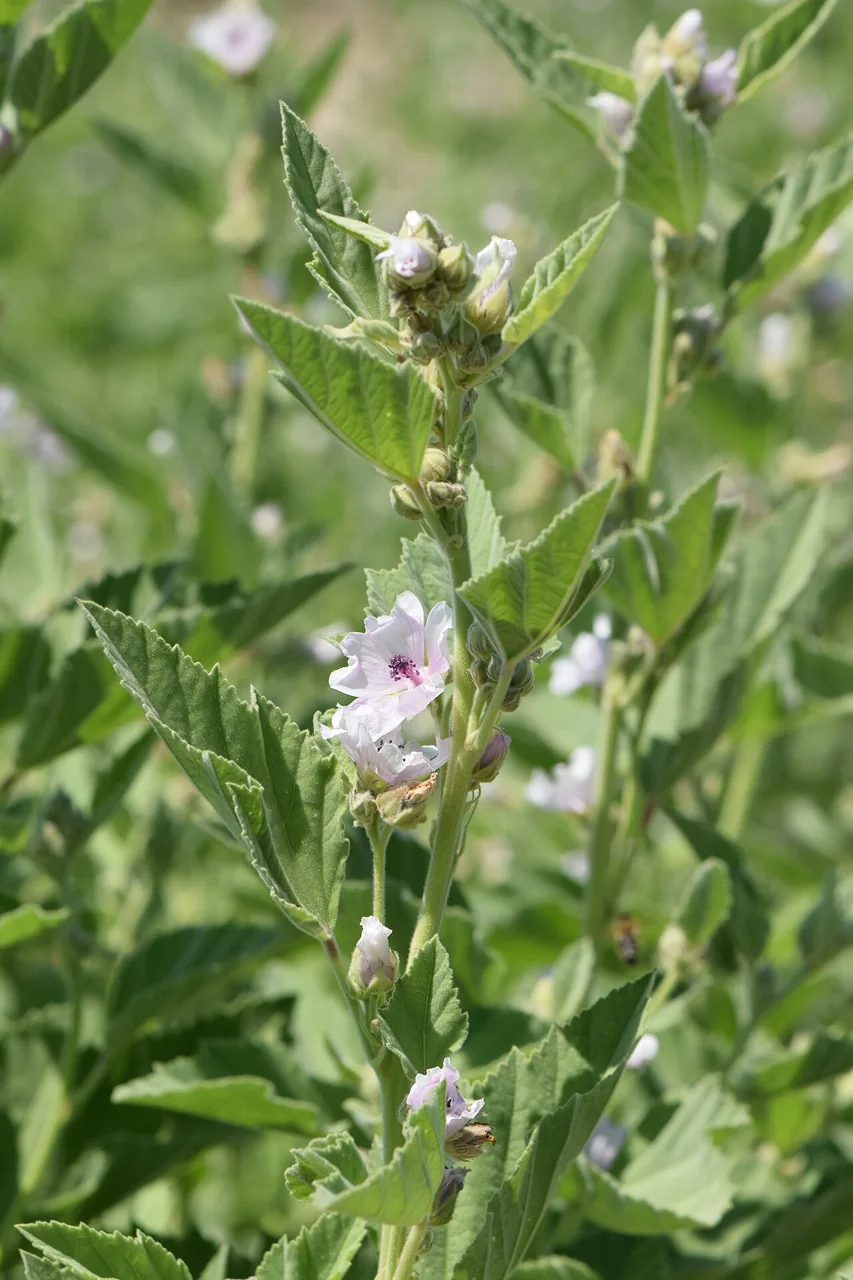
Althaea officinalis in flower.
Krzysztof Ziarnek, Kenraiz / Wikimedia Commons / CC BY-SA 4.0

Photo details
Resized and converted to WebP. No content edits.
Source: File:Althaea officinalis kz06.jpg
Reviewed . Source identification, photograph and license reviewed. The image illustrates the named plant; it does not verify dimensions or other plant traits.
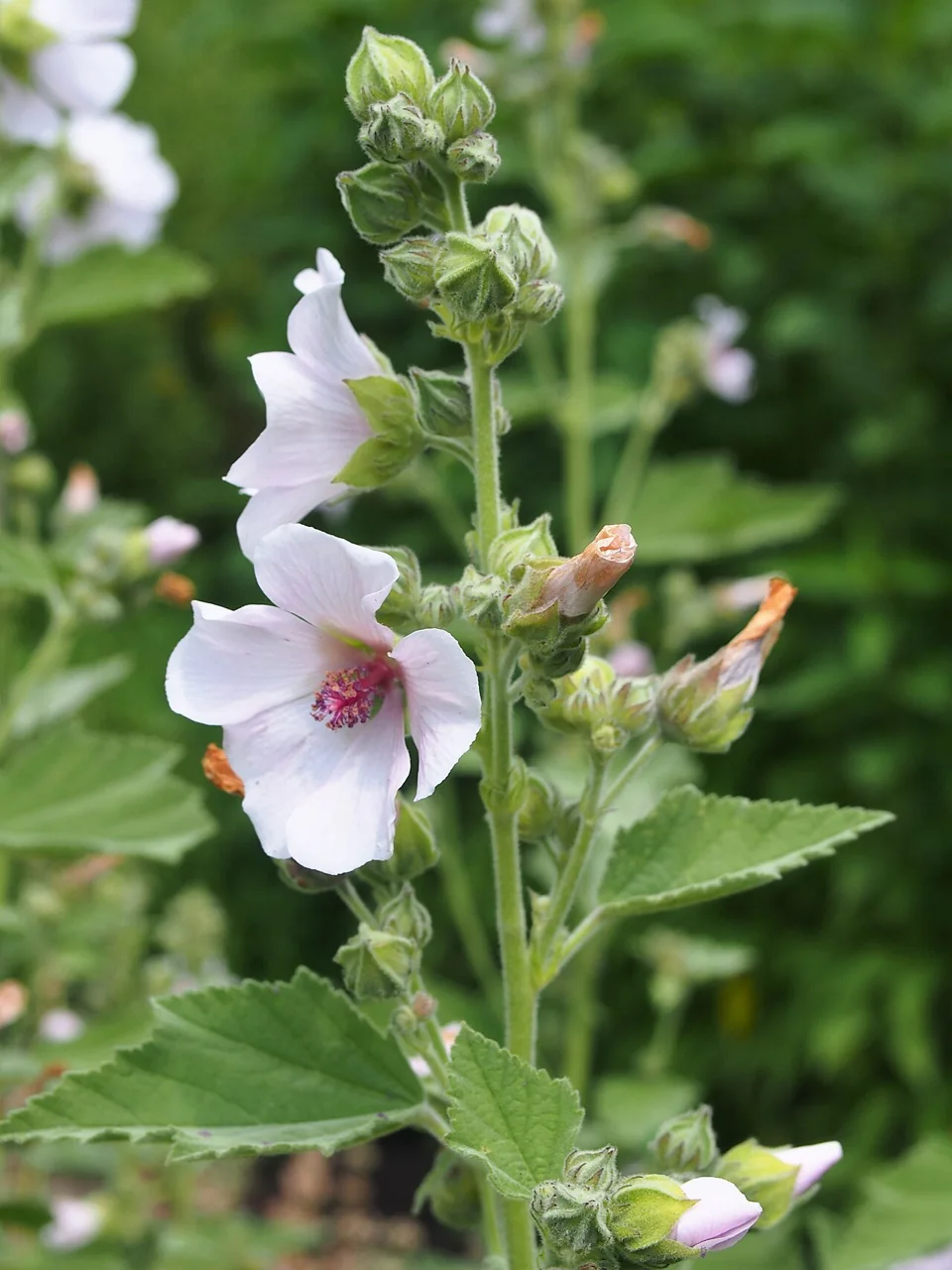
Flowers of Althaea officinalis.
Agnieszka Kwiecień, Nova / Wikimedia Commons / CC BY-SA 4.0

Photo details
Resized and converted to WebP. No content edits.
Source: File:Althaea officinalis Prawoślaz lekarski 2020-07-18 03.jpg
Reviewed . Source identification, photograph and license reviewed. The image illustrates the named plant; it does not verify dimensions or other plant traits.
Common names
37 names · 31 languagesOther languages (30)
- Dutch
-
- Echte heemst
- Heemst[2]
- French
-
- Guimauve officinale[2]
- Armenian
-
- Տուղտ դեղատու[2]
- Catalan
-
- malví[2]
- Chinese (Simplified)
-
- 药蜀葵[2]
- Chinese (Traditional)
-
- 藥蜀葵[2]
- Czech
-
- proskurník lékařský[2]
- Danish
-
- Læge-stokrose[2]
- Finnish
-
- rohtosalkoruusu[2]
- Hebrew
-
- נטופית רפואית[2]
- Hungarian
-
- Orvosi ziliz[2]
- Italian
-
- Bismalva[2]
- Japanese
-
- ウスベニタチアオイ[2]
- Norwegian
-
- legestokkrose[2]
- Polish
-
- prawoślaz lekarski[2]
- Romanian
-
- Nalbă mare[2]
- Russian
-
- Алтей лекарственный[2]
- Serbian
-
- Бели слез[2]
- Slovak
-
- ibiš lekársky[2]
- Slovenian
-
- navadni slez[2]
- Spanish
-
- Malvavisco[2]
- Thai
-
- มาร์ชแมลโลว์[2]
- Turkish
-
- Deli Hatmi[2]
- Ukrainian
-
- Проскурняк лікарський[2]
- Welsh
-
- Hocysen y morfa[2]
Sources & name notes (2)
Names recorded in our plant catalogue and botanical sources, grouped by language. Usage can vary by region.
Numbered references identify names recorded by an external source. Other names are from our plant catalogue.
Common names from World Plants, version 26.05, reproduced in Catalogue of Life 2026-08-20. License: CC BY.
Source records
- Echter Eibisch (DE) — VernacularName.tsv, line 164291; taxon 5TY3W.
- Marsh-mallow (EN) — VernacularName.tsv, line 164292; taxon 5TY3W.
Community-curated iNaturalist taxonomy; common-name attestation, not an independent botanical determination.
Source records
- marsh mallow — results[0].names[1]; taxon id 52565; Althaea officinalis.
- Marsh-mallow — results[0].names[2]; taxon id 52565; Althaea officinalis.
- malví — results[0].names[3]; taxon id 52565; Althaea officinalis.
- Guimauve officinale — results[0].names[4]; taxon id 52565; Althaea officinalis.
- proskurník lékařský — results[0].names[5]; taxon id 52565; Althaea officinalis.
- Echter Eibisch — results[0].names[6]; taxon id 52565; Althaea officinalis.
- Læge-stokrose — results[0].names[7]; taxon id 52565; Althaea officinalis.
- Heemst — results[0].names[8]; taxon id 52565; Althaea officinalis.
- legestokkrose — results[0].names[9]; taxon id 52565; Althaea officinalis.
- Алтей лекарственный — results[0].names[10]; taxon id 52565; Althaea officinalis.
- Bismalva — results[0].names[11]; taxon id 52565; Althaea officinalis.
- rohtosalkoruusu — results[0].names[12]; taxon id 52565; Althaea officinalis.
- ウスベニタチアオイ — results[0].names[13]; taxon id 52565; Althaea officinalis.
- Alteia — results[0].names[14]; taxon id 52565; Althaea officinalis.
- malvaísco — results[0].names[15]; taxon id 52565; Althaea officinalis.
- Orvosi ziliz — results[0].names[16]; taxon id 52565; Althaea officinalis.
- ختمية طبية — results[0].names[17]; taxon id 52565; Althaea officinalis.
- خباز المستنقع — results[0].names[18]; taxon id 52565; Althaea officinalis.
- läkemalva — results[0].names[19]; taxon id 52565; Althaea officinalis.
- altea — results[0].names[20]; taxon id 52565; Althaea officinalis.
- Pitomi sljez — results[0].names[21]; taxon id 52565; Althaea officinalis.
- Bijeli sljez — results[0].names[22]; taxon id 52565; Althaea officinalis.
- Бели слез — results[0].names[23]; taxon id 52565; Althaea officinalis.
- 药蜀葵 — results[0].names[24]; taxon id 52565; Althaea officinalis.
- Տուղտ դեղատու — results[0].names[25]; taxon id 52565; Althaea officinalis.
- 藥蜀葵 — results[0].names[26]; taxon id 52565; Althaea officinalis.
- navadni slez — results[0].names[27]; taxon id 52565; Althaea officinalis.
- Проскурняк лікарський — results[0].names[28]; taxon id 52565; Althaea officinalis.
- prawoślaz lekarski — results[0].names[29]; taxon id 52565; Althaea officinalis.
- Nalbă mare — results[0].names[30]; taxon id 52565; Althaea officinalis.
- ibiš lekársky — results[0].names[31]; taxon id 52565; Althaea officinalis.
- נטופית רפואית — results[0].names[32]; taxon id 52565; Althaea officinalis.
- Hocysen y morfa — results[0].names[33]; taxon id 52565; Althaea officinalis.
- มาร์ชแมลโลว์ — results[0].names[34]; taxon id 52565; Althaea officinalis.
- Malvavisco — results[0].names[35]; taxon id 52565; Althaea officinalis.
- Deli Hatmi — results[0].names[36]; taxon id 52565; Althaea officinalis.
General information
Plant characteristics
Growing conditions
Well-drained, Moist
Sand (light) Loam (medium) Clay (heavy)
Acidic Neutral Alkaline
Partial shade, Full sun
Uses
Leaves, Root, Tea
Adhesive, Fibre, Oil
Description
Leaves can be eaten both raw and cooked. They are often used in dishes as leafy vegetables or to make thicker soups. To retain the flavor and texture optimally, it is advisable to use the leaves in small quantities and combine them with other leafy types. Cooking too many leaves can lead to a slimy texture and a less pleasant taste. The leaves can also be eaten raw, but keep in mind that they can be fibrous, although the flavor is generally mild and pleasant. The root of the plant can be eaten both raw and cooked. It is often used as a vegetable, but can also be dried and ground into powder. This powder can be used to make pastes or for roasting. Roasted roots can develop a sweet, marshmallow-like texture. The cooking water from the roots can even serve as an egg substitute. Finally, both the flowers and the roots can be used to make tea.
Harvest
Sources and references
References for the information marked with source numbers on this page.
-
Royal Botanic Gardens, Kew
World Checklist of Vascular Plants, version 16, extracted 4 June 2026
Relevant sections
- Botanical family: WCVP v16, wcvp_names.csv row 1304535; name ID 2631485; Althaea L.. Family column.
- Taxonomy: WCVP v16, wcvp_names.csv row 247405; name ID 2631597; Althaea officinalis L..
Source checked on .
Source data licence: CC BY 3.0.
-
Catalogue of Life
Catalogue of Life 2026-08-20 — Althaea officinalis
Taxonomic data from World Plants, version 26.05, reproduced in Catalogue of Life 2026-08-20.
Supports: TaxonomyRelevant sections
- Taxonomy: COL 2026-08-20, NameUsage.tsv line 1773712, ID 5TY3W: Althaea officinalis L. (accepted).
Source checked on .