Alnus rubra
Red alder
Explore the size, hardiness, soil, light, edible uses and harvest period of Alnus rubra.
Plant photos
2 photos · Select to enlarge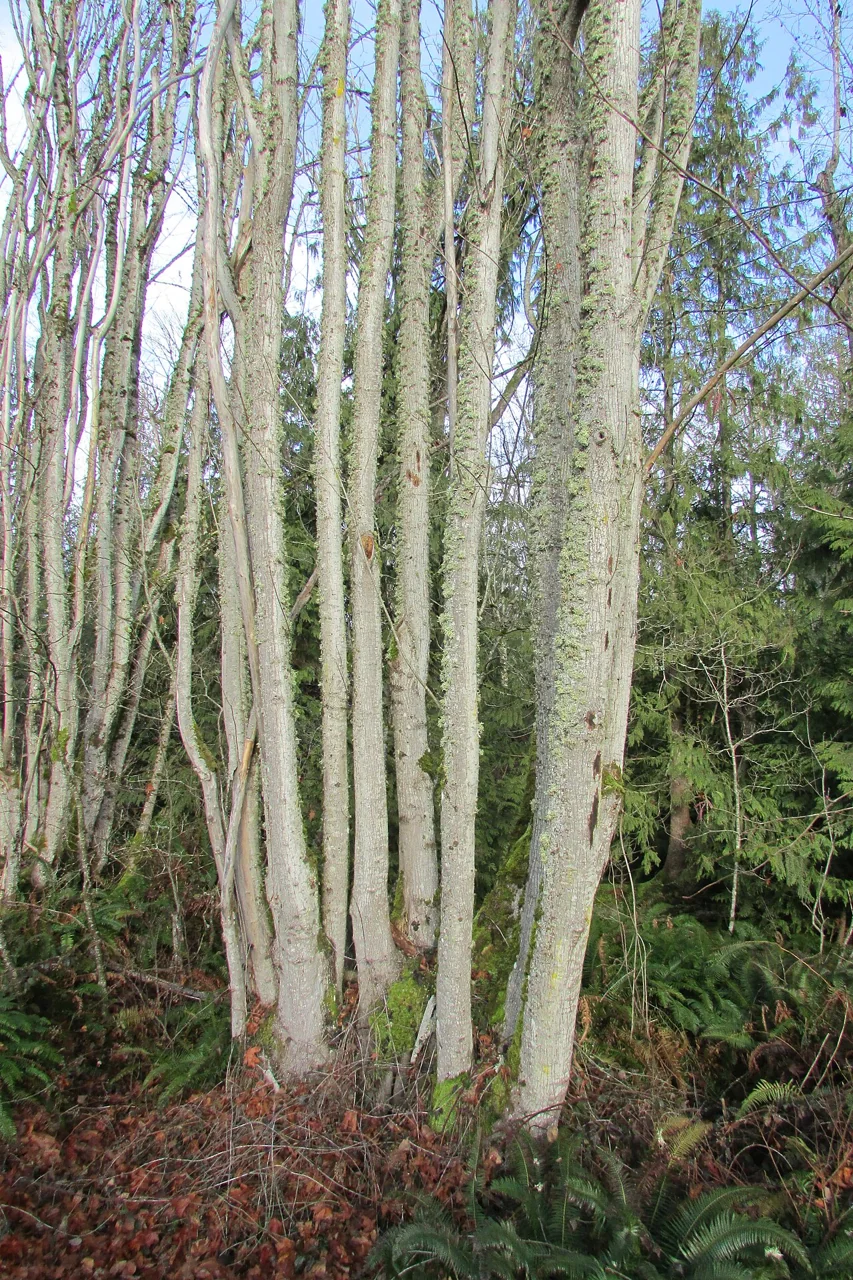
The growth habit of Alnus rubra.
Chris Light / Wikimedia Commons / CC BY-SA 4.0

Photo details
Resized and converted to WebP. No content edits.
Source: File:Red Alder 9549.jpg
Reviewed . Source identification, photograph and license reviewed. The image illustrates the named plant; it does not verify dimensions or other plant traits.
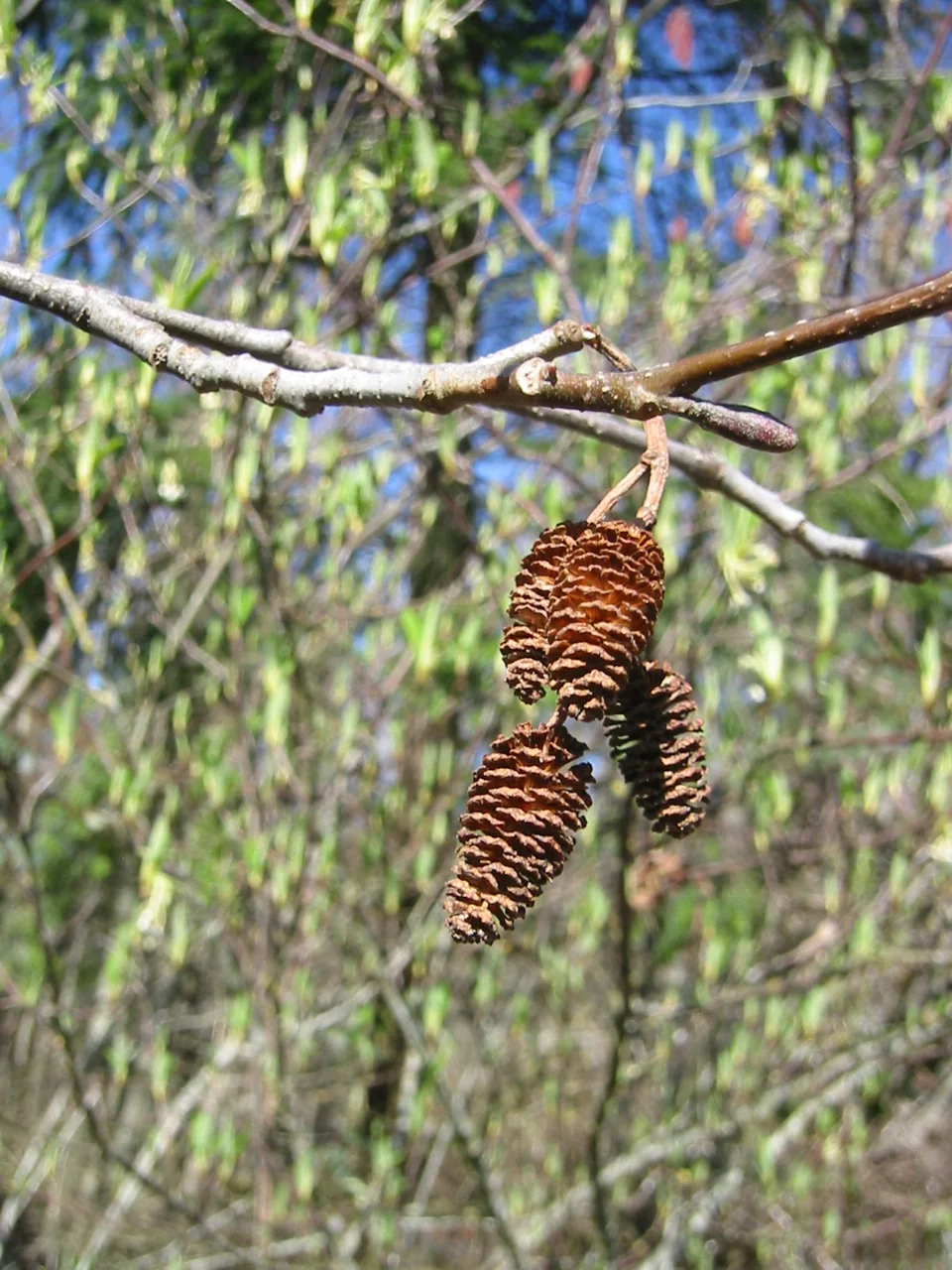
Woody female catkins of Alnus rubra remaining from the previous season.
Walter Siegmund / Wikimedia Commons / CC BY 2.5

Photo details
Resized and converted to WebP. No content edits.
Source: File:Alnus rubra 0020.JPG
Reviewed . Source identification, photograph and license reviewed. The image illustrates the named plant; it does not verify dimensions or other plant traits.
Common names
25 names · 23 languages- EnglishYour language
-
- Red alder[1]
Other languages (22)
- Dutch
-
- Rode els
- French
-
- Aulne rouge[1]
- Afrikaans
-
- amerikaanse rooiels[1]
- Chinese (Traditional)
-
- 紅榿木[1]
- Czech
-
- olše oregonská[1]
- Danish
-
- oregonel[1]
- Downriver Halkomelem
-
- kʷəxʷsi:ɬp[1]
- Estonian
-
- punane lepp[1]
- Finnish
-
- Punaleppä[1]
- Hungarian
-
- Vörös éger[1]
- Norwegian
-
- Rødor[1]
- Nuuchahnulth
-
- qaqmapt[1]
- Polish
-
- olsza czerwona[1]
- Russian
-
- Ольха красная[1]
- Saanich
-
- SḰOṈEȽĆ[1]
- Slovak
-
- jelša červená[1]
- Spanish
-
- Aliso rojo[1]
- Squamish
-
- kwelúl̓ay[1]
- Swedish
-
- rödal[1]
- Upriver Halkomelem
-
- kwulala’ulhp[1]
Sources & name notes (1)
Names recorded in our plant catalogue and botanical sources, grouped by language. Usage can vary by region.
Numbered references identify names recorded by an external source. Other names are from our plant catalogue.
Community-curated iNaturalist taxonomy; common-name attestation, not an independent botanical determination.
Source records
- Red Alder — results[0].names[1]; taxon id 56034; Alnus rubra.
- Ольха красная — results[0].names[2]; taxon id 56034; Alnus rubra.
- Aliso rojo — results[0].names[3]; taxon id 56034; Alnus rubra.
- Punaleppä — results[0].names[4]; taxon id 56034; Alnus rubra.
- Vörös éger — results[0].names[5]; taxon id 56034; Alnus rubra.
- Aulne rouge — results[0].names[6]; taxon id 56034; Alnus rubra.
- Rødor — results[0].names[7]; taxon id 56034; Alnus rubra.
- punane lepp — results[0].names[8]; taxon id 56034; Alnus rubra.
- olše oregonská — results[0].names[9]; taxon id 56034; Alnus rubra.
- 红桤木 — results[0].names[10]; taxon id 56034; Alnus rubra.
- 美国赤杨 — results[0].names[11]; taxon id 56034; Alnus rubra.
- 紅榿木 — results[0].names[12]; taxon id 56034; Alnus rubra.
- rödal — results[0].names[13]; taxon id 56034; Alnus rubra.
- oregonel — results[0].names[14]; taxon id 56034; Alnus rubra.
- olsza czerwona — results[0].names[15]; taxon id 56034; Alnus rubra.
- jelša červená — results[0].names[16]; taxon id 56034; Alnus rubra.
- kwelúl̓ay — results[0].names[17]; taxon id 56034; Alnus rubra.
- kʷəxʷsi:ɬp — results[0].names[18]; taxon id 56034; Alnus rubra.
- SḰOṈEȽĆ — results[0].names[19]; taxon id 56034; Alnus rubra.
- amerikaanse rooiels — results[0].names[20]; taxon id 56034; Alnus rubra.
- qaqmapt — results[0].names[21]; taxon id 56034; Alnus rubra.
- kwulala’ulhp — results[0].names[22]; taxon id 56034; Alnus rubra.
- Rot-Erle — results[0].names[23]; taxon id 56034; Alnus rubra.
- Oregon-Erle — results[0].names[24]; taxon id 56034; Alnus rubra.
General information
Accepted in the cited Kew taxonomic treatment.
Sources [1]Plant characteristics
NC State landscape size range; converted from feet and inches. Size varies with site, age and management.
Sources [2]NC State landscape size range; converted from feet and inches. Size varies with site, age and management.
Sources [2]Growing conditions
USDA zones listed by NC State; winter survival does not establish reliable cropping.
Sources [2]Acidic Neutral Alkaline
Uses
Leaves, Inner bark, Sap
Nitrogen fixer, Pioneer species, Charcoal, Dye, Hedge, Windbreak, Wood
Description
This plant is a pioneer and fixes nitrogen. The catkins can be eaten raw or cooked; they are high in protein but have a bitter taste. The bark must be boiled and dried to avoid the emetic effect. Often, the bark is dried and ground into powder that can be used as a thickening agent in soups or mixed with grain for bread. The sap of this plant is harvested raw in late winter on a warm, sunny day followed by a freezing cold night for the best flow. It has a sweet taste and was often used in the past to sweeten other foods. No specific details are provided about the buds, so it is unclear whether they refer to flower buds or leaf buds.
Harvest
Crown
Sources and references
References for the information marked with source numbers on this page.
-
Royal Botanic Gardens, Kew
World Checklist of Vascular Plants, version 16, extracted 4 June 2026
Relevant sections
- Botanical family: WCVP v16, wcvp_names.csv row 949920; name ID 6245; Alnus Mill.. Family column.
- Taxonomy: WCVP v16, wcvp_names.csv row 950415; name ID 6584; Alnus rubra Bong..
Source checked on .
Source data licence: CC BY 3.0.
-
NC State Extension, North Carolina State University
Alnus rubra — Extension Gardener Plant Toolbox
Relevant sections
- Height: Dimensions > Height; Height: 66 ft. 0 in. - 98 ft. 0 in.
- Spread: Dimensions > Width; Width: 35 ft. 0 in. - 50 ft. 0 in.
- Growth rate: Growth Rate
- Foliage: Woody Plant Leaf Characteristics
- Growth habit: Habit/Form
- Light: Light
- Soil moisture: Soil Drainage
- Soil texture: Soil Texture
- USDA hardiness: USDA Plant Hardiness Zone
Source checked on .