Alnus incana
Grey alder, White alder
Explore the size, hardiness, soil, light, edible uses and harvest period of Alnus incana.
Plant photos
2 photos · Select to enlarge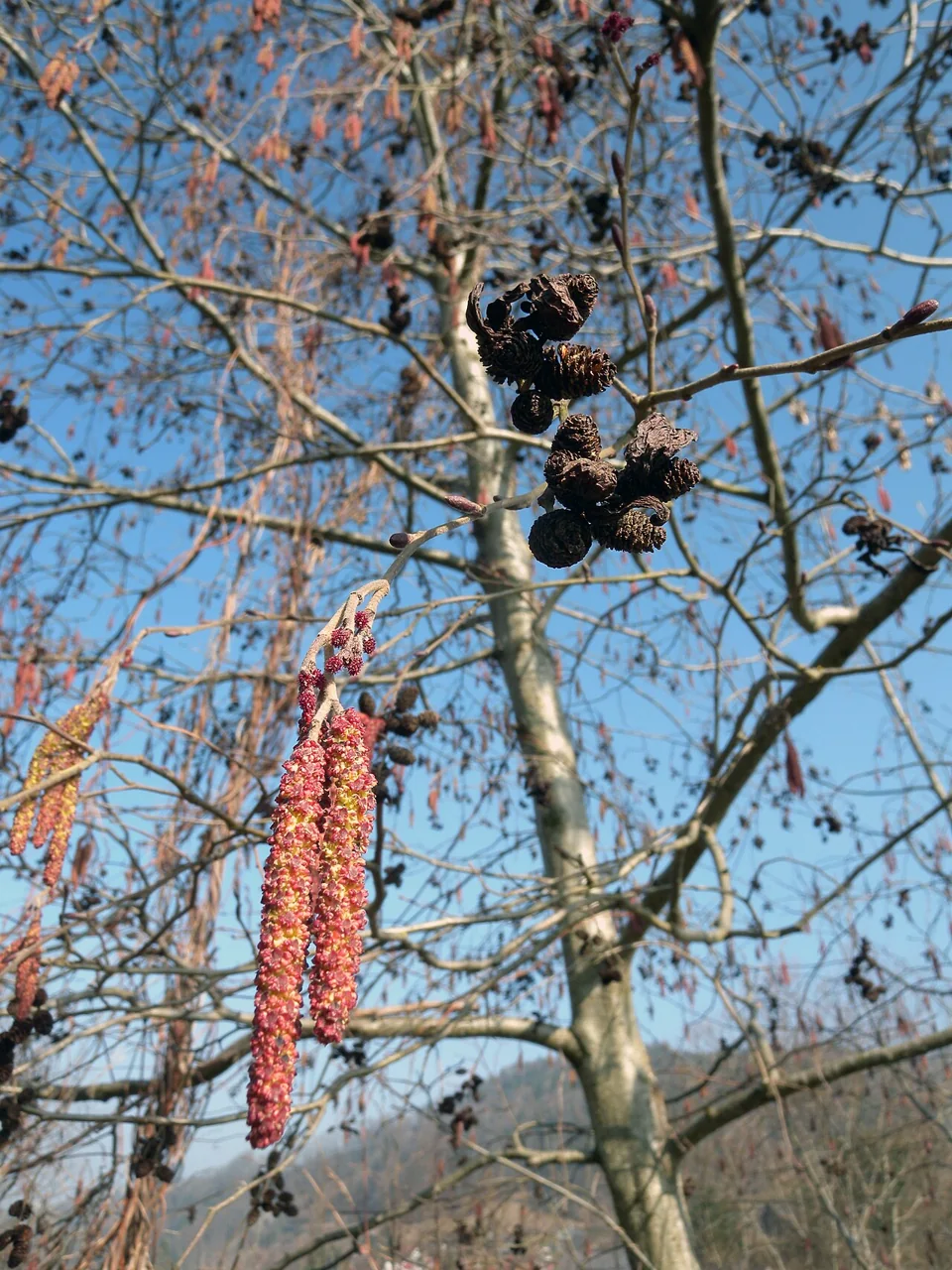
Catkins of Alnus incana.
MüBe / Wikimedia Commons / CC BY-SA 3.0

Photo details
Resized and converted to WebP. No content edits.
Source: File:Alnus incana flowers buds.jpg
Reviewed . Source identification, photograph and license reviewed. The image illustrates the named plant; it does not verify dimensions or other plant traits.
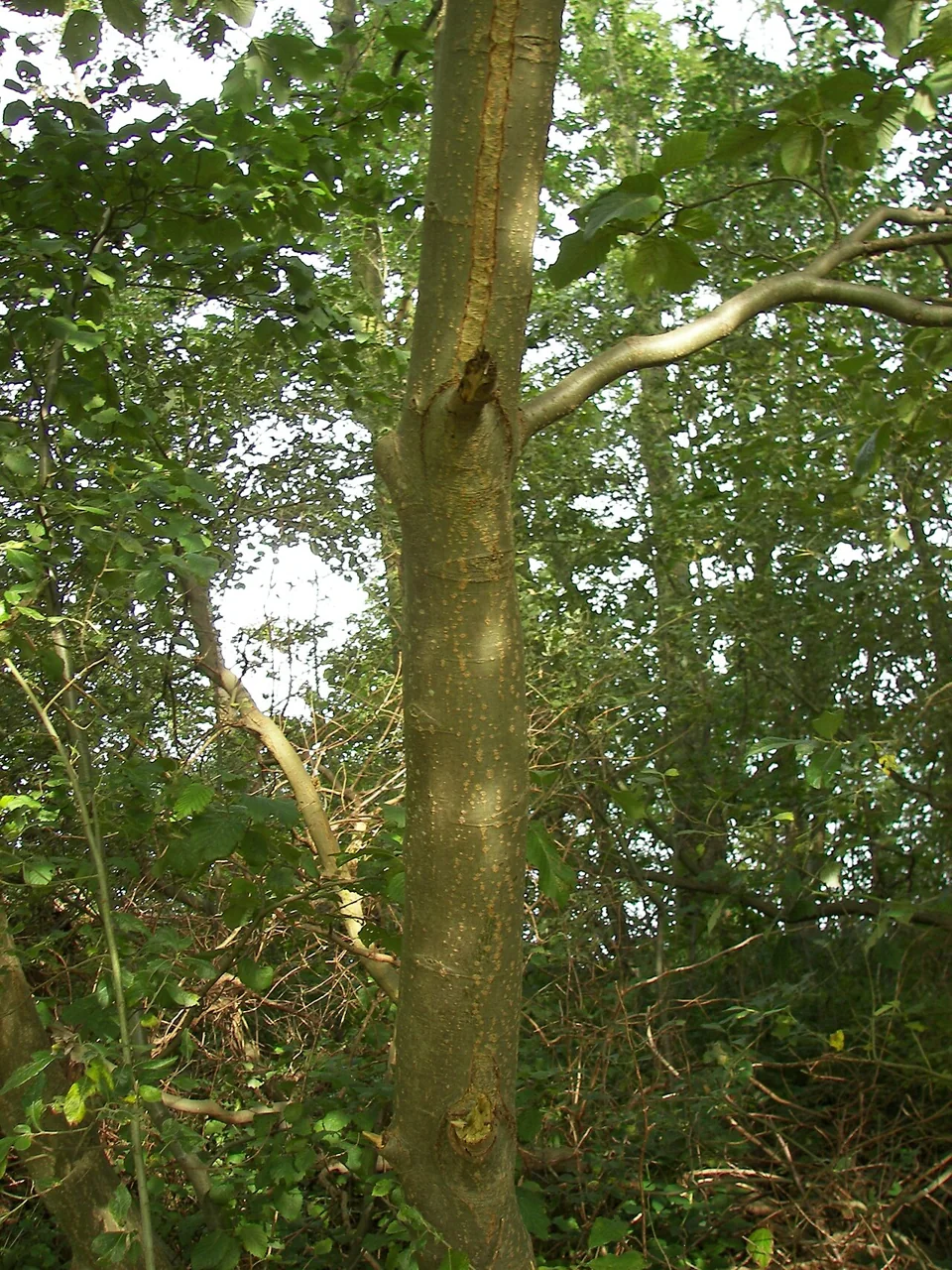
Trunk and bark of Alnus incana.
Nikanos / Wikimedia Commons / CC BY-SA 2.5

Photo details
Resized and converted to WebP. No content edits.
Source: File:Alnus incana 003.jpg
Reviewed . Source identification, photograph and license reviewed. The image illustrates the named plant; it does not verify dimensions or other plant traits.
Common names
36 names · 26 languagesOther languages (25)
- French
-
- Aulne blanc[1]
- Bulgarian
-
- Бяла елша[1]
- Chinese (Simplified)
-
- 灰桤木[1]
- Chinese (Traditional)
-
- 灰赤楊[1]
- Czech
-
- olše šedá[1]
- Danish
-
- Grå-el[1]
- Finnish
-
- harmaaleppä[1]
- Hebrew
-
- אלנוס לבן[1]
- Hungarian
-
- hamvas éger[1]
- Italian
-
- Ontano bianco[1]
- Latvian
-
- Baltalksnis[1]
- Lithuanian
-
- Baltalksnis[1]
- Navajo
-
- K'ish[1]
- Norwegian
-
- gråor[1]
- Ojibwe
-
- Waadiipiin (Wadoop-Agaasaa)[1]
- Polish
-
- Olsza szara[1]
- Slovak
-
- jelša sivá[1]
- Slovenian
-
- Siva jelša[1]
- Swedish
-
- gråal[1]
- Ukrainian
-
- Вільха сіра[1]
Sources & name notes (1)
Names recorded in our plant catalogue and botanical sources, grouped by language. Usage can vary by region.
Numbered references identify names recorded by an external source. Other names are from our plant catalogue.
Community-curated iNaturalist taxonomy; common-name attestation, not an independent botanical determination.
Source records
- grey alder — results[0].names[1]; taxon id 75377; Alnus incana.
- aulne blanc — results[0].names[2]; taxon id 75377; Alnus incana.
- Ольха серая — results[0].names[3]; taxon id 75377; Alnus incana.
- Ольха белая — results[0].names[4]; taxon id 75377; Alnus incana.
- speckled alder — results[0].names[5]; taxon id 75377; Alnus incana.
- Елоха — results[0].names[6]; taxon id 75377; Alnus incana.
- gray alder — results[0].names[8]; taxon id 75377; Alnus incana.
- Вольха шэрая — results[0].names[9]; taxon id 75377; Alnus incana.
- Вольха белая — results[0].names[10]; taxon id 75377; Alnus incana.
- olše šedá — results[0].names[11]; taxon id 75377; Alnus incana.
- Grau-Erle — results[0].names[12]; taxon id 75377; Alnus incana.
- tag alder — results[0].names[13]; taxon id 75377; Alnus incana.
- Baltalksnis — results[0].names[14]; taxon id 75377; Alnus incana.
- Grå-el — results[0].names[15]; taxon id 75377; Alnus incana.
- Grauwe els — results[0].names[16]; taxon id 75377; Alnus incana.
- Witte els — results[0].names[17]; taxon id 75377; Alnus incana.
- gråor — results[0].names[18]; taxon id 75377; Alnus incana.
- hall lepp — results[0].names[19]; taxon id 75377; Alnus incana.
- valge lepp — results[0].names[20]; taxon id 75377; Alnus incana.
- harmaaleppä — results[0].names[21]; taxon id 75377; Alnus incana.
- Olsza szara — results[0].names[22]; taxon id 75377; Alnus incana.
- Weiß-Erle — results[0].names[23]; taxon id 75377; Alnus incana.
- Waadiipiin (Wadoop-Agaasaa) — results[0].names[24]; taxon id 75377; Alnus incana.
- gråal — results[0].names[25]; taxon id 75377; Alnus incana.
- 灰桤木 — results[0].names[26]; taxon id 75377; Alnus incana.
- 灰赤楊 — results[0].names[27]; taxon id 75377; Alnus incana.
- Бяла елша — results[0].names[28]; taxon id 75377; Alnus incana.
- Вільха сіра — results[0].names[29]; taxon id 75377; Alnus incana.
- K'ish — results[0].names[30]; taxon id 75377; Alnus incana.
- Siva jelša — results[0].names[31]; taxon id 75377; Alnus incana.
- hamvas éger — results[0].names[32]; taxon id 75377; Alnus incana.
- Baltalksnis — results[0].names[33]; taxon id 75377; Alnus incana.
- Ontano bianco — results[0].names[34]; taxon id 75377; Alnus incana.
- אלנוס לבן — results[0].names[35]; taxon id 75377; Alnus incana.
- jelša sivá — results[0].names[36]; taxon id 75377; Alnus incana.
General information
Plant characteristics
Growing conditions
Wet, Moist
Loam (medium) Clay (heavy)
Acidic Neutral Alkaline
Full sun, Partial shade
Uses
Inner bark, Leaves, Sap
Hedge, Pioneer species, Nitrogen fixer, Windbreak, Wood, Charcoal, Dye
Description
This species fixes atmospheric nitrogen and is also tolerant of polluted soil. It can be used for soil remediation, especially on gravel heaps. This is an excellent pioneer species for re-establishing forests on abandoned agricultural land, difficult terrains, and so on. Due to its rapid growth rate, it quickly provides sheltered conditions, allowing more permanent trees in the forest to thrive. Additionally, bacteria on the roots fix atmospheric nitrogen – although this enables the tree to grow well in relatively poor soils, it also makes some of this nitrogen available to other nearby plants. Alder trees also have a dense canopy, and when the leaves fall in autumn, they help to build up the humus content of the soil. Alder seedlings do not compete well in shady forest conditions, and thus this species gradually dies out as other trees establish themselves. The bark and fruits contain up to 20% tannin. The wood is light, soft, fairly elastic, and easy to split. It is used for clogs, bowls, woodcuts, and so on. It is highly valued by furniture makers.
Harvest
Crown
Sources and references
References for the information marked with source numbers on this page.
-
Royal Botanic Gardens, Kew
World Checklist of Vascular Plants, version 16, extracted 4 June 2026
Relevant sections
- Botanical family: WCVP v16, wcvp_names.csv row 949920; name ID 6245; Alnus Mill.. Family column.
- Taxonomy: WCVP v16, wcvp_names.csv row 950160; name ID 6417; Alnus incana (L.) Moench.
Source checked on .
Source data licence: CC BY 3.0.
-
Catalogue of Life
Catalogue of Life 2026-08-20 — Alnus incana
Taxonomic data from World Plants, version 26.05, reproduced in Catalogue of Life 2026-08-20.
Supports: TaxonomyRelevant sections
- Taxonomy: COL 2026-08-20, NameUsage.tsv line 1772706, ID 5TWTV: Alnus incana (L.) Moench (accepted).
Source checked on .
-
Native Plant Trust; Go Botany
Alnus incana — Go Botany
Supports: Foliage
Relevant sections
- Foliage: Leaf duration
Source checked on .