Allium ampeloprasum
Babington’s leek
Explore the size, hardiness, soil, light, edible uses and harvest period of Allium ampeloprasum.
Plant photos
2 photos · Select to enlarge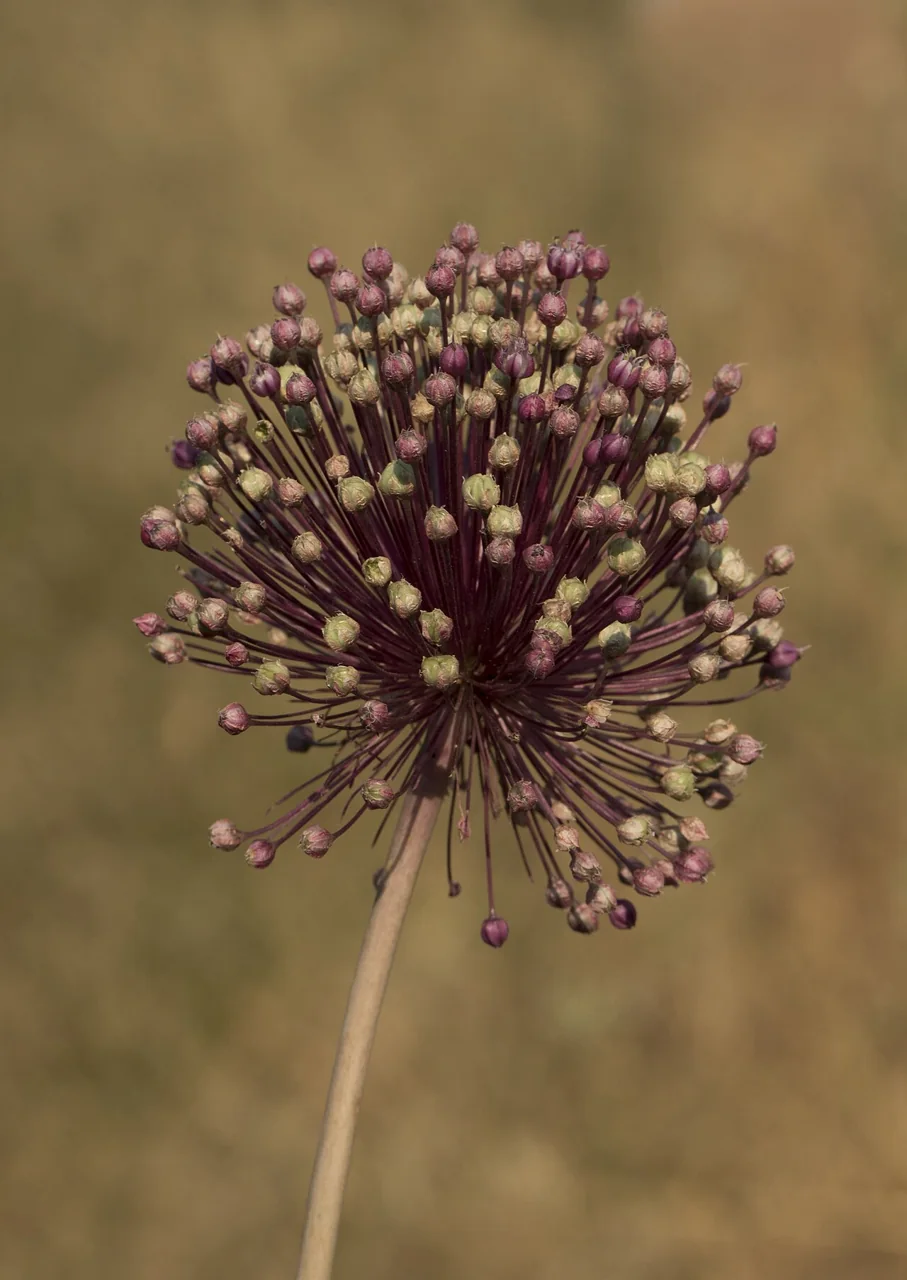
Flowers of Allium ampeloprasum.
Zeynel Cebeci / Wikimedia Commons / CC BY-SA 4.0

Photo details
Resized and converted to WebP. No content edits.
Source: File:Allium ampeloprasum - Broadleaf wild leek 03.jpg
Reviewed . Source identification, photograph and license reviewed. The image illustrates the named plant; it does not verify dimensions or other plant traits.
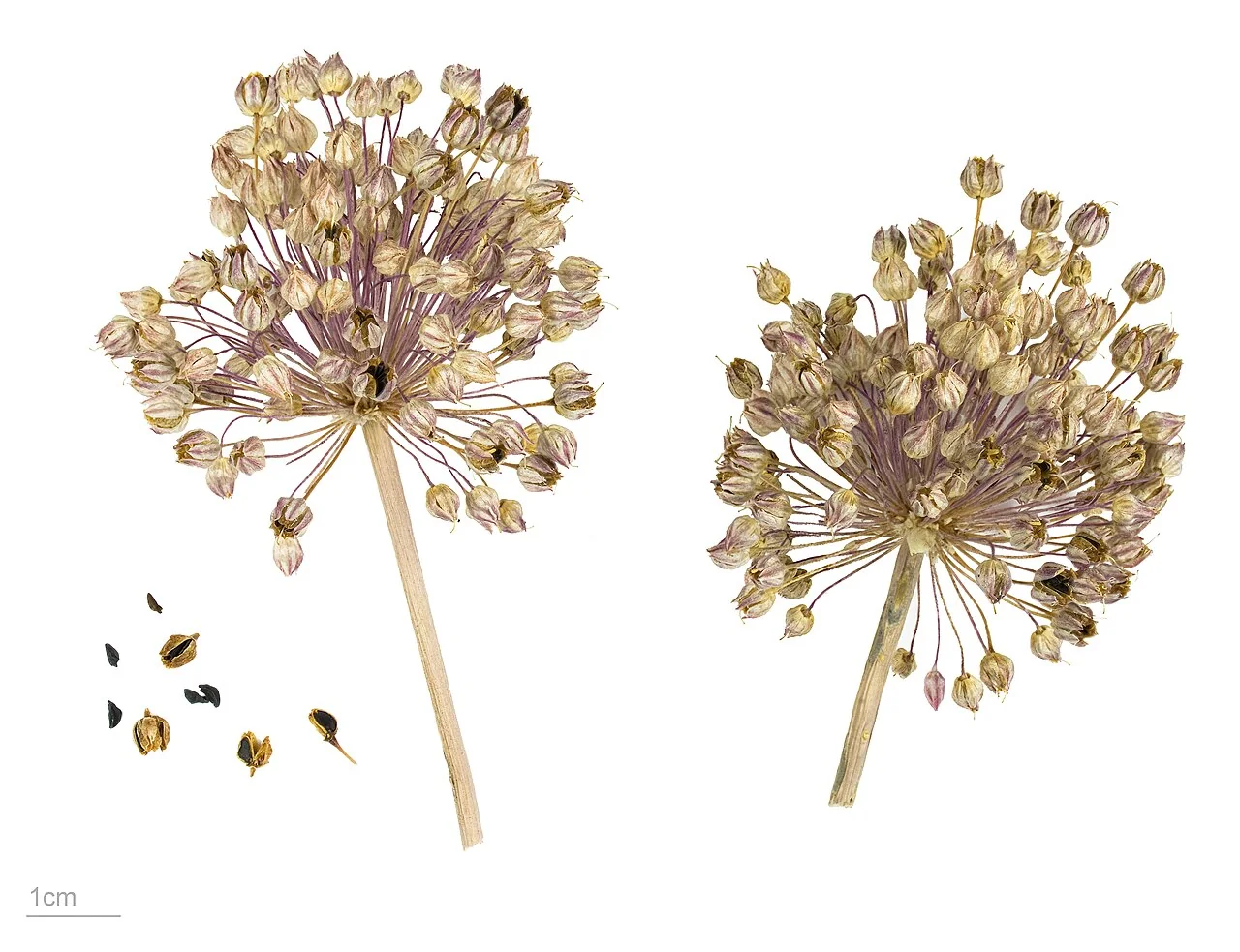
Dry fruiting heads and seeds of Allium ampeloprasum.
Roger Culos / Wikimedia Commons / CC BY-SA 3.0

Photo details
Resized and converted to WebP. No content edits.
Source: File:Allium ampeloprasum MHNT.BOT.2006.46.12.jpg
Reviewed . Source identification, photograph and license reviewed. The image illustrates the named plant; it does not verify dimensions or other plant traits.
Common names
36 names · 24 languagesOther languages (23)
- Dutch
-
- Oerprei
- Parellook
- Prei[1]
- French
-
+1 more nameShow fewer names
- Poireau perpétuel
- Arabic
-
+1 more nameShow fewer names
- كراث نبطي[1]
- Catalan
-
- porradell[1]
- Czech
-
- pór letní[1]
- Danish
-
- vild perleløg[1]
- Estonian
-
- viinamäelauk[1]
- Finnish
-
- kesäpurjo[1]
- Greek
-
- Αγριόπρασο[1]
- Hebrew
-
- שום גבוה[1]
- Hungarian
-
- Francia hagyma[1]
- Italian
-
- aglio ampelopraso[1]
- Lithuanian
-
- Gausiažiedis poras[1]
- Ojibwe
-
- Bagwaji-zhigaagawanzh[1]
- Polish
-
- por[1]
- Portuguese
-
- Alho-pôrro[1]
- Russian
-
- Лук виноградный[1]
- Slovak
-
- pór divý[1]
- Slovenian
-
- poletni luk[1]
- Spanish
-
- Puerro silvestre[1]
- Swedish
-
- purjolök[1]
Sources & name notes (1)
Names recorded in our plant catalogue and botanical sources, grouped by language. Usage can vary by region.
Numbered references identify names recorded by an external source. Other names are from our plant catalogue.
Community-curated iNaturalist taxonomy; common-name attestation, not an independent botanical determination.
Source records
- Wild Leek — results[1].names[1]; taxon id 122912; Allium ampeloprasum.
- Elephant Garlic — results[1].names[2]; taxon id 122912; Allium ampeloprasum.
- Alho-pôrro — results[1].names[3]; taxon id 122912; Allium ampeloprasum.
- Ail Faux-Poireau — results[1].names[4]; taxon id 122912; Allium ampeloprasum.
- Carambole — results[1].names[5]; taxon id 122912; Allium ampeloprasum.
- Poireau d'été — results[1].names[6]; taxon id 122912; Allium ampeloprasum.
- viinamäelauk — results[1].names[7]; taxon id 122912; Allium ampeloprasum.
- purjolök — results[1].names[8]; taxon id 122912; Allium ampeloprasum.
- kesäpurjo — results[1].names[9]; taxon id 122912; Allium ampeloprasum.
- Лук виноградный — results[1].names[10]; taxon id 122912; Allium ampeloprasum.
- pór letní — results[1].names[11]; taxon id 122912; Allium ampeloprasum.
- Αγριόπρασο — results[1].names[12]; taxon id 122912; Allium ampeloprasum.
- Bagwaji-zhigaagawanzh — results[1].names[13]; taxon id 122912; Allium ampeloprasum.
- كراث بري — results[1].names[14]; taxon id 122912; Allium ampeloprasum.
- كراث بري عريض الأوراق — results[1].names[15]; taxon id 122912; Allium ampeloprasum.
- بصل العفريت — results[1].names[16]; taxon id 122912; Allium ampeloprasum.
- كراث نبطي — results[1].names[17]; taxon id 122912; Allium ampeloprasum.
- porradell — results[1].names[18]; taxon id 122912; Allium ampeloprasum.
- Gausiažiedis poras — results[1].names[19]; taxon id 122912; Allium ampeloprasum.
- 象大蒜 — results[1].names[20]; taxon id 122912; Allium ampeloprasum.
- Prei — results[1].names[21]; taxon id 122912; Allium ampeloprasum.
- Puerro silvestre — results[1].names[22]; taxon id 122912; Allium ampeloprasum.
- aglio ampelopraso — results[1].names[23]; taxon id 122912; Allium ampeloprasum.
- poletni luk — results[1].names[24]; taxon id 122912; Allium ampeloprasum.
- vild perleløg — results[1].names[25]; taxon id 122912; Allium ampeloprasum.
- Francia hagyma — results[1].names[26]; taxon id 122912; Allium ampeloprasum.
- שום גבוה — results[1].names[27]; taxon id 122912; Allium ampeloprasum.
- por — results[1].names[28]; taxon id 122912; Allium ampeloprasum.
- 南欧蒜 — results[1].names[29]; taxon id 122912; Allium ampeloprasum.
- pór divý — results[1].names[30]; taxon id 122912; Allium ampeloprasum.
- Pırasa — results[1].names[31]; taxon id 122912; Allium ampeloprasum.
- Kaya Sarımsağı — results[1].names[32]; taxon id 122912; Allium ampeloprasum.
General information
Accepted in the cited Kew taxonomic treatment.
Sources [1]Kew's family placement for the genus Allium (WCVP v16).
Sources [1]Plant characteristics
NC State landscape size range; converted from feet and inches. Size varies with site, age and management.
Sources [2]NC State landscape size range; converted from feet and inches. Size varies with site, age and management.
Sources [2]Growing conditions
USDA zones listed by NC State; winter survival does not establish reliable cropping.
Sources [2]Acidic Neutral Alkaline
Uses
Leaves, Flowers, Root
None
Description
Chives can be eaten raw or cooked. The bulbs vary in size from 2 to 6 cm and have a strong leek and garlic flavor. They are used as a seasoning in cooked dishes. Selected cultivars of the bulbs are large and have a mild garlic flavor. The leaves can also be consumed raw or cooked, with a mild to strong garlic taste. They are available from late autumn to spring, although they become fibrous and tough as they age. The flowers have a similar flavor to the leaves but are drier in texture and are best used as a flavoring in cooked dishes. The chive bulbs have a mild garlic flavor and are suitable as a seasoning in salads and cooked food. Although they grow abundantly, their small size makes them a bit cumbersome to handle. They can also be pickled.
Harvest
Sources and references
References for the information marked with source numbers on this page.
-
Royal Botanic Gardens, Kew
World Checklist of Vascular Plants, version 16, extracted 4 June 2026
Relevant sections
- Botanical family: WCVP v16, wcvp_names.csv row 1169904; name ID 294888; Allium L.. Family column.
- Taxonomy: WCVP v16, wcvp_names.csv row 1170517; name ID 294972; Allium ampeloprasum L..
Source checked on .
Source data licence: CC BY 3.0.
-
NC State Extension, North Carolina State University
Allium ampeloprasum — Extension Gardener Plant Toolbox
Relevant sections
- Height: Dimensions > Height; Height: 3 ft. 0 in. - 4 ft. 0 in.
- Spread: Dimensions > Width; Width: 1 ft. 0 in. - 2 ft. 0 in.
- Growth rate: Growth Rate
- Growth habit: Habit/Form
- Life cycle: Life Cycle
- Light: Light
- Soil moisture: Soil Drainage
- Soil texture: Soil Texture
- USDA hardiness: USDA Plant Hardiness Zone
Source checked on .