Actinidia deliciosa
Kiwi
Explore the size, hardiness, soil, light, edible uses and harvest period of Actinidia deliciosa.
Plant photos
2 photos · Select to enlarge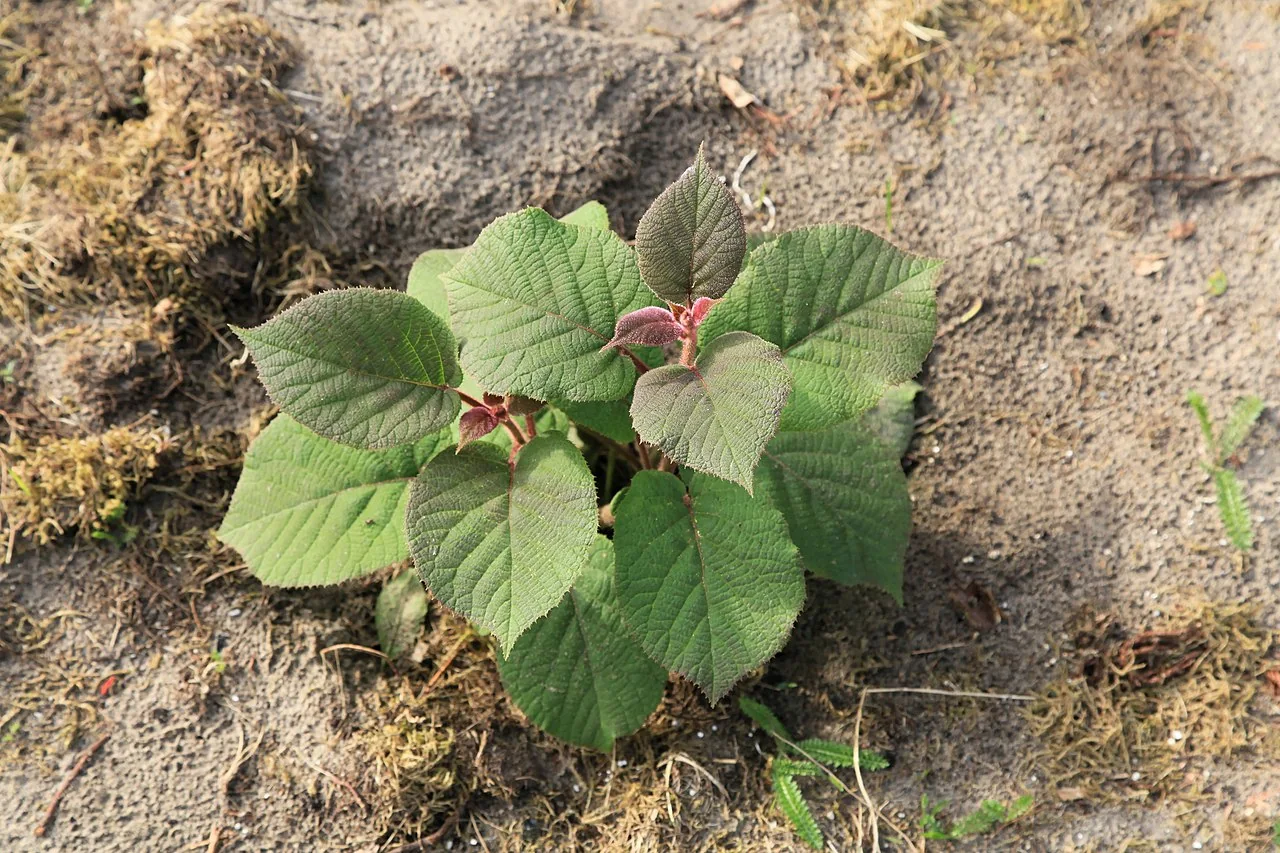
A young Actinidia deliciosa plant growing in a garden.
Frank Vincentz / Wikimedia Commons / CC BY-SA 3.0

Photo details
Resized and converted to WebP. No content edits.
Source: File:Kluse - Actinidia deliciosa - Kiwi 01 ies.jpg
Reviewed . Source identification, photograph and license reviewed. This image illustrates the named plant; it does not verify dimensions or other plant traits.
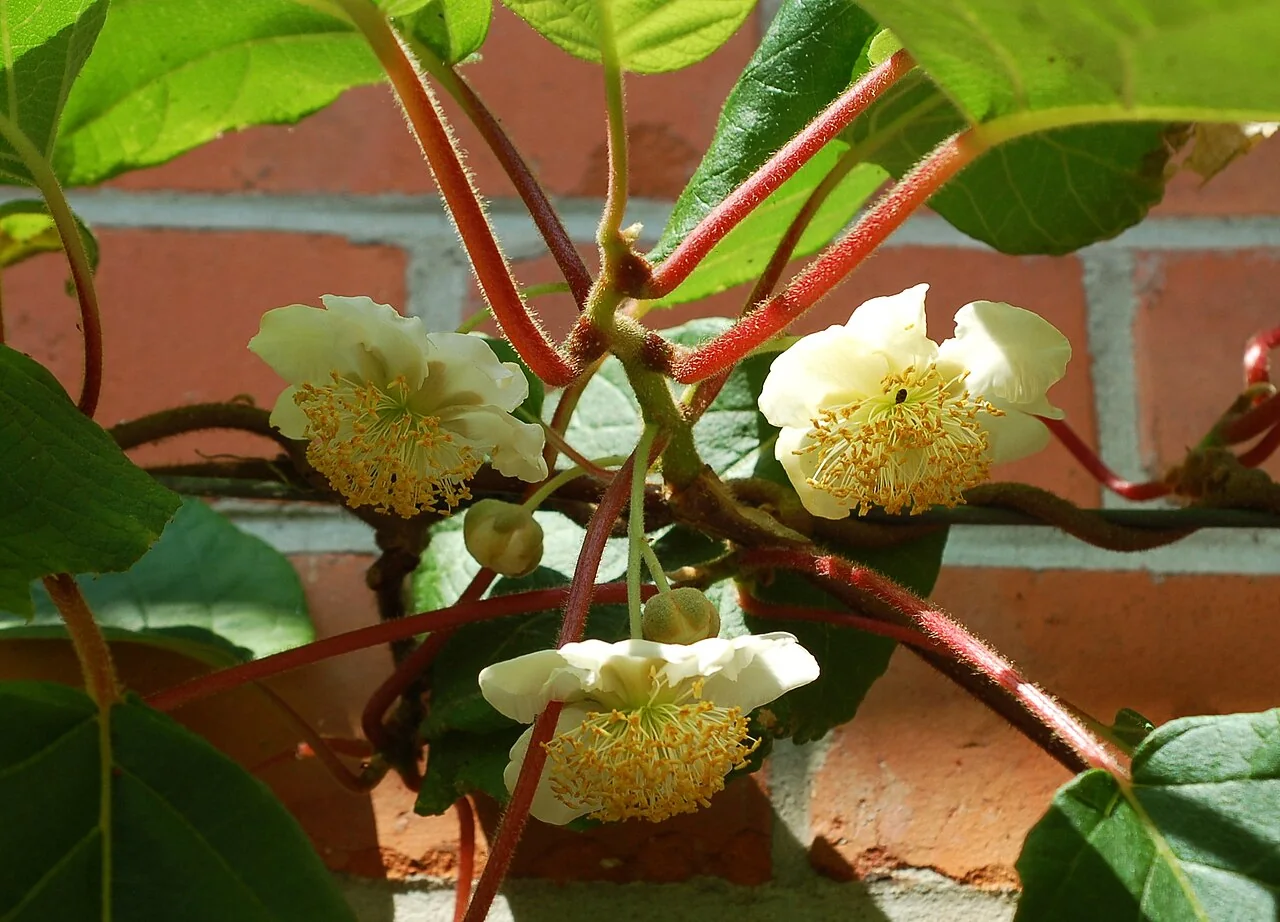
Male flowers of Actinidia deliciosa on the vine.
Heiner Otterstedt / Wikimedia Commons / CC BY-SA 4.0

Photo details
Resized and converted to WebP. No content edits.
Source: File:Kiwi-maennliche-bluete.jpg
Reviewed . Source identification, photograph and license reviewed. This image illustrates the named plant; it does not verify dimensions or other plant traits.
Common names
6 names · 4 languages- EnglishYour language
-
- Kiwi
Other languages (3)
- Dutch
-
- Kiwi
- French
-
- Kiwi
Sources & name notes (1)
Names recorded in our plant catalogue and botanical sources, grouped by language. Usage can vary by region.
Numbered references identify names recorded by an external source. Other names are from our plant catalogue.
Common names from World Plants, version 26.05, reproduced in Catalogue of Life 2026-08-20. License: CC BY.
Source records
- Chinese Gooseberry — VernacularName.tsv, line 153183; taxon BP86J.
- Kiwi — VernacularName.tsv, line 153184; taxon BP86J.
- Kiwifruit — VernacularName.tsv, line 153185; taxon BP86J.
General information
Kew's family placement for the genus Actinidia (WCVP v16).
Sources [1]Plant characteristics
NC State landscape size range; converted from feet and inches. Size varies with site, age and management.
Sources [3]NC State landscape size range; converted from feet and inches. Size varies with site, age and management.
Sources [3]Growing conditions
USDA zones listed by NC State; winter survival does not establish reliable cropping.
Sources [3]Sand (light) Loam (medium) Clay (heavy)
Acidic
Uses
Leaves, Fruit, Seed
Fragrant, Paper
Description
Fruit - can be consumed raw or cooked. With a delicious flavor, the fruits can grow up to 8 cm long and are very juicy when fully ripe, featuring a fresh, tart taste. They contain small seeds that can easily be eaten along with the fruit. This fruit is rich in vitamin C, with fresh specimens containing 100 - 420 mg of vitamin C per 100 g and 8-14% carbohydrates. The acidity ranges from 1-2%, mainly due to citric acid. The fruits ripen in November and can be stored for up to 3-4 months. It is possible to harvest 8-30 tons of fruit per hectare. The leaves of this plant are nutritious.
Harvest
Sources and references
References for the information marked with source numbers on this page.
-
Royal Botanic Gardens, Kew
World Checklist of Vascular Plants, version 16, extracted 4 June 2026
Relevant sections
- Taxonomy: WCVP version 16, wcvp_names.csv: Actinidia deliciosa (A.Chev.) C.F.Liang & A.R.Ferguson, name ID 2620664, row 702478; Actinidia chinensis var. deliciosa (A.Chev.) A.Chev., name ID 2874080, row 1418150
- Botanical family: WCVP v16, wcvp_names.csv row 823982; name ID 2620606; Actinidia Lindl.. Family column.
Source checked on .
Source data licence: CC BY 3.0.
-
Catalogue of Life
Catalogue of Life 2026-08-20 — Actinidia deliciosa
Taxonomic data from World Plants, version 26.05, reproduced in Catalogue of Life 2026-08-20.
Supports: TaxonomyRelevant sections
- Taxonomy: COL 2026-08-20, NameUsage.tsv line 1914319, ID 64Q3J: Actinidia deliciosa (A.Chev.) C.F.Liang & A.R.Ferguson (synonym). Accepted target: Actinidia chinensis var. deliciosa (A.Chev.) A.Chev., ID BP86J, line 4348332.
Source checked on .
-
NC State Extension, North Carolina State University
Actinidia chinensis var. deliciosa — Extension Gardener Plant Toolbox
Relevant sections
- Height: Dimensions > Height; Height: 15 ft. 0 in. - 30 ft. 0 in.
- Spread: Dimensions > Width; Width: 6 ft. 0 in. - 10 ft. 0 in.
- Growth rate: Growth Rate
- Foliage: Woody Plant Leaf Characteristics
- Growth habit: Habit/Form
- Light: Light
- Soil moisture: Soil Drainage
- USDA hardiness: USDA Plant Hardiness Zone
Source checked on .