Actinidia chinensis
Kiwi
Explore the size, hardiness, soil, light, edible uses and harvest period of Actinidia chinensis.
Plant photos
2 photos · Select to enlarge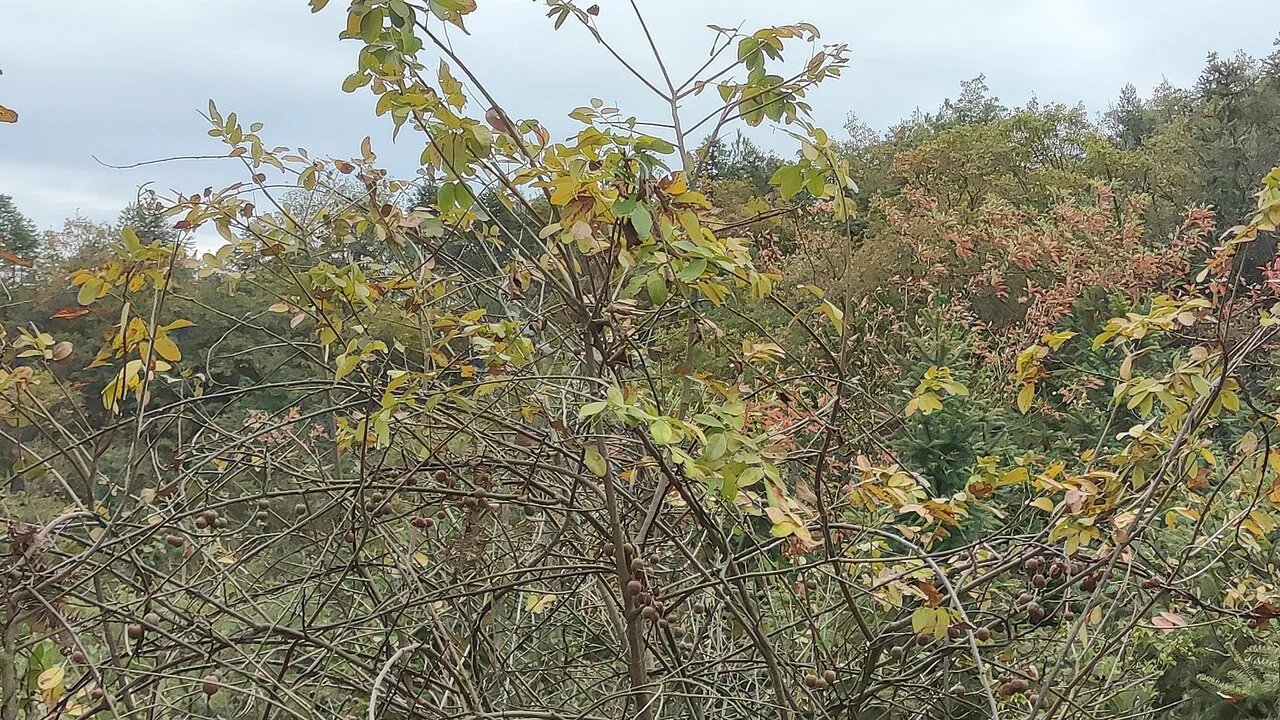
The growth habit of Actinidia chinensis.
江国彬 / Wikimedia Commons / CC0

Photo details
Resized and converted to WebP. No content edits.
Source: File:Actinidia chinensis 247847607.jpg
Reviewed . Source identification, photograph and license reviewed. The image illustrates the named plant; it does not verify dimensions or other plant traits.
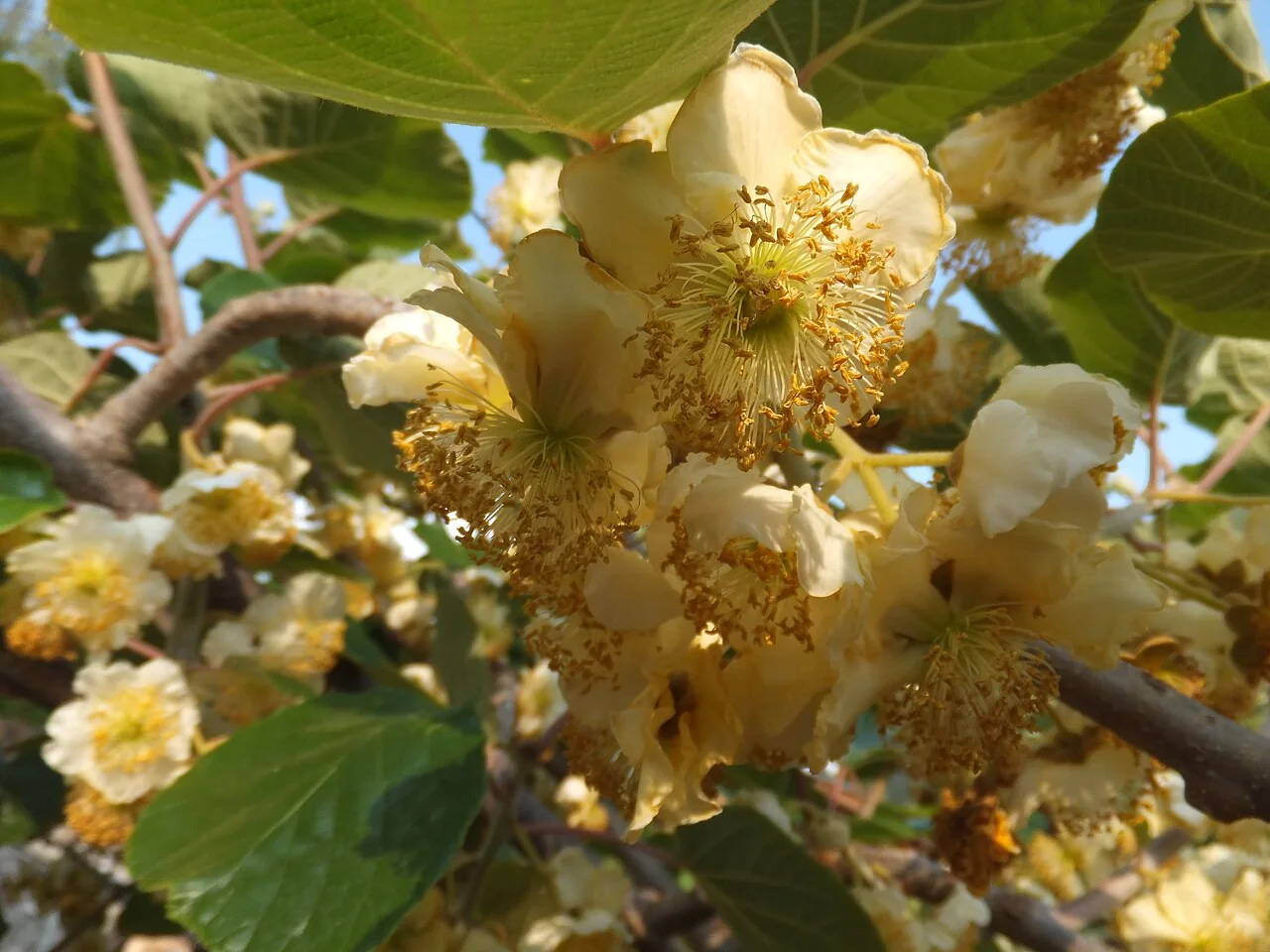
Male flowers of Actinidia chinensis.
Syrio / Wikimedia Commons / CC BY-SA 4.0

Photo details
Resized and converted to WebP. No content edits.
Source: File:Kiwi male flowers 3.JPG
Reviewed . Source identification, photograph and license reviewed. The image illustrates the named plant; it does not verify dimensions or other plant traits.
Common names
29 names · 19 languagesOther languages (18)
- Dutch
-
- Chinese Kruisbes[1]
- Kiwi
- Arabic
-
- كيوي ذهبي[1]
- Catalan
-
- Actinídia de la Xina[1]
- Chinese (Traditional)
-
- 中華獼猴桃[1]
- Czech
-
- aktinidie čínská[1]
- Danish
-
- ægte kiwi[1]
- Italian
-
- Kiwi[1]
- Japanese
-
- シナサルナシ[1]
- Lithuanian
-
- Kininė aktinidija[1]
- Portuguese
-
- Quiuí-amarelo[1]
- Russian
-
- Актинидия китайская[1]
- Slovak
-
- aktinídia čínska[1]
- Turkish
-
- kivi[1]
Sources & name notes (1)
Names recorded in our plant catalogue and botanical sources, grouped by language. Usage can vary by region.
Numbered references identify names recorded by an external source. Other names are from our plant catalogue.
Community-curated iNaturalist taxonomy; common-name attestation, not an independent botanical determination.
Source records
- Chinese gooseberry — results[0].names[0]; taxon id 55149; Actinidia chinensis.
- Golden Kiwi — results[0].names[2]; taxon id 55149; Actinidia chinensis.
- Chinese Kruisbes — results[0].names[3]; taxon id 55149; Actinidia chinensis.
- Aktinidia chińska — results[0].names[4]; taxon id 55149; Actinidia chinensis.
- Kiwifruit — results[0].names[5]; taxon id 55149; Actinidia chinensis.
- aktinidie čínská — results[0].names[6]; taxon id 55149; Actinidia chinensis.
- Actinídia de la Xina — results[0].names[7]; taxon id 55149; Actinidia chinensis.
- シナサルナシ — results[0].names[8]; taxon id 55149; Actinidia chinensis.
- 中华猕猴桃 — results[0].names[9]; taxon id 55149; Actinidia chinensis.
- 中華獼猴桃 — results[0].names[10]; taxon id 55149; Actinidia chinensis.
- Актинидия китайская — results[0].names[11]; taxon id 55149; Actinidia chinensis.
- Kiwi — results[0].names[12]; taxon id 55149; Actinidia chinensis.
- kivi — results[0].names[13]; taxon id 55149; Actinidia chinensis.
- Kininė aktinidija — results[0].names[14]; taxon id 55149; Actinidia chinensis.
- Quiuí-amarelo — results[0].names[15]; taxon id 55149; Actinidia chinensis.
- كيوي ذهبي — results[0].names[16]; taxon id 55149; Actinidia chinensis.
- ægte kiwi — results[0].names[17]; taxon id 55149; Actinidia chinensis.
- 猕猴桃 — results[0].names[18]; taxon id 55149; Actinidia chinensis.
- Kiwi — results[0].names[19]; taxon id 55149; Actinidia chinensis.
- Kiwi de Chine — results[0].names[20]; taxon id 55149; Actinidia chinensis.
- Actinidie de Chine — results[0].names[21]; taxon id 55149; Actinidia chinensis.
- Kiwi — results[0].names[22]; taxon id 55149; Actinidia chinensis.
- kiwi — results[0].names[23]; taxon id 55149; Actinidia chinensis.
- aktinídia čínska — results[0].names[24]; taxon id 55149; Actinidia chinensis.
- Chinesischer Strahlengriffel — results[0].names[25]; taxon id 55149; Actinidia chinensis.
- Kiwi — results[0].names[26]; taxon id 55149; Actinidia chinensis.
- 키위 — results[0].names[27]; taxon id 55149; Actinidia chinensis.
- 양다래 — results[0].names[28]; taxon id 55149; Actinidia chinensis.
General information
Kew's family placement for the genus Actinidia (WCVP v16).
Sources [1]Growing conditions
USDA zones listed by NC State; winter survival does not establish reliable cropping.
Sources [3]Uses
Leaves
Fragrant
Description
The Kiwi (Actinidia chinensis) is an excellent choice for agroforestry applications due to its numerous benefits and uses. This vigorous climbing plant, native to China, is now cultivated worldwide for its delicious fruits. The Kiwi can climb up to 9 meters high and reach a width of up to 3 meters, with a moderate growth rate. This makes it an ideal choice for creating shade and providing support to other crops in agroforestry systems. Kiwis thrive best in a temperate climate with warm summers and cool winters. They prefer well-drained, fertile soils with a pH between 6.0 and 6.5, indicating a balanced acidity level for optimal growth, where the soil is neither too acidic nor too alkaline. The fruits of the Kiwi are delicious eaten raw or cooked and contain small seeds that are easily edible. The leaves are also edible when cooked and are an excellent source of vitamin C and other nutrients. To allow the Kiwi to thrive, regular pruning is necessary to control growth and promote fruit production. A sturdy support is also required for climbing. In agroforestry systems, the Kiwi offers numerous benefits, including soil stabilization through its extensive root system, biodiversity through its attractiveness to pollinators and other animals, and food for animals and pollinators. These benefits make the Kiwi a valuable and desirable addition to any agroforestry system, not only providing a rich harvest but also contributing to a healthy and balanced ecosystem.
Harvest
Sources and references
References for the information marked with source numbers on this page.
-
Royal Botanic Gardens, Kew
World Checklist of Vascular Plants, version 16, extracted 4 June 2026
Relevant sections
- Botanical family: WCVP v16, wcvp_names.csv row 823982; name ID 2620606; Actinidia Lindl.. Family column.
- Taxonomy: WCVP v16, wcvp_names.csv row 922394; name ID 2620644; Actinidia chinensis Planch..
Source checked on .
Source data licence: CC BY 3.0.
-
Catalogue of Life
Catalogue of Life 2026-08-20 — Actinidia chinensis
Taxonomic data from World Plants, version 26.05, reproduced in Catalogue of Life 2026-08-20.
Supports: TaxonomyRelevant sections
- Taxonomy: COL 2026-08-20, NameUsage.tsv line 1914316, ID 64Q3F: Actinidia chinensis Planch. (accepted).
Source checked on .
-
NC State Extension, North Carolina State University
Actinidia chinensis — Extension Gardener Plant Toolbox
Relevant sections
- Growth rate: Growth Rate
- Foliage: Woody Plant Leaf Characteristics
- Growth habit: Habit/Form
- Light: Light
- Soil moisture: Soil Drainage
- Soil texture: Soil Texture
- Soil pH: Soil pH
- USDA hardiness: USDA Plant Hardiness Zone
Source checked on .