Abies grandis
Grand Fir, Giant Fir, Lowland White Fir
Explore the size, hardiness, soil, light and edible uses of Abies grandis.
Plant photos
2 photos · Select to enlarge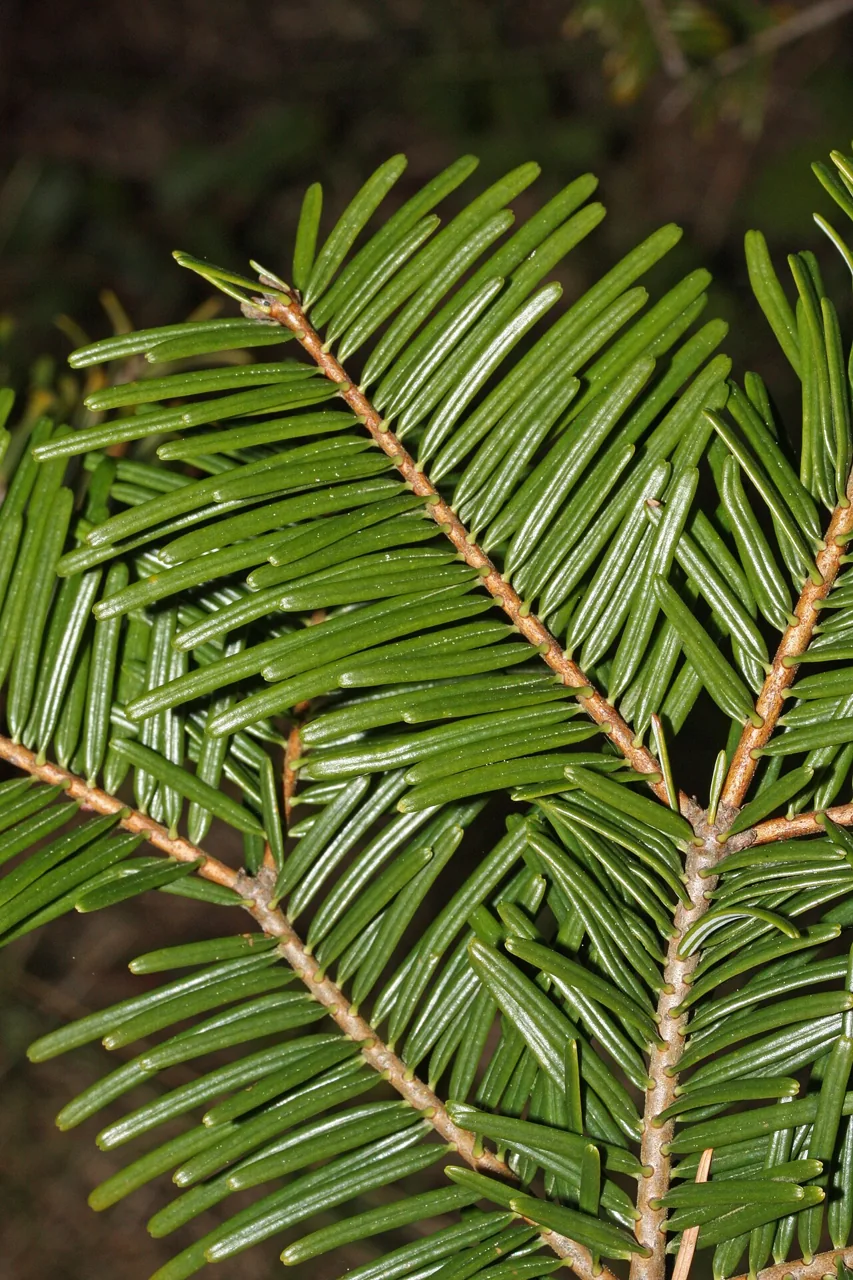
Leaves of Abies grandis.
Walter Siegmund (talk) / Wikimedia Commons / CC BY-SA 3.0

Photo details
Resized and converted to WebP. No content edits.
Source: File:Abies grandis 5359.JPG
Reviewed . Source identification, photograph and license reviewed. The image illustrates the named plant; it does not verify dimensions or other plant traits.
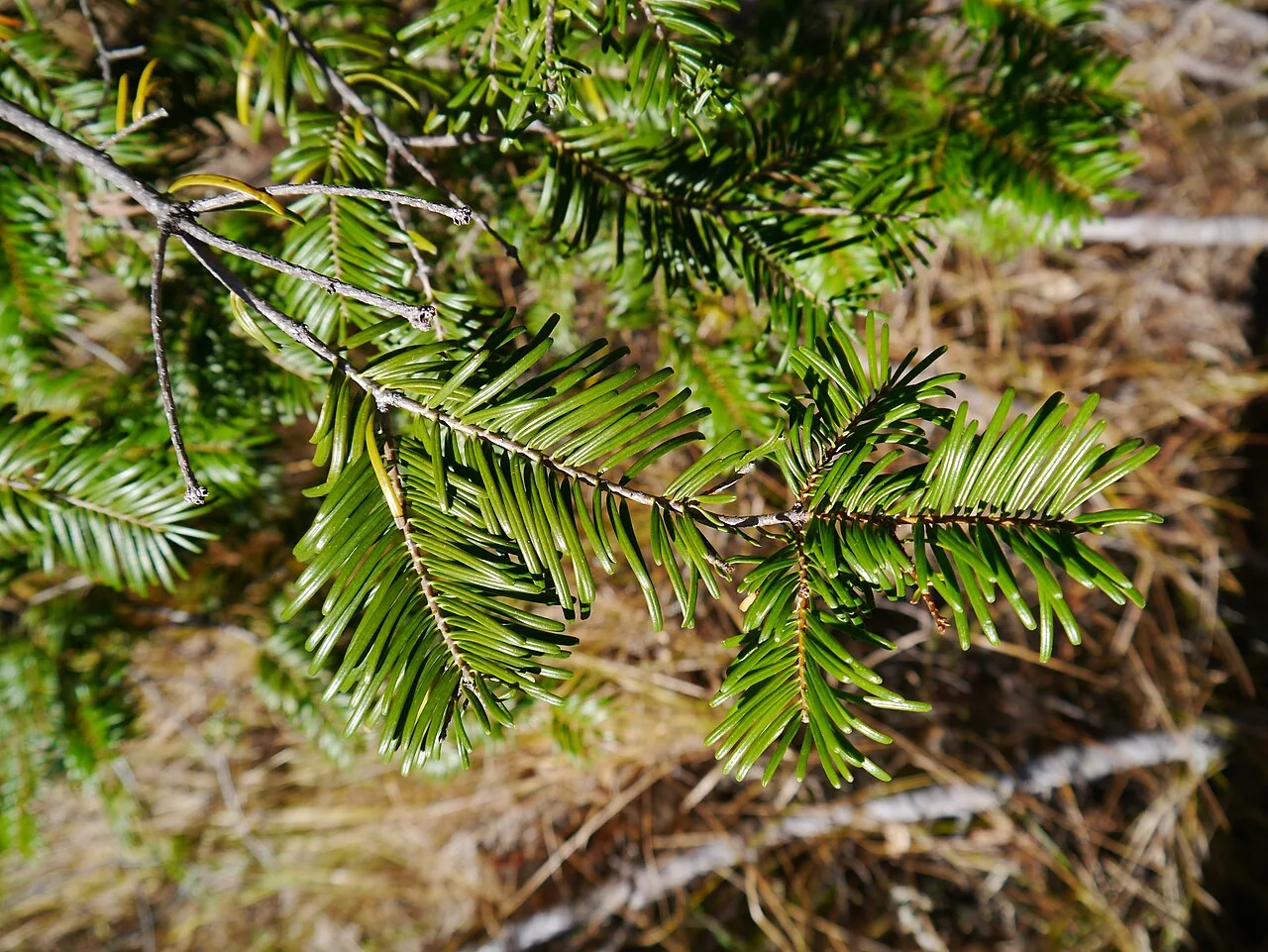
Leaves of Abies grandis.
Thayne Tuason / Wikimedia Commons / CC BY-SA 4.0

Photo details
Resized and converted to WebP. No content edits.
Source: File:Abies grandis leaves.jpg
Reviewed . Source identification, photograph and license reviewed. The image illustrates the named plant; it does not verify dimensions or other plant traits.
Common names
27 names · 22 languagesOther languages (21)
- Dutch
-
- Reuzenzilverspar[1]
- Chinese (Simplified)
-
- 巨冷杉[1]
- Chinese (Traditional)
-
- 巨冷杉[1]
- Czech
-
- jedle obrovská[1]
- Danish
-
- Kæmpegran[1]
- Downriver Halkomelem
-
- taʔxʷəɬp[1]
- Estonian
-
- hiigelnulg[1]
- Finnish
-
- jättipihta[1]
- Italian
-
- Abete grande[1]
- Japanese
-
- アメリカオオモミ[1]
- Norwegian
-
- kjempeedelgran[1]
- Nuuchahnulth
-
- w̓iḥmapt[1]
- Polish
-
- Jodła olbrzymia[1]
- Russian
-
- Пихта великая[1]
- Slovak
-
- jedľa obrovská[1]
- Swedish
-
- kustgran[1]
- Turkish
-
- Büyük Sahil Göknarı[1]
- Upriver Halkomelem
-
- t’a’hw[1]
- West Flemish
-
- Reuzedenne[1]
Sources & name notes (1)
Names recorded in our plant catalogue and botanical sources, grouped by language. Usage can vary by region.
Numbered references identify names recorded by an external source. Other names are from our plant catalogue.
Community-curated iNaturalist taxonomy; common-name attestation, not an independent botanical determination.
Source records
- grand fir — results[1].names[0]; taxon id 63690; Abies grandis.
- giant fir — results[1].names[2]; taxon id 63690; Abies grandis.
- sapin grandissime — results[1].names[3]; taxon id 63690; Abies grandis.
- jedle obrovská — results[1].names[4]; taxon id 63690; Abies grandis.
- Reuzenzilverspar — results[1].names[5]; taxon id 63690; Abies grandis.
- kjempeedelgran — results[1].names[6]; taxon id 63690; Abies grandis.
- Küsten-Tanne — results[1].names[7]; taxon id 63690; Abies grandis.
- Riesen-Tanne — results[1].names[8]; taxon id 63690; Abies grandis.
- アメリカオオモミ — results[1].names[9]; taxon id 63690; Abies grandis.
- Jodła olbrzymia — results[1].names[10]; taxon id 63690; Abies grandis.
- hiigelnulg — results[1].names[11]; taxon id 63690; Abies grandis.
- 巨冷杉 — results[1].names[12]; taxon id 63690; Abies grandis.
- 巨冷杉 — results[1].names[13]; taxon id 63690; Abies grandis.
- Kæmpegran — results[1].names[14]; taxon id 63690; Abies grandis.
- Reuzedenne — results[1].names[15]; taxon id 63690; Abies grandis.
- Abete grande — results[1].names[16]; taxon id 63690; Abies grandis.
- kustgran — results[1].names[17]; taxon id 63690; Abies grandis.
- lowland white fir — results[1].names[18]; taxon id 63690; Abies grandis.
- yellow fir — results[1].names[19]; taxon id 63690; Abies grandis.
- Пихта великая — results[1].names[20]; taxon id 63690; Abies grandis.
- Sapin de Vancouver — results[1].names[21]; taxon id 63690; Abies grandis.
- jättipihta — results[1].names[22]; taxon id 63690; Abies grandis.
- jedľa obrovská — results[1].names[23]; taxon id 63690; Abies grandis.
- taʔxʷəɬp — results[1].names[24]; taxon id 63690; Abies grandis.
- w̓iḥmapt — results[1].names[25]; taxon id 63690; Abies grandis.
- t’a’hw — results[1].names[26]; taxon id 63690; Abies grandis.
- Büyük Sahil Göknarı — results[1].names[27]; taxon id 63690; Abies grandis.
General information
Accepted in the cited Kew taxonomic treatment.
Sources [1]Plant characteristics
NC State landscape size range; converted from feet and inches. Size varies with site, age and management.
Sources [2]NC State landscape size range; converted from feet and inches. Size varies with site, age and management.
Sources [2]Growing conditions
USDA zones listed by NC State; winter survival does not establish reliable cropping.
Sources [2]Uses
Shoots
Gum
Description
This versatile plant is a valuable asset to any agroforestry system, known for its robust growth and diverse applications. The plant reaches a height of approximately 15-20 meters and a width of 5-10 meters, with a moderate to fast growth rate that quickly contributes to the biomass in your system. It thrives in a wide range of climates, from temperate to cool, and prefers well-drained soils, although it is also tolerant of less ideal conditions. The applications of this plant are surprisingly broad. Its inner bark, rich and succulent in spring, can be dried and ground into a thickener for soups, or mixed with grains for bread – an excellent emergency food source. The resin from the trunk, once hardened, can be used as chewing gum or processed into a refreshing drink. Furthermore, the young shoot tips offer a delightful alternative to tea. In terms of maintenance, this plant is relatively low-maintenance. Pruning is usually only necessary to maintain the desired shape or remove dead branches. The plant is naturally resistant to many pests and diseases, minimizing the need for intervention. Within agroforestry, this plant offers numerous benefits. It contributes to soil improvement through its deep root system and provides shade and wind protection for other crops. Its role as a food source and its ability to produce resin and tea make it a multifunctional addition that enhances the biodiversity and resilience of your agroforestry system
Sources and references
References for the information marked with source numbers on this page.
-
Royal Botanic Gardens, Kew
World Checklist of Vascular Plants, version 16, extracted 4 June 2026
Relevant sections
- Botanical family: WCVP v16, wcvp_names.csv row 1219769; name ID 381615; Abies Mill.. Family column.
- Taxonomy: WCVP v16, wcvp_names.csv row 1220000; name ID 381804; Abies grandis (Douglas ex D.Don) Lindl..
Source checked on .
Source data licence: CC BY 3.0.
-
NC State Extension, North Carolina State University
Abies grandis — Extension Gardener Plant Toolbox
Supports: HeightSpreadGrowth rateFoliageGrowth habitLightSoil moistureSoil textureSoil pHUSDA hardiness
Relevant sections
- Height: Dimensions > Height; Height: 130 ft. 0 in. - 230 ft. 0 in.
- Spread: Dimensions > Width; Width: 20 ft. 0 in. - 26 ft. 0 in.
- Growth rate: Growth Rate
- Foliage: Woody Plant Leaf Characteristics
- Growth habit: Habit/Form
- Light: Light
- Soil moisture: Soil Drainage
- Soil texture: Soil Texture
- Soil pH: Soil pH
- USDA hardiness: USDA Plant Hardiness Zone
Source checked on .